Imagine reaching the third date before discovering that the person across the table wants children, hates your politics, and considers your beloved dog an unfortunate lifestyle choice. Attraction has done its work. Information has arrived rather late. OkCupid’s proposition is that some of this awkwardness can happen earlier, on a screen, while everybody still has their coat on.
- Questions put beliefs and preferences beside the photograph.
- Matching and conversations are free; extra visibility and information cost money.
- Expanded identity options are central to the product’s appeal.
- A compatibility score starts an investigation. It does not finish one.
01 / The people behind the questions
The company launched in 2004, founded by Chris Coyne, Sam Yagan, Christian Rudder, and Max Krohn. Their earlier world included TheSpark, with its quizzes and irreverent web content, and SparkNotes, which made study guides available online. Before helping people read one another, they had helped people read books. The family resemblance is pleasing: both enterprises offer assistance before a difficult examination.
OkCupid brought personality, politics, religion, and ordinary habits into matchmaking. Early users could indicate their own answers, acceptable answers from a partner, and how much each question mattered. Its expertise lay in turning messy preferences into a searchable introduction. That gave the free website a recognizable character in a market where paid dating services already existed.
An early constraint appeared in the plumbing. By 2006, the asynchronous code that helped keep hosting efficient had become difficult to maintain; development slowed as the codebase and team grew. The response was Tame, a translator that simplified the programming style while allowing gradual adoption. Another useful company lesson hides here: cheap infrastructure can become expensive in developer time, and replacing everything at once is not the only remedy.
02 / A percentage with footnotes
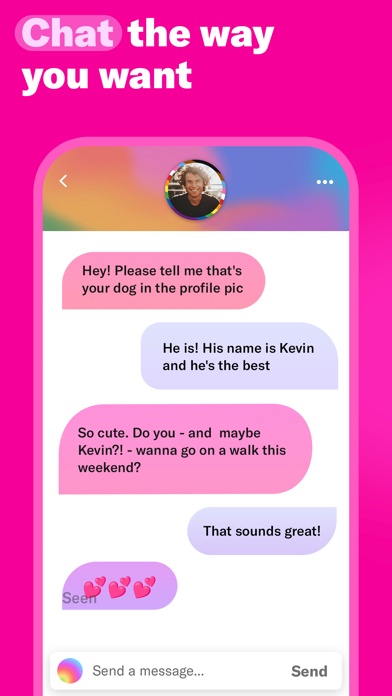
Today the service works through a website and mobile apps. You make a profile, set preferences, answer questions, and encounter people who might fit. Likes and Intros begin the exchange; matched members can keep talking. The interesting material sits behind the Match %: answers that reveal whether two people agree about things they might otherwise avoid discussing.
OkCupid’s question guide recommends answering between 50 and 100 to begin. Members can compare questions both have answered publicly. A practical use is to open the answers rather than admire the number: agreement about dinner is charming; agreement about the life you want may be consequential. A thoughtful Intro can then refer to something specific, instead of asking a stranger to manufacture a conversation from “hey.”
The number deserves restraint. It summarizes information the platform has collected; it is not a measured probability of staying together. Answers can be incomplete, circumstances can change, and a promising profile still has to become a willing person in the same conversation. For someone who enjoys describing themselves, the questionnaire offers useful texture. For someone who wants instant chemistry without homework, that same texture can feel like paperwork.
03 / The dropdown was too small
A dating service cannot introduce people properly if its categories cannot describe them. OkCupid expanded gender and orientation options in 2014; its public identity page now offers more than 60 ways to identify. Additional tags were developed with staff and community experts, including the Human Rights Campaign. Self-description also helps people express the kinds of partners and relationships they seek.
Former CTO Tom Quisel explained that the original male-or-female choice was embedded deep in the code. Changing it required engineering time and a decision to prioritize the work. His account of employees reading user feedback shows how product assumptions could meet actual customers. The lesson for another builder is concrete: listen for the person your form cannot accommodate, then fix the machinery that excludes them.
“We really wanted to make that change.”Tom Quisel, former CTO, on expanding gender options
04 / Free to talk, paid to be seen
Free matching makes the invitation accessible. Subscriptions monetize additional information and control. Premium lets members see incoming Likes and public question answers more readily; Premium Plus adds priority Likes, read receipts, and further promotional features. Incognito restricts profile visibility. Boosts sell extra exposure. The current subscription guide says Basic is no longer available for new purchases.
The starting price is therefore straightforward: zero for the core exchange. Paid costs depend on the offer and subscription selected, with longer packages billed upfront. These purchases change access or attention, not another person’s willingness to respond. A sensible experiment is to try the free experience in your area before deciding which paid feature would solve a problem you have actually encountered.
Within the market, OkCupid’s distinctive claim is the question-based introduction. Alternatives include Bumble and eharmony, as well as Tinder, Hinge, and Match. Those last three share its parent, Match Group. Different brand personalities can consequently compete for the same dater while their subscription revenue travels into the same corporate family.
05 / What the price tag leaves out
Match acquired OkCupid in January 2011 for $50 million cash, with up to $40 million in additional contingent consideration. A later amendment produced a $30 million payment and left up to $10 million contingent. Yagan described an unsolicited offer, competing bidders, and a chance to reward investors and staff. The acquisition offered corporate resources without requiring him to keep handling every administrative problem.
06 / When the answer changes the question
OkCupid’s appetite for measurement sometimes became the story itself. In 2014, Rudder disclosed experiments that included showing some poorly matched pairs a 90% compatibility score instead of 30%. The intervention tested whether the label influenced interaction. It also exposed an uncomfortable feature of product measurement: the score can help create the behavior it appears merely to describe.
A separate privacy episode returned in March 2026. The FTC alleged that OkCupid had shared nearly three million user photos and associated information with an unrelated third party, contrary to its privacy promises. A joint motion sought a stipulated order to resolve the case; defendants neither admitted nor denied the allegations except jurisdictional matters. The complaint concerns data handling, not proof that compatibility questions cannot work.
There is a useful idea here worth copying: make consequential preferences discussable before people invest heavily. It depends on honest participation, enough relevant people nearby, and responsible handling of what they disclose. OkCupid can help someone find a better opening question. Whether the answer becomes a relationship remains the work of two people, neither of whom can be reduced to a very flattering percentage.