A child needs to defeat a monster. Before the next spell, there is a math question. For Prodigy Education, this small interruption is the whole business: put practice inside something a child already wants to do, then see whether the appetite for adventure survives the arithmetic.
- The hook: a fantasy math game for grades 1-8, with adaptive questions.
- The bargain: core Math and English practice stays free; families can pay for extras.
- The adult’s job: choose the right skills, inspect progress, and check understanding away from the screen.
Educational software often starts with a lesson and adds a reward. Prodigy gives the reward a world to live in. There are pets to collect, opponents to battle, and a story to continue. The attraction is easy to understand. A worksheet ends when you finish it. An adventure offers another reason to return.
Two engineers meet the reluctant learner
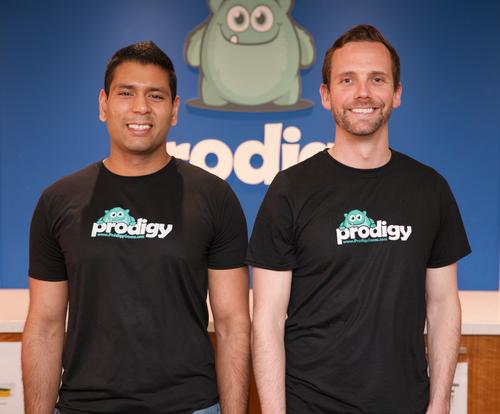
The idea began as an undergraduate project in 2011. Alex Peters and Rohan Mahimker were studying mechatronics at the University of Waterloo, a discipline concerned with making different systems work together. Their educational game had a similar problem: the machinery of a curriculum had to mesh with the machinery of a game.
They built Prodigy Math around curriculum-aligned questions and an adaptive system that adjusts practice to the learner. The teacher can direct the subject matter; the student encounters it while playing. Behind a bright cartoon battle sits a quieter tool for finding skills that need attention.
That makes Prodigy a supplemental practice business with game-development expertise. Its customers and users overlap without being identical. Children play. Teachers assign and monitor. Parents decide whether to buy a membership. The company must make each of those people feel that the same activity is worth their time.

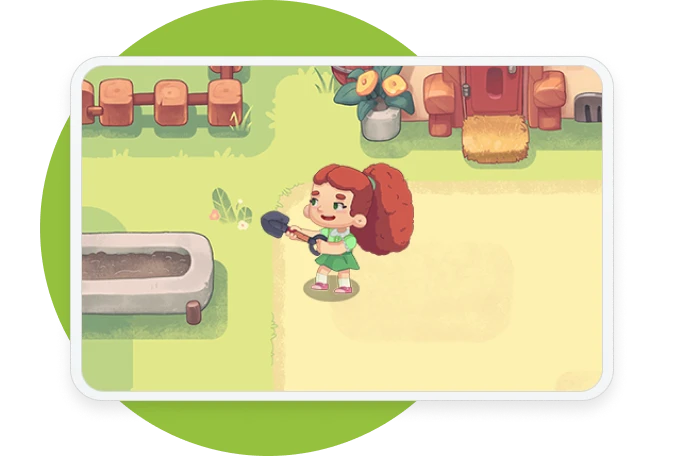
Prodigy English, launched in 2022, takes the same premise into a different mood. Instead of battling, children build their own world. Answering language arts questions provides energy for gathering resources and creating things. The change is instructive: motivation can come from making a place of your own as well as winning a fight. For families, it offers reading and writing practice in a format that feels distinct from the math adventure. Both games retain an adaptive layer, but the desired reward changes with the activity.
Free is a distribution strategy
A teacher can use Prodigy without finding a software budget. Free assignments and reports make classroom adoption easier; optional parent memberships help fund the experience. Prodigy says this model also lets it avoid relying on third-party advertising or selling user data.
The distinction matters at checkout. Its U.S. membership page lists annual Core, Plus, and Ultra plans at $58.95, $88.95, and $118.95, respectively, as of October 2026. Monthly billing costs more over a full year, and subscriptions renew automatically. Core Math and English content remains free. Science content requires Plus or Ultra.
Investors bought into that arrangement. In January 2021, Prodigy announced a CAD $159 million Series B, approximately US $125 million at the time, led by TPG Growth with Canadian Business Growth Fund participating. That was capital for expansion, rather than a disclosed price tag for building the original game.
Within the market, Boddle offers another game-based route through elementary subjects. IXL offers a broader K-12 curriculum with diagnostics and analytics. Prodigy’s particular attraction is the ongoing adventure wrapped around practice, coupled with controls for the adult responsible for learning.
Attention has a price, too
The freemium arrangement creates a tension. The classroom introduces children to a game whose paid benefits their families may value differently. In February 2021, a coalition of 22 advocacy and consumer groups filed an FTC complaint alleging deceptive promotion and manipulative membership marketing. A complaint is an allegation, not a regulatory finding.
Even before that dispute, a January 2020 Johns Hopkins evaluation had identified friction. Teachers welcomed engagement but wanted limits on shopping and avatar customization. The two-school case study found a positive association between usage and math achievement gains; its correlational design could not establish that the game caused those gains.
The first weakness visible in that evaluation was familiar to anyone who has handed a child a screen: the surrounding activity could compete with the intended task. Teachers also wanted more training in reports. A dashboard cannot help much if nobody uses it to decide what happens next.
Prodigy’s April 2025 Common Sense Privacy Seal addresses a different concern: data practices. That recognition deserves its own credit. It does not settle questions about membership promotion or demonstrate learning gains. Those require different evidence.
The adventure gets a timetable
In March 2026, Prodigy announced Math Facts, a more focused fluency experience. Students race with their pets while practicing arithmetic recall. Teachers can select fact sets and review fluency grids; each student gets one free session a day through the teacher offering.
April brought Homeschool Companion, adding parent assignments, progress tracking, and textbook alignment. Its launch served families using eligible state funding programs. Rather than asking parents to abandon their chosen curriculum, it connects lessons to matching practice. These releases suggest a move toward more explicit routines and adult control.
The National Cup supplies another kind of structure: school pride. Prodigy reported more than six million participants during the 2025/26 competition cycle. At Medford Area Elementary in Wisconsin, teacher Scott Woller even wrote a motivational rock song. His school won its tier and a $50,000 technology grant.
“Together as one, we’ll get this done.”
Scott Woller · Medford teacher’s 2026 competition theme
Borrow the routine, inspect the result
A teacher can copy the useful part without organizing a national contest: select a skill, set a short practice window, review errors, and reteach what students cannot explain. A parent can sit beside a child for one session and notice how much time goes into questions, wandering, or rewards.
The approach depends on suitable devices, reliable access, age-appropriate content, and adult follow-through. It becomes less useful when it substitutes for teaching, when children guess to advance, or when game rewards monopolize attention. Prodigy can supply a reason to practice. The revealing moment comes afterward, when the child explains the math without the wizard.