adaptive-learning
(43)
Duolingo Built a Billion-Dollar Habit Out of Five-Minute Lessons
The green owl did not win by promising fluency overnight. It won by making tomorrow's five-minute lesson feel harder to skip than today's - then built subscriptions, testing and AI conversation on top of that habit.

Jeff Scheur Graded 15,000 Papers. Then He Rebuilt the Feedback Loop.
A Chicago English teacher turned a 2 a.m. grading ritual into NoRedInk. His enduring idea is disarmingly practical: software should give students room to practice and give teachers more time to teach.

Kunaal Satija Is Building the Study Habit That Fits in a Pocket
The EduRev founder started with second-hand books, learned the limits of selling software one school at a time, and built a learning platform around a stubborn idea: useful education should travel farther than a good teacher can.

Arpit Jain Bet the iPad Could Make Learning Feel Like Play
His first education startup was early. His second began with four classmates, a new tablet, and a stubborn question: what if children could practise hard things without learning to fear them?

He Built a Parenting App for the Question No Spreadsheet Could Answer
Gustavo Rodriguez knew how to read a deal. Becoming a father taught him that the harder problem was turning a mountain of child-development research into one useful thing a tired parent could do next.
The $25,000 Parenting App That Learned to Stop Pitching Numbers and Start Telling a Story
BabySparks reached millions of parents on a shoestring, then discovered its data-heavy fundraising pitch was the thing holding it back. The fix was not another chart - it was a better story.

The Dental School Dropout Who Turned 1,400 Flashcards Into 27 Million Students
Alec Whitters quit dental school in Iowa to rebuild exam prep on a phone screen. A decade later, roughly half of America's new nurses study on the platform he started - and he did it from a town most investors can't find on a map.
The 40-Year-Old Quiz Company Trying to Become the Operating System for Learning
Renaissance began with a reading quiz built in a Wisconsin basement. Four decades and a string of acquisitions later, it is betting that the next big classroom product is not another app, but a connected path from assessment to action.
The 138-Year-Old Publisher That Learned to Think in Software
McGraw Hill spent more than a century putting knowledge between covers. Its next act is turning that trusted catalog - and billions of student interactions - into adaptive software for classrooms that cannot afford to get the answer wrong.
HMH
It started as a Boston book publisher in 1832. Today HMH wants to be the software layer between the test a student takes and the lesson they get next.
Cengage Group
The company that once filed for bankruptcy owning the textbook now rents you every book it makes for the price of one - and it is quietly rewiring how students, libraries, and job-seekers learn.
Atomi
Atomi is a Sydney-based edtech company that runs an online teaching and learning platform for high school. It pairs short, curriculum-aligned videos with interactive quizzes, AI-driven revision recommendations and real-time analytics, serving students, teachers and schools across Australia and the UK. Founded in 2013 as HSC Hub by Rob Barakat and Thomas O'Donahoo, the company now reaches over a million students and teachers and covers hundreds of subjects across all high school year levels.
EduRev
EduRev (Education Revolution) is a Bengaluru/Gurugram-based Indian edtech company founded in 2015 and backed by Y Combinator (W20). It runs a mobile-first learning platform - pitched as a 'Netflix for Education' - that bundles video lessons, notes, question banks, mock tests, doubt-solving and progress analytics for school students (Class 6-12) and aspirants of competitive exams like NEET, JEE, UPSC, GATE and CAT. Its low-cost annual subscription (roughly $20-$50/year vs competitors' $300+) has drawn a reported 20M+ registered learners.

Excellence
Excellence is a Y Combinator-backed (W25) AI education platform, founded by three Stanford-trained builders, that turns generative AI into a genuine learning tool rather than a homework-answer machine. Designed with teachers, it lets educators generate personalized assignments and exams, create interactive materials, and track student progress, while giving students an AI tutor that asks progressive questions instead of handing over answers. It began as an AI tutor for maths and science aimed at replacing costly private tutoring and long-term programs like Kumon.

Geniebook
Geniebook is a Singapore-based edtech company that pairs a proprietary AI engine with human teachers to deliver personalised learning for primary and secondary students across Southeast Asia. Its platform generates adaptive worksheets that target each student's specific knowledge gaps, streams live online classes led by experienced educators, and offers real-time teacher chat support - all aligned to Singapore's national (MOE) curriculum. Founded by former tutors Neo Zhizhong and Alicia Cheong, the company has grown from an offline tuition business into a regional platform serving more than 220,000 students, and has since expanded into hybrid online-plus-physical learning centres.
Zenius
Zenius was Indonesia's pioneering education-technology company, founded in 2004 as a Jakarta tutoring center and reborn in 2010 as one of the country's first video-based learning platforms. Built around founder Sabda PS's belief that education should teach fundamental skills and critical thinking rather than rote memorization, Zenius grew into a digital learning ecosystem with a library of more than 100,000 video lessons, a large UTBK question bank, AI-powered tools like ZenCore and ZenBot, and live classes. After acquiring legacy tutoring brand Primagama in 2022 to push into hybrid learning, the company struggled with the post-pandemic funding downturn and suspended operations in January 2024 after roughly 20 years.
Flint
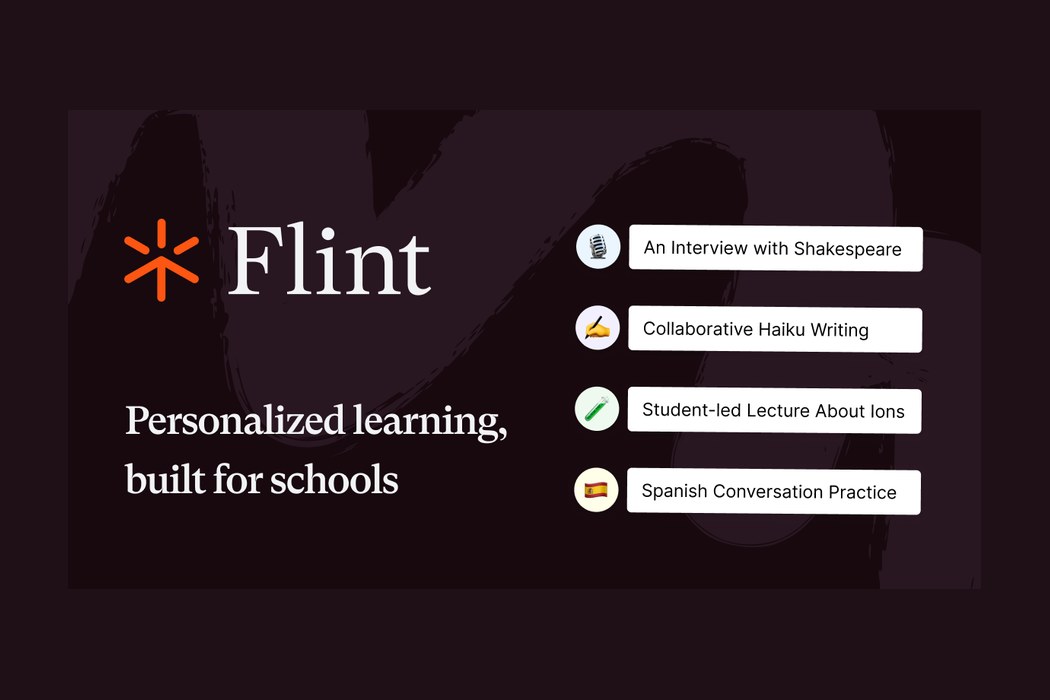
Flint is an AI-powered personalized learning platform built for K-12 schools. It lets teachers design AI tutors, activities, and assessments that adapt to each student across every subject - from language speaking practice to guided science labs - while giving educators real-time visibility into student progress without adding to their workload. Founded in 2023 and backed by Y Combinator, Flint raised a $15M Series A in November 2025 and serves hundreds of schools and hundreds of thousands of students worldwide.
SplashLearn
SplashLearn (operated by StudyPad, Inc.) is a game-based learning platform for children in preschool through Grade 5, focused on math and reading. Founded in 2010 by four friends who saw the iPad as a natural learning device for kids, it now serves more than 40 million learners across 150+ countries and is used by hundreds of thousands of teachers and schools. The platform pairs an adaptive, curriculum-aligned library of 6,500+ games and activities with live small-group classes, aiming to turn children into confident, self-motivated learners.

Filadd
Filadd is a Córdoba, Argentina-based edtech company (Y Combinator S21) that helps Latin American students pass college entrance exams and graduate from university. Its platform blends video lessons, live tutoring, AI-powered study plans, and downloadable resources to prepare students for regional exams like Chile's PAES and Brazil's ENEM. Filadd serves more than 25,000 students a year across Chile, Brazil, Argentina, and Colombia.

Classera
Classera is an edtech company that runs a cloud-based Learning Super Platform used across K-12 schools, universities, and corporate and government training programs. Founded in 2011 and headquartered in San Francisco with deep roots in the MENA region, it pairs a core learning management system with gamification, AI-driven personalization, virtual-reality content, an educational marketplace (Edumalls), and embedded payments (C-Pay). The platform serves more than 12 million users in over 40 countries and, in October 2022, raised a $40M Series A led by Sanabil Investments - reportedly the largest edtech funding round in MENA and most of Africa.

NoRedInk
NoRedInk is a K-12 writing platform used in more than 10,000 schools that helps students in grades 3-12 become stronger writers through adaptive, interest-based exercises, scaffolded composition tools, and an AI-powered Grading Assistant that cuts teacher grading time roughly in half. Founded in 2012 by former Chicago English teacher Jeff Scheur, the company builds around a taxonomy of common student writing errors and personalizes practice using topics students actually care about. Students have completed billions of exercises on the platform.
Analytikus
Analytikus is a Miami-based education-technology company that applies machine learning and artificial intelligence to help colleges and universities reduce student dropout, sharpen recruitment, and personalize teaching. Its SEAL platform pulls signals from learning management systems and campus data into a holistic student profile (WHALE), then layers on predictive modules and generative-AI assistants - Emilia and Socrates - to give students 24/7 support and give faculty an early-warning read on who is at risk.
Axio Education
Axio Education is an AI-native learning platform, spun out of Arizona State University's Luminosity Lab in 2023, that helps colleges and universities design, deliver, and improve courses. It combines LMS, CRM, and SIS capabilities with agentic AI to compress course development from months to minutes, deliver personalized learning pathways, and give faculty real-time insight into how students are doing - while keeping instructors in creative control.

Darsel
Darsel is an education-technology nonprofit that teaches K-12 math over the messaging apps students already have. Instead of an app or a laptop, students practice curriculum-aligned questions through SMS, WhatsApp, and Facebook Messenger, and an AI-powered chatbot delivers hints, explanations, and personalized practice while auto-grading homework and reporting progress to teachers. Founded by Stanford MBA and MIT alum Abdulhamid Haidar during the COVID-19 lockdowns, Darsel has grown from a spring-break prototype to a platform used across Jordan, India, and Nigeria, reaching hundreds of thousands of students who have answered hundreds of millions of math questions.
Gooroo
Gooroo is a New York-based education technology company founded in 2015 by Scott Lee that pairs students with vetted tutors through personalized matching and pairs that with a library of self-paced online courses and small-group clubs. Built to make one-on-one tutoring affordable and to celebrate individual learning styles, Gooroo grew a network of NYC tutors, ran a 'Gooroo Gives Back' nonprofit arm for underserved students and seniors, and raised roughly $14M across seed rounds. As of 2026 the company paused consumer enrollments while it evaluates a pivot toward trustworthy, accountable AI for learning and student protection.
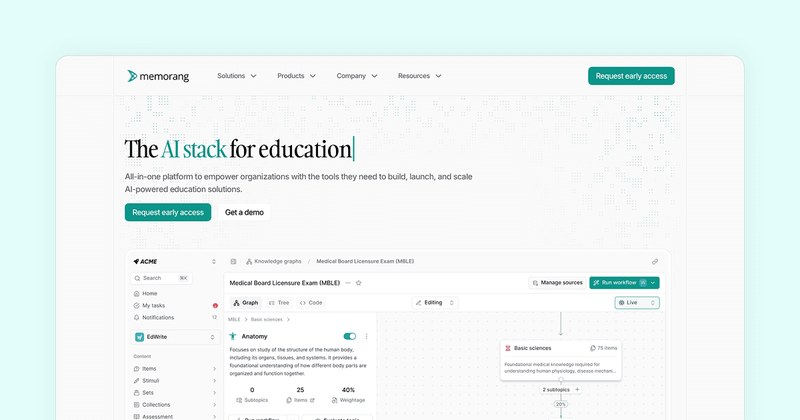
Memorang
Memorang is a Los Angeles-based education-technology company building what it calls the AI stack for education - an all-in-one, agentic platform that lets testing providers, publishers and training organizations create standards-aligned content, assessments and branded learning apps at scale. It began as a consumer flashcards-and-quizzes app for medical and professional exams and has since pivoted into a B2B platform that pairs knowledge graphs with AI agents and human-in-the-loop workflows. After winning first place among roughly 1,500 startups in the Vercel AI Accelerator, the bootstrapped company says it has delivered hundreds of millions of assessments and serves tens of millions of annual test-takers.

Super Teacher
Super Teacher is a New York-based edtech company building an AI-powered tutoring app for elementary school students. Founded in 2022 by former Google product manager and NYC math teacher Tim Novikoff, it delivers unlimited, conversational one-on-one tutoring in reading and math for roughly $15 a month - a fraction of the cost of a human tutor. Unlike most AI education tools, Super Teacher avoids large language model guesswork in favor of a deterministic content system designed to always give correct answers. Around 20,000 families have signed up, and public schools in New York, New Jersey, and Hawaii now use the app in classrooms.

Abdulhamid Haidar
Abdulhamid Haidar is the founder and CEO of Darsel, a nonprofit that teaches K-12 math over text messages. Instead of apps and video that assume reliable Wi-Fi, Darsel runs entirely on WhatsApp, Facebook Messenger and SMS, using AI-powered adaptive algorithms to tutor students in Jordan, India and Nigeria. Built during the 2020 COVID lockdown by a Syrian-American who grew up in a family of teachers, Darsel has had more than 120,000 students answer over 170 million math questions. Haidar holds degrees from MIT, Harvard Kennedy School and Stanford's Graduate School of Business, and previously spent three years at McKinsey. His goal: meaningfully reach 100 million students by 2030.

Scott Lee
Scott Lee is the founder and CEO of Gooroo, a New York based education technology company building an AI-driven platform that matches students with the right tutor and bundles online courses, clubs and progress tracking under one roof. Born in Seoul and arriving in the US at 16 without speaking English, he leaned on tutors and mentors to find his footing, studied engineering at Columbia, paused to serve as a sergeant in the South Korean army, and worked as an analyst in JP Morgan's Chief Investment Office before going all in on education. He has raised more than $8 million and serves thousands of students worldwide, with a stated mission to make quality, personalized learning accessible to everyone.
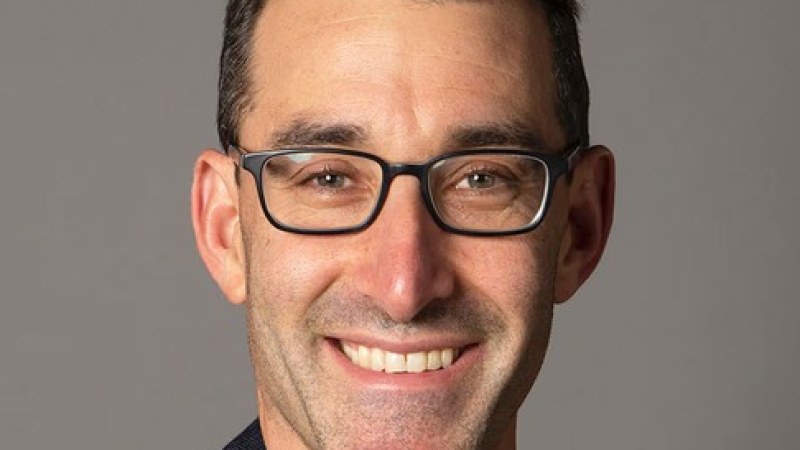
Todd Zipper
Todd Zipper is a longtime education-and-technology operator now running Axio Education, a Scottsdale-based agentic AI learning platform that turns static coursework into adaptive, personalized pathways. Before Axio he spent more than two decades building and scaling online-education businesses: he led The Learning House to its 2018 sale to Wiley, then ran Wiley's global education and talent operations as an executive vice president overseeing more than $300 million in annual revenue. He hosts the higher-ed podcast An Educated Guest and holds a CFA charter alongside degrees from Penn and Columbia.