The baby arrived, and the banker panicked. Gustavo Rodriguez had spent years advising global consumer companies at JPMorgan and Merrill Lynch. Spreadsheets were familiar territory. A newborn was not. When his son Nico was born, Rodriguez found himself asking the ordinary, slightly frantic questions of a first-time parent: How do I encourage speech? What helps with crawling? Is this milestone late, early or simply different?
The answers existed, but in the least parent-friendly forms imaginable - expensive specialists, generic books, stray search results and a small universe of contradictory advice. Rodriguez met Colombian technologist Juan Pablo Mejia, and the pair began translating early-childhood research into something a tired adult could use while standing in a living room. Jose Bernal joined the founding team on operations. BabySparks was incorporated in Florida in 2014; its first full consumer version followed in December 2016.
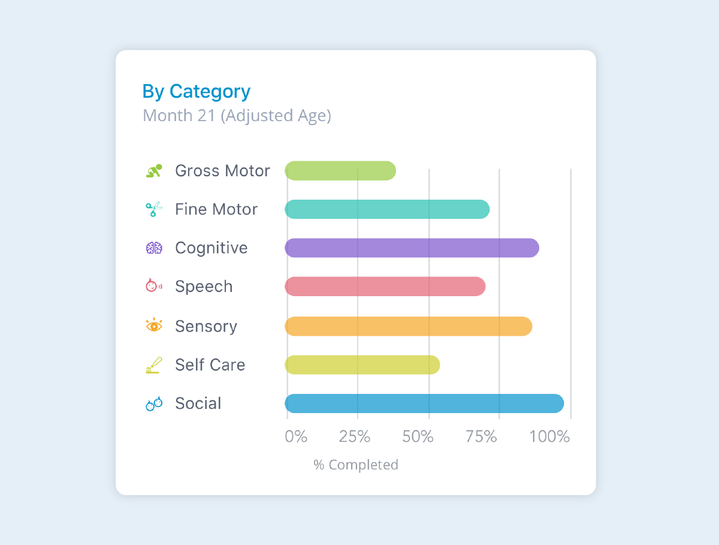
The product was less “teach your baby with an app” than “let the app teach you how to play.” A parent enters a child's age and development profile. BabySparks recommends a short set of physical, cognitive, language, sensory, social-emotional and self-care activities. Each comes with a demonstration video, the milestone it supports and a way to record whether the exercise felt too easy or too hard. The phone is the coach. The parent and child still do the work off-screen.

An expert in your pocket, with fewer decisions
There is no shortage of parenting information. There is a shortage of judgment at 6:40 p.m., when dinner is late and a baby has rejected both sleep and socks. BabySparks' useful trick is not merely owning a library. It collapses the library into a next action: try this game, for this reason, at this stage.
That is its distinction from a book, a YouTube playlist or a late-night search. The information may not be exclusive. The sequence is. It also explains why the product can travel: the company has marketed in English and Spanish and reported users in 180 countries. Play is cheap infrastructure. A spoon, a blanket and ten deliberate minutes work in more households than a box of monthly toys.
The company gradually stretched beyond the baby-years wedge. Its current offer includes hundreds of live and on-demand classes on sleep, feeding, behavior, potty training and family life, along with private coaching. Those products address parents from pregnancy through adolescence. Ava, a newer AI-powered assistant, handles round-the-clock questions, suggests classes, and can draft bedtime stories or meal plans. BabySparks warns that Ava is guidance, not a substitute for a pediatrician or healthcare professional - a boundary that matters more than any chat feature.
The metrics were good. The pitch was terrible.
By early 2019, BabySparks said it had reached roughly 3 million downloads after only $25,000 of investment. A 2018 deck reported a $1.4 million annual sales run rate, 185 percent year-over-year subscription growth and average subscriber sessions of 18 minutes. For a former investment banker raising capital, these numbers should have been home turf.
The fundraising still sputtered. Rodriguez later described the reason with refreshing bluntness: he was telling the story with numbers. The deck proved that something was happening without making an investor feel why it ought to exist. During 500 Startups' Road to Series A program in Miami, the team was pushed to foreground the frightened new father, the neglected early-development window and the people building the solution. The data remained, but it moved from plot to evidence.
“I was telling the story with numbers. 500 was more like, ‘you have to fall in love with the story and the team.’ That's when we started getting traction.”Gustavo Rodriguez, on the early fundraise
It is a tidy lesson because the change was not cosmetic. Rodriguez's origin story also explained the product choices. He had too many questions, so the app reduces searching. He and his wife were busy and tired, so activities fit ordinary routines. Every child is different, so recommendations adapt. The emotional pitch and the product architecture finally described the same problem.
Ocean Azul Partners led a $2 million seed round announced in July 2019, joined by Miami Angels, Kairos, Marstar Investments and individual backers. Public funding records then show a $1.8 million seed round in 2020, another $2 million in 2021 and about $4.08 million of Series A financing in March 2022 from Pareto Holdings, Strike Ventures and L'ATTITUDE Ventures. Together, those disclosed and supplied round figures total about $9.88 million. BabySparks has not publicly announced a valuation.
From bootstrap to Series A
Publicly reported and company-supplied round amounts. Bar length compares round size, not valuation.
One content engine, three customer doors
BabySparks is primarily a subscription business. Families can download the app free, create a child profile and sample activities and milestones. Paid plans unlock the broader catalog, tracking tools, classes and Ava access, depending on the bundle. Prices vary by storefront and promotion. The U.S. App Store lists purchases beginning at $3.99, older web checkout pages show a $23.99 annual activity plan and current premium class bundles can be considerably higher.
The professional version is more legible. Published packages cost $1.25, $2.25 or $5 per child per month, with annual discounts. Higher tiers add family sharing, a desktop dashboard and free premium access for parents. Preschools can assign plans across classrooms; healthcare and early-intervention teams can emphasize areas of concern and send activities home. Administrators can follow both a child's progress and the adults' participation.
Employers are the third door. BabySparks packages its activities, bilingual classes and coaching as a benefit for working parents. The logic is credible: a sleep-deprived employee does not leave parenting problems in the daycare parking lot. The sales cycle, privacy expectations and proof of return are very different from a $3.99 app purchase, however. Serving all three markets can diversify distribution; it can also turn one simple consumer product into three companies wearing the same cardigan.
04 / Proof and frictionMillions of downloads do not tuck the bugs into bed
BabySparks reported 3.5 million downloads in 180 countries in 2019 and nearly 9 million in 2023. Current store copy says more than 10 million parents. Google Play displays more than 1 million Android installs, an Editors' Choice badge and roughly 14,500 reviews; Apple's U.S. listing shows about 13,000 ratings and a 4.7 average. The company has also won the Latin American track of the Global EdTech Startup Awards, appeared on the Kairos 50 and received a Women's Choice Award in 2023.
The reviews are also a useful dose of gravity. Parents praise the variety, clear video demonstrations and relief from repeating the same five games. Others complain about paywalls, too many taps, lost milestone data or recommendations that did not adapt quickly enough. One parent of a premature baby initially found the age assumptions wrong, then updated the review after adjusted age appeared. A 2026 Google Play reviewer reported lost progress and later praised the support team's fast response.
That is the first condition under which the model fails: when “personalized” feels generic. It also struggles when parents want child-led, unstructured exploration rather than a daily checklist, when connectivity or subscription cost is a barrier, or when a developmental concern needs diagnosis rather than an activity suggestion. The product can help adults notice patterns. It cannot tell a family what a clinician should conclude from them.
Five things a builder can copy
- Choose a tense moment. “What do I do with my baby today?” is sharper than “learn about parenting.”
- Turn expertise into a routine. A recommendation is more usable than another content category.
- Demonstrate the action. Short video reduces the fear of doing an unfamiliar activity wrong.
- Invite the support network. A plan gets stronger when parents, relatives, teachers and clinicians can coordinate.
- Make metrics prove the story. Traction is evidence; it is rarely the reason a person remembers the pitch.
Between the pediatrician and the search bar
BabySparks competes with Kinedu, Lovevery, The Wonder Weeks, Pathways.org and a busy field of milestone trackers and activity apps. It also competes with free substitutes: books, relatives, YouTube, childcare curricula and the ancient parenting technique known as putting safe objects on the floor. Its advantage is a joined-up loop of expert content, personalization, demonstration and progress tracking. Lovevery can tie guidance to physical kits; Kinedu spans a similar developmental lane; a pediatrician carries authority no consumer app should imitate.
The company's broader platform makes strategic sense if trust transfers from infant activities to older-child classes and AI answers. It makes less sense if breadth blurs the reason parents opened BabySparks in the first place. Ava may improve retention between classes, but a general parenting chatbot is easier to copy than a decade of structured activities and feedback. The durable asset is the system around the answer: age context, expert curriculum, recommended follow-up and a clear handoff to human professionals.
BabySparks' best idea remains modest. Parents do not need to optimize every minute, and a child is not a quarterly target. They sometimes need one good suggestion, shown clearly, at the right age, before everyone gets tired. The company built a business by shrinking an enormous subject into today's play. It raised money only after learning to perform the same trick on its own story.