A reading test begins with a small act of faith: the answer will tell an adult something useful. Then comes the less glamorous business of deciding what to teach tomorrow. Istation built its reputation in that interval. Behind its animated characters and superhero cape sits a practical proposition: test a child, identify a skill gap, and connect the result to instruction before the report becomes another forgotten tab.
- Measure, then teach. ISIP connects adaptive assessment with practice and teacher resources.
- Content meets speech. The 2024 Amira merger pairs Istation’s library with spoken-reading AI.
- Implementation counts. Evidence, training, accommodations, and scheduled use deserve the same attention as features.
The test that chooses the next lesson
Founded in 1998, Istation belongs to an earlier generation of education software, when putting instruction on a computer was itself a substantial undertaking. George Grayson founded the business; Richard Collins, whom Southern Methodist University identifies as a co-founder, became chairman and chief executive in 2007. Its name, Imagination Station, suited the animated world it built for children.
The grown-up machinery is ISIP, short for Istation’s Indicators of Progress. In the legacy Spanish assessment, correct answers bring harder questions; incorrect answers bring easier ones. The first login each month triggers another assessment. The point is to locate the student’s working level and watch it change, rather than assume that every child sharing a grade needs the same lesson.
Istation sells subscriptions to schools and districts. Children encounter reading, math, and Spanish literacy activities; teachers encounter reports, scripted lessons, books, and intervention resources. Administrators get a wider view of performance. The software must therefore please two audiences with remarkably different tastes: a child wants something worth doing, while a district wants something worth buying.
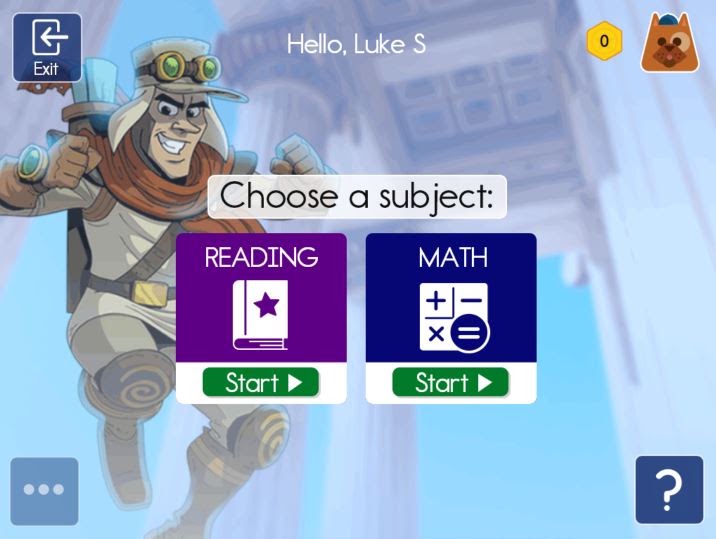
That dual audience helps explain an unusual detail: D Magazine reported that Istation maintained its own animation and art departments. This was an assessment company with a production studio inside it. The cartoons were part of the delivery system, intended to keep students participating long enough for the instructional sequence to do its work.
Each result should earn its place in the next teaching decision.
The second cohort matters
A commissioned February 2021 Johns Hopkins study compared students in one South Carolina district with matched students elsewhere. Overall reading growth favored Istation. The younger cohort gained significantly more; the older cohort showed no significant advantage. The design was quasi-experimental, using a virtual comparison group rather than random assignment.
Extra MAP reading growth
This is useful evidence with boundaries: one district, different outcomes by cohort, and an association with consistent instructional use. It does not establish that every student will benefit equally. A school buyer should read the underlying report, then ask whether its pupils, teaching arrangements, and planned use resemble the conditions examined.
An $8.3 million lesson in trust
North Carolina supplied a less tidy lesson. In June 2019, state superintendent Mark Johnson awarded Istation an $8.3 million contract for K-3 reading assessment. Rival Amplify protested. Johnson defended the selection; the dispute created uncertainty over implementation just as schools were preparing to use the tool. The practical question became which assessment teachers should administer.
The first visible breakdown was in the rollout process. A product could be selected while the authority to implement it remained contested. In April 2020, the state approved a $243,000 amendment to preserve access to existing assessment data through June 30 during pandemic disruption. These are institutional contract costs, not a price list for individual pupils.
By July 2021, official state communications identified Amplify’s mCLASS DIBELS 8 as the statewide K-3 assessment. The episode shows where Istation sits in the market: public agencies compare it with other diagnostic systems, even when its instructional content extends beyond testing. A smooth demonstration cannot settle questions about procurement, educational requirements, or teacher confidence.
The microphone arrives
The June 2024 merger gave Istation a different route forward. Amira became the continuing business. The announcement put their combined reach at four million students across 50 states and 17 countries. Istation supplied a substantial content library and district relationships; Amira supplied a tutor that listens as students read aloud. The strategic fit was plainly stated.
“If reading isn’t fun, it isn’t happening.”
Mark Angel, Amira CEO, on the merger
Angel’s explanation was that tutoring needed engagement as well as intelligence. Istation had spent years producing the material that could hold a child’s attention. Pairing those assets promised a closer connection between what the system heard and what the student encountered next. That was the proposal; subsequent documentation gives a more concrete view of the changes.
New Mexico’s 2025 guidance says Istation has been rebranded as Amira and describes voice recognition in early literacy ISIP. It explicitly excludes voice recognition from mathematics and Lectura in that implementation. Current product documentation lists Amira ISIP Assess, Instruct, Tutor, a Spanish literacy family, and Amira Math, powered by Istation. The legacy survives in both assessment and mathematics.
Put the minutes on the timetable
The most portable lesson is administrative. Amira’s August 2026 Math/Lectura guidance recommends at least 30 weekly minutes for Tier 1 students and 40 for Tiers 2 and 3, with weekly review of usage reports. Schools can copy the routine: schedule practice, inspect participation, and connect assessment findings to teaching. Buying access is only the beginning of that sequence.
Conditions still matter. Devices need working audio where speech is assessed. Non-verbal students need appropriate accommodations; New Mexico cautions against using its non-verbal ISIP result alone for dyslexia screening decisions. Teachers need time to interpret results and respond. Istation’s enduring idea is attractive because it is concrete: a measurement should help someone choose the next lesson. The classroom has to complete the handoff.