sports-technology
(27)
The Shirt That Asked Your Muscles to Speak
Athos began with an engineer's irritation at the gym: movement was easy to count, but muscle effort was invisible. Its answer was a washable laboratory - and a revealing lesson in where sophisticated wearables actually belong.
Legacy Direct Put a Number on an Athlete's Good Name
The 2008 sports startup scored reputations, gave away a three-year plan, and asked sponsors to pay for the follow-through. Its most revealing product was not a dashboard - it was a new answer to who gets to build a legacy.

The Tiny Agency That Chose the Hard Stories
Hot Paper Lantern built a broad agency by chasing narrow, difficult categories. Its wager is that the messier the business, the more valuable a clear story becomes.
Sportinnovator’s real sport is getting ideas off the bench
A portable padel court, a shared ride to the stadium, a smarter training session. Inside the Dutch network that helps sports inventions find partners, money and a place to prove themselves.

Veritran built the bank app. Now it wants the stadium.
The Argentine software company helps banks put everyday finance on a phone. Its next proving ground is football, where the same identity technology has a very different crowd to please.

STATSports put a number on the hard yards. Sony bought in.
The Newry company turned a GPS vest into a business serving professional teams and weekend players. Its next test is making all those numbers worth a coach’s time.

The Biggest Sports Company Fans Never See
Deltatre powers the streams, scores, graphics and split-second decisions behind global sport. Its cleverest product may be its own invisibility.

PlayMetrics Wants to Make Youth Sports Boring - In the Best Possible Way
Youth sports runs on volunteers, weather alerts and too many spreadsheets. PlayMetrics built one operating system for the whole unruly machine - then used a merger, an acquisition and a sharp round of divestitures to make that bet bigger.
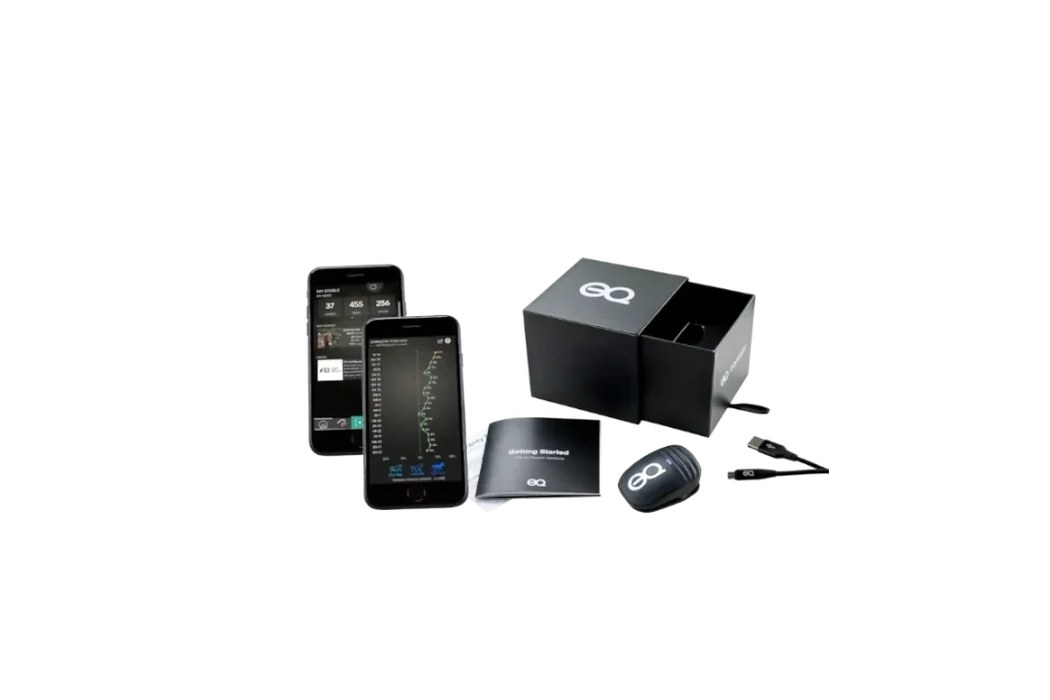
The Startup Teaching Horses to Talk Back
A horse can't tell you its left hind is off. Equestic's SaddleClip listens to the gait instead - and riders in 65 countries are now training to what the data says.

Garmin Spent 35 Years Being Unfashionable - Then the Fashionable Watch Blinked
It builds watches for people who leave the pavement, cockpits for people who leave the ground, and sonar for people who leave the dock. In 2025 the unglamorous approach paid a record $7.25 billion.

The Sports Fund Buying Everything Except the Scoreboard
Bluestone Equity Partners is making a focused bet on the businesses around the game - the software, services, venues and experiences that turn attention into durable revenue.

The Brazilian Shoe Giant That Learned to Run Three Brands at Once
Vulcabras owns Brazil's homegrown running champion and operates two global names. Its real product is the machine behind them - research, factories, retail reach and a feel for the Brazilian athlete.

The Swim Shop That Quietly Built a Software Lane
Spiraledge turned a niche online store into an aquatics system - one that sells the suit, outfits the team and follows the swimmer into the pool.

Dream Sports Lost Its Cash Engine. Now It Wants the Rest of the Fan's Day
The company that taught millions of Indians to manage imaginary cricket teams is attempting a harder rebuild: turning one enormous audience into many smaller businesses without the paid contests that once funded the machine.

The 123-Year-Old Startup That Put a Clock on Baseball
Thirty rival owners, one shared product, and a rulebook that finally admitted the game was too slow. Inside the business behind the batter's-box logo.

The 99-Year-Old Skate Company Turning Fit Into Hockey’s Next Product
Bauer changed hockey by fastening the blade to the boot. Nearly a century later, it is trying to own every millimeter between the player and the ice.

National Football League (NFL)
The NFL is less a single sports company than a carefully tuned operating system for 32 clubs - one that turns a short season into year-round media, data, merchandise and global fandom.

National Hockey League (NHL)
The NHL sells a scarce live spectacle, then makes it abundant across television, streaming, merchandise, data products and 32 local markets. Its century-old advantage is not merely hockey - it is the system that turns every puck drop into rights, reach and ritual.

GOLFTEC
The company turned a country-club basement experiment into 250-plus training centers and a database of 14 million golf swings. Its bet: that the fastest way to fix your slice is to measure it.

Betterguards Technology
Betterguards Technology is a German-engineered sports-tech company that builds adaptive ankle braces using a patented micro-hydraulic piston. Unlike rigid braces or taping, the BetterGuard moves freely with the athlete and stiffens only at the instant of a dangerous ankle roll, reacting several times faster than the human body. Founded in Berlin/Hennigsdorf and now with a New York operation, the company sells direct-to-consumer and has been adopted by athletes across the NBA, NFL, MLS, MLB, NCAA and Olympic programs after joining the 2022 NBA Launchpad cohort.

ScorePlay
ScorePlay is an AI-powered media asset management platform built specifically for the sports industry. It centralizes photos, videos and live broadcast content into one system, then uses computer vision and facial recognition to automatically tag athletes, sponsors and moments so teams, leagues and federations can find and distribute content in seconds instead of hours. Founded in 2021 and headquartered in New York, ScorePlay is used by 200+ sports organizations worldwide and raised a $13M Series A in February 2025.

Lava.ai
Lava.ai is a San Francisco software company that runs a Realtime AI customer-engagement platform for sports teams, live-event venues, retailers and large enterprises. Its engine ties together ticketing, point-of-sale, mobile wallets, apps, parking and live game feeds through 250+ integrations, then uses AI to deliver personalized offers, membership perks, stored-value rewards and clienteling 'in the moment.' Co-founded by TIBCO founder Vivek Ranadive and former TIBCO executive Wen Miao, Lava counts more than 50 franchises and brands - including the NBA, Real Madrid, the LA Rams and the Cleveland Browns - among its users.

Quintar, Inc.
Quintar is a Santa Clara-based extended reality company building a device-agnostic spatial XR platform that turns physical venues into digitally enhanced 'Quintar Places.' Its patented Q.reality platform combines a Spatial Visual Positioning System with True Spatial Video to overlay real-time, data-driven content on live sports and other events. Quintar is the official mobile AR and XR developer of the PGA TOUR and built PGA TOUR Vision, the first professional golf application for Apple Vision Pro. Founded in 2021 by former Intel CTO Dr. Sankar (Jay) Jayaram and Dr. Jeff Jonas, the company has raised roughly $11 million, including an $8.2 million Series A in 2024.

HELIOS
HELIOS is a Portsmouth, New Hampshire sports-technology company that builds a hardware-free wearable and app platform for hockey. Its Core sensor clips to a shoulder pad and uses stride-recognition machine learning to measure skating explosiveness, agility, speed and balance, then syncs the data with shift video so players and coaches get instant, benchmarked feedback the moment a shift ends. The company's stated goal is to give youth, college and pro players the same quality of performance data that was once reserved for elite programs, sold as a hardware-plus-software membership.

Pelotero
Pelotero is a Player Intelligence Platform for baseball and softball that blends computer vision, bat-sensor data, and professional coaching expertise to deliver personalized player development. Using nothing more than a phone video, the app scores a hitter's swing across 50+ mechanical attributes, identifies the gap between current performance and potential, and turns that data into individualized training plans. Founded by former MLB player Chris Colabello and hitting coach Bobby Tewksbary and led by serial software entrepreneur Bennett Fisher, the company has assessed more than 10,000 players and works with 40+ organizations plus scouting service Perfect Game.

Trace
Trace is an Austin, Texas sports technology company that uses computer vision, GPS sensors and AI to automatically film youth sports games and edit a personalized highlight video for every single player - no camera operator required. Originally founded as AlpineReplay to track skiing and snowboarding, the father-and-son team pivoted to team sports and built one of the largest video datasets in youth athletics. Trace has delivered millions of automated highlights to over a million athletes and raised a $47M Series C at a reported $190M valuation.
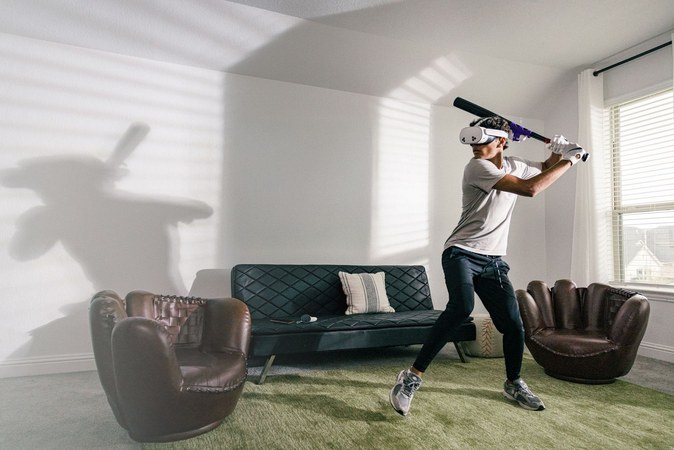
WIN Reality
WIN Reality is an Austin-based sports technology company that turns the Meta Quest headset into a virtual batting cage. Founded in 2018 by former Colorado Rockies GM Dan O'Dowd and his son, ex-pro player Chris O'Dowd, the company lets baseball and softball hitters take game-speed reps against a library of nearly two million real pitches from more than 7,000 pitchers - plus AI swing analysis through a phone. Its mission is to democratize professional-grade training, putting the same tools used by most MLB franchises into the hands of youth, travel-ball, high school and college players.