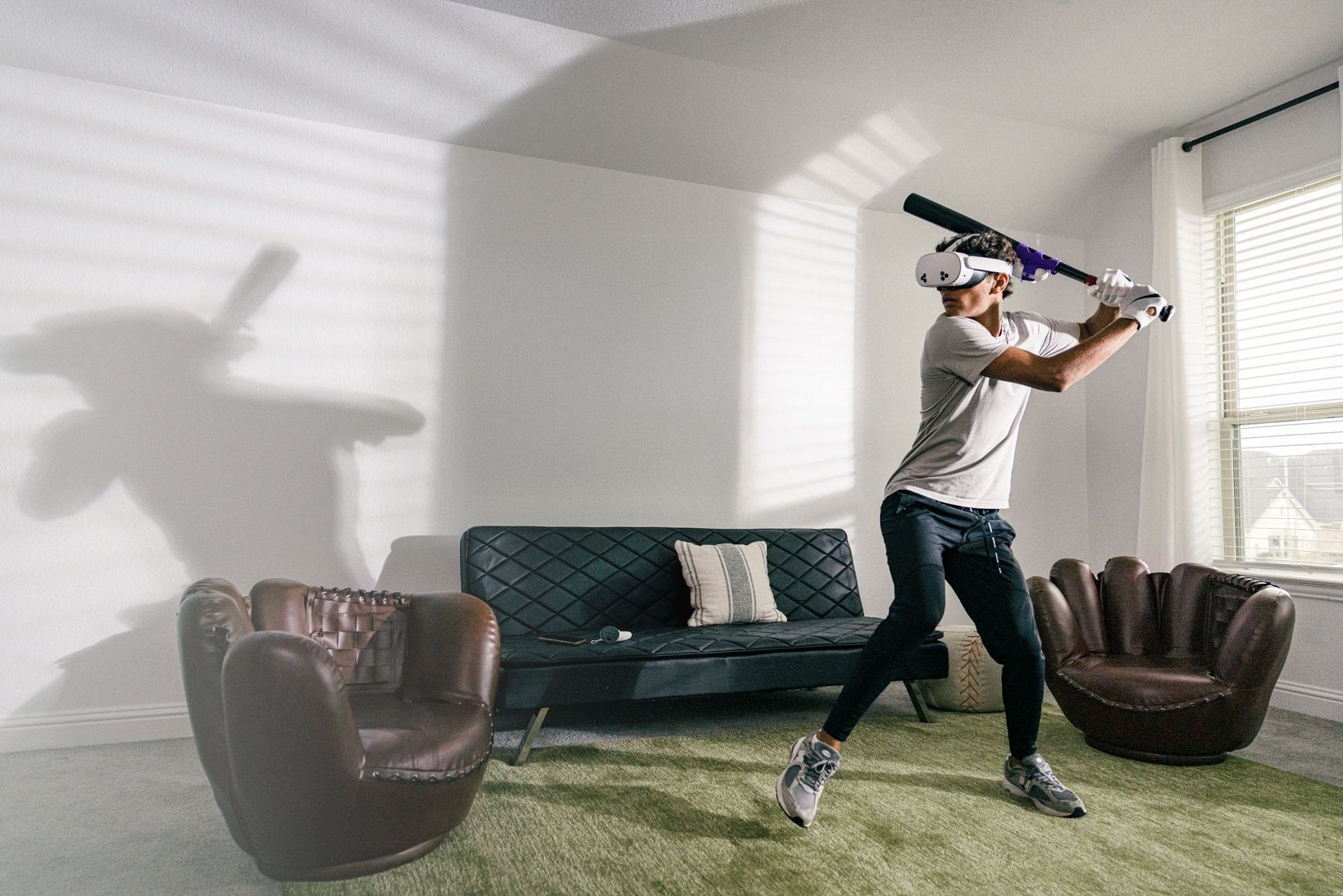
A living room becomes a stadium
It is a Tuesday in February, three months before opening day. A high-school sophomore in a garage in Ohio pulls a Meta Quest over her eyes and steps in against a pitcher she will never meet - a real arm, with a real release point, throwing at real speed. She takes 300 swings before dinner. No coach feeds the machine. No net needs untangling. The pitches remember themselves.
This is WIN Reality on an ordinary night. The Austin company has spent years answering a stubborn question in baseball: how do you practice the one thing the sport refuses to let you practice enough - seeing the ball? Hitting a baseball is often called the hardest act in sports. The cruel part is that the act you most need to rehearse, recognizing a pitch out of a hand at game speed, is the act you get the fewest reps at.
You can't hit what you've never seen
A live arm gets tired. A pitching machine has no release point and no intention. A travel-ball schedule costs a fortune and still only delivers so many at-bats. For a century the gap between elite hitters and everyone else was partly a gap in access - the pros saw more, sooner, against better. The kid in the garage saw a coach lobbing batting practice.
WIN Reality looked at that gap and saw a distribution problem dressed up as a talent problem. The pros were not simply more gifted; they were better fed. Major League clubs had analysts, scouting video, and facilities that manufactured repetitions. Everyone else had a bucket of balls and good intentions.
The irony was not lost on them: the most data-rich sport on earth had left its youngest players training the way their grandparents did.
A GM, his son, and a headset
Dan O'Dowd ran the Colorado Rockies for 15 years and won two Executive of the Year awards. He knows what a front office spends to shave points off a slugging percentage. His son Chris O'Dowd played in the White Sox, Braves, Rockies, and Padres organizations - he knows, from the batter's box, what those tools feel like when you finally get them.
In 2018 they made a bet that virtual reality had quietly gotten good enough, and cheap enough, to carry pro-grade training into anyone's home. Not a gimmick. A tool. The kind of thing a Major League hitting coordinator would respect, running on a headset a parent could actually afford.
It helped that one founder had bought the expensive version of everything and the other had swung at it.
What you actually do with it
Put on the headset and you are standing in a stadium, facing a pitcher pulled from a library of nearly two million real pitches thrown by more than 7,000 real arms. The release point is true. The speed is true. You read it, you decide, you swing - holding your own bat through the WIN Bat Attachment, or a shortened controller-bat made for indoor safety. Then you do it again, hundreds of times, in the time it would take to drive to a field.
TrainVR
The core VR cage on Meta Quest. Game-speed pitches, true release points, timing and recognition reps that no live arm could supply.
SwingAI
Point your phone at your swing and get AI-powered analysis and coaching feedback in seconds - no coach required.
SwingConnect
A mobile experience built with Babe Ruth League to put structured training in the hands of youth players.
Blast Motion
Acquired in 2025: bat-sensor and motion-analysis hardware across baseball, softball, and golf.
// Four products, one stubborn idea: a rep you can measure beats a rep you can only feel.
From a bet to a standard
The numbers that ended the argument
Skepticism is the correct reflex for any sentence containing the words "virtual reality" and "performance." So WIN Reality ran the study with Major League Baseball itself. The finding: hitters using the platform raised their batting average and on-base percentage by margins that, in a sport measured in fractions, are not small.
MLB hitters, before and after
Gray = baseline, orange = after WIN reps. In a game where a .020 jump changes a contract, a 19% lift is loud.
The adoption tells the same story without the lab coat. The majority of MLB franchises use it. More than 100 NCAA baseball and softball programs use it. The same tool sits in big-league cages and in garages - which was the entire point.
Meta Quest
The hardware platform that made a pro-grade cage affordable.
Major League Baseball
Joint performance study; SmartPark data MLB-certified for accuracy.
Babe Ruth League
Youth distribution through the SwingConnect app.
AWRE Sports
Automated swing biomechanics for coaches and players.
Democratize the reps
WIN Reality's stated goal is not "VR baseball." It is access. The mission is to hand athletes of every age and level the exact tools the professionals use, and to stop letting geography, budget, or luck decide who gets to see a good slider before it is too late to learn.
That mission explains the moves that might otherwise look scattered - a phone app for swings, a youth partnership, a hardware acquisition. Each one widens the door. SwingAI reaches anyone with a phone. SwingConnect reaches the youngest players. Blast Motion adds the sensor layer. The headset was never the destination; it was the first room in a much larger house.
Back to the garage
Return to that sophomore in Ohio. Twenty years ago her ceiling was set partly by her zip code - by who could coach her, who could throw to her, how many real arms she would ever face before the games that counted. The expensive version of development belonged to someone else's kid.
Now she takes 300 game-speed swings against real pitchers on a Tuesday, gets her swing graded by an app, and walks into the season having already seen the pitch that used to freeze her. The gap between her and the kid with the private facility did not close because she got more gifted. It closed because the tool got cheaper than the gap.
WIN Reality did not invent the desire to hit better. It removed the excuse that you couldn't practice the part that mattered. The pitches remember themselves now. Anyone can step in.