- Athos put surface-EMG sensors into compression clothing so a wearer could see which muscles were working, how hard, and with what left-right balance.
- The original consumer arithmetic started at $199 for the Core plus $99 per garment; later bundles rose to $348 and $398.
- Its sharper edge was internal load: GPS sees distance and speed, while Athos tried to show the muscular cost of producing them.
- The public story moved from solo gym users toward coaches, teams, researchers, and military readiness programs.
- The transferable lesson: build the measurement around a decision someone urgently needs to make.
There is a small treachery in every squat. From across the gym, the repetition looks symmetrical: bar level, knees bent, athlete upright. Inside the body, however, one leg may be bargaining with the other. A tired glute can quietly pass work to a hamstring. An old injury can teach the brain a workaround that persists long after the pain is gone. The eye sees one squat. The muscles know there were two.
This was the gap that bothered Dhananja “DJ” Jayalath and Chris Wiebe, engineering students at the University of Waterloo. They wanted better feedback from their own workouts and could not afford a personal trainer. The available trackers counted steps, estimated calories, and followed motion. None could answer the question they cared about: which muscle actually did the work?
Their answer became Athos. Founded in 2012 and legally called Mad Apparel, Inc., the company took electromyography - the measurement of electrical activity produced by muscle - out of the clinic and stitched it into close-fitting gym clothes. The compression mattered. Electrodes need reliable skin contact. The tight shirt or shorts were not merely costume; they were part of the instrument.
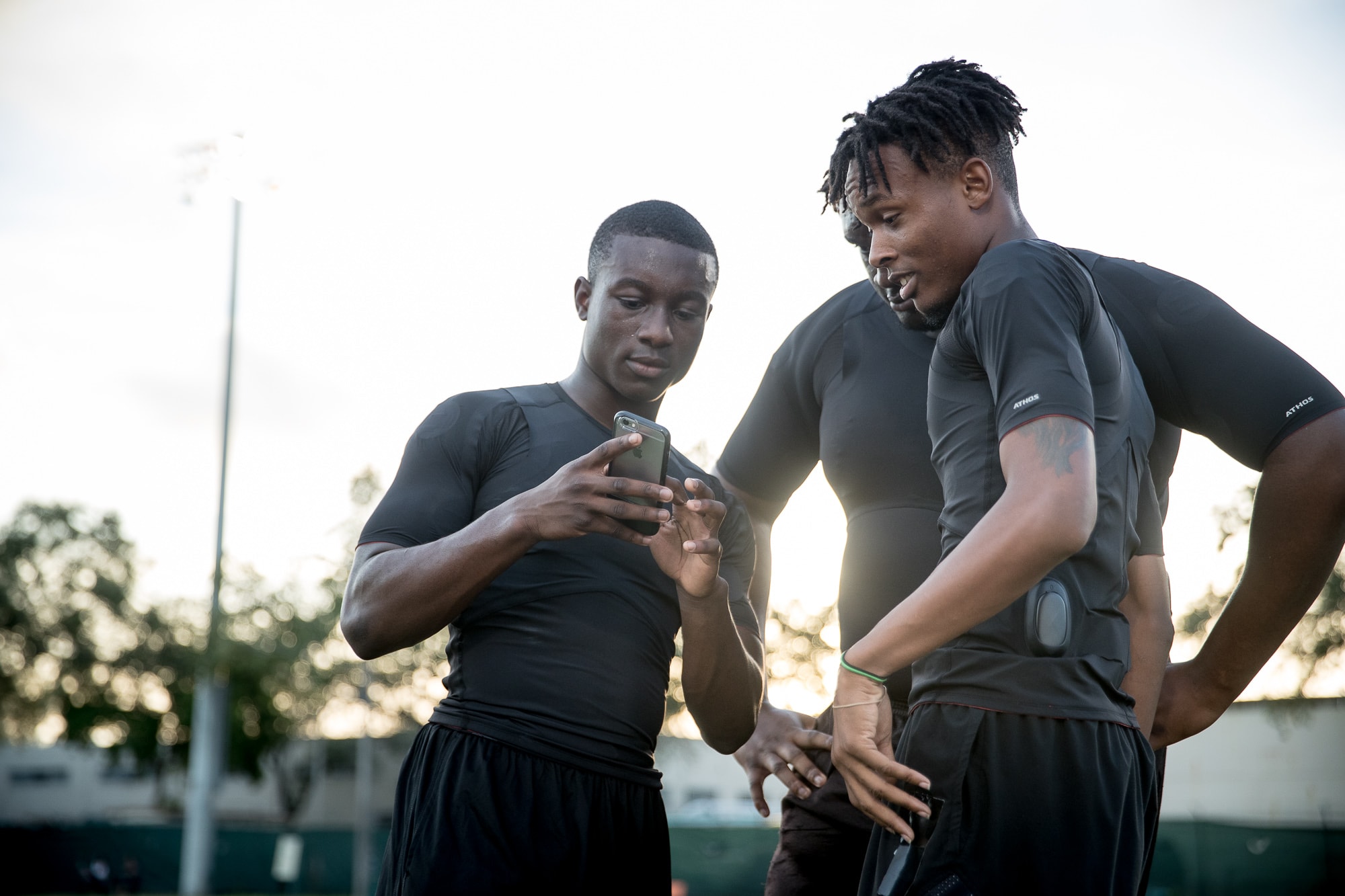
The egg on the chest
The system had three pieces. Sensors lived in the fabric. A removable device called the Core snapped onto the garment, interpreted the signals, and sent them over Bluetooth. An iPhone app converted that stream into colored muscle maps, effort scores, and left-right contribution. The Core weighed 0.78 ounces, had a built-in accelerometer, and promised up to ten hours of use. Take it off, and the garment could go through the wash.
The design was clever because it hid something that had previously been awkward: laboratory EMG usually meant adhesive electrodes, careful placement, cables, and a controlled room. Athos reduced the ceremony to getting dressed. In one team configuration, a shirt and shorts together carried 18 surface-EMG sensors, with four heart-rate sensors in the top.
What Athos sold was not another record of movement. It sold an interpretation of effort. Two athletes can run the same distance at the same speed and accumulate the same external load. One, returning from injury or carrying fatigue, may recruit far more muscle to do it. GPS calls the performances equal. Athos asks what each performance cost.
A portable lab gets a retail price
In 2013, Social+Capital put in $3.5 million after Chamath Palihapitiya encountered the founders’ demonstration at Waterloo. Jayalath passed on a hardware job at Apple; Wiebe gave up a chip-design role at Analog Devices. By late 2015, after a $35.5 million Series C led by Social Capital with MAS Holdings, Lightspeed, Felix Capital and earlier backers, Athos had raised roughly $51 million.
The early retail equation looked almost friendly for a laboratory: $199 for the Core, then $99 for a shirt or shorts. But consumer hardware has a habit of revealing its full bill slowly. Athos required the correct tight-fitting garment, a charged module, calibration, an iOS device, and enough curiosity to read a muscle map between sets. Later product pages listed a men’s shirt with Core at $398 and shorts with Core at $348. Contemporary coverage put a full set near $700.
“It really enlightens you to see what you’ve been doing wrong for so many years.”Greg Jennings, Super Bowl champion, in an Athos testimonial
That sentence contains both the attraction and the trouble. Seeing the error is exciting. Deciding what to do next is the valuable part. For an ordinary exerciser, the app could be a mirror with graduate-level opinions. For a strength coach, athletic trainer, or researcher, the same data could change tomorrow’s session.
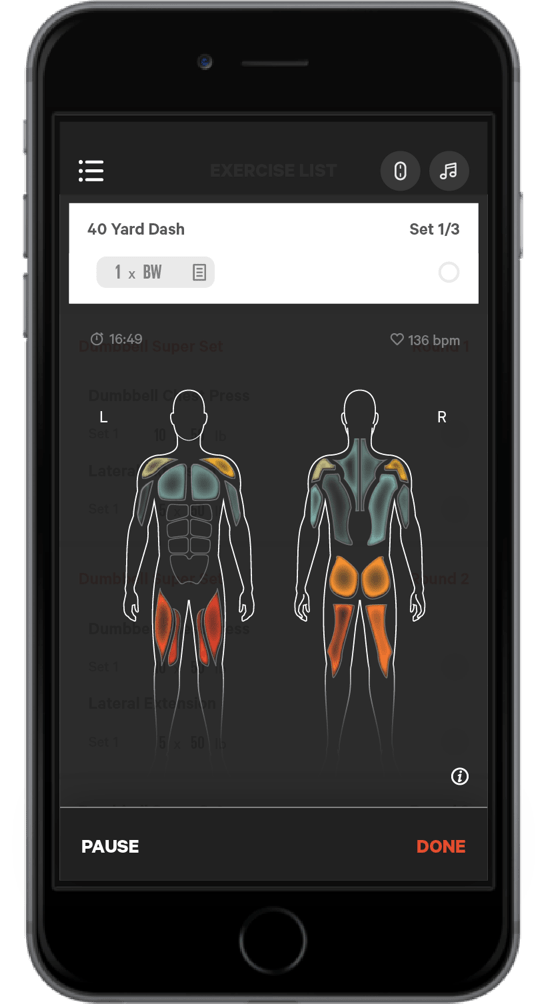
The customer moved closer to the coach
Athos’s public language changed. Early stories imagined an individual gym customer getting more from a workout. Later pages centered on team hubs, athlete-specific calibration, real-time activation, training-load analysis, and coaches. The Golden State Warriors tested Athos technology with their Santa Cruz affiliate. The company’s LinkedIn description says it has worked with professionals across major leagues, elite collegiate programs, and warfighters in several U.S. military branches.
The shift makes economic sense, even without a grand declaration of a pivot. The more specialized the signal, the more valuable an interpreter becomes. A coach can compare sessions, spot compensation, and alter workload. A tactical program can ask whether remote trainees are physically ready. In May 2020, the Air Force awarded Mad Apparel $737,882 to test Athos wearables and AI training recommendations with Tactical Air Control Party trainees. A separate AFWERX award followed in 2021 for remote physical training with wearable sensors.
The credibility question mattered. In a 2018 peer-reviewed study of 12 healthy subjects, Athos measurements were consistent with a research-grade Biopac EMG system for the tested exercises. The paper also supplied the useful footnote that product marketing tends to misplace: 18 percent of sets were removed because at least one muscle had unreliable contact quality. A wearable can simplify a laboratory, but skin, sweat, fit, and motion do not stop being physics.
What builders can steal
Athos did not make a better step counter. It measured muscle contribution, something common trackers could not see.
Textile electrodes and a removable Core replaced sticky pads and cables with the familiar act of putting on clothes.
No two bodies produce identical signals. Athos made individual calibration part of the product, not an inconvenient disclaimer.
Muscle data matters when it changes load, technique, recovery, or readiness. The useful output is action, not a prettier chart.
This approach fits settings where small errors are expensive: return-to-play work, elite performance, repeated tactical training, or research. It is less convincing when a customer wants casual activity tracking, uses an unsupported phone, dislikes compression clothing, or lacks a coach who can translate activation into programming. It also depends on good contact and repeatable calibration. The instrument is worn, so fit is part of data quality.
Where the idea loses leverage
Wearable EMG is a poor bargain when the decision is low stakes, a cheaper heart-rate or motion sensor answers the real question, garments cannot maintain consistent skin contact, or the user will not tolerate setup and interpretation. Sophistication does not rescue an unnecessary measurement.
Athos’s most durable idea is not that every shirt should become a computer. It is that motion tells only half the story. A box score records the distance, the repetitions, the work. The body keeps another ledger - who contributed, who compensated, and what the effort cost. Athos spent years trying to make that private accounting visible. The shirt listened. The market’s answer was quieter: show the numbers to someone with a reason to act.