CEO / Betterguards Technology
TonyVerutti
He sells a brace that does nothing until the split second it does everything. A seatbelt for the ankle, built in Germany, sold to the NBA.
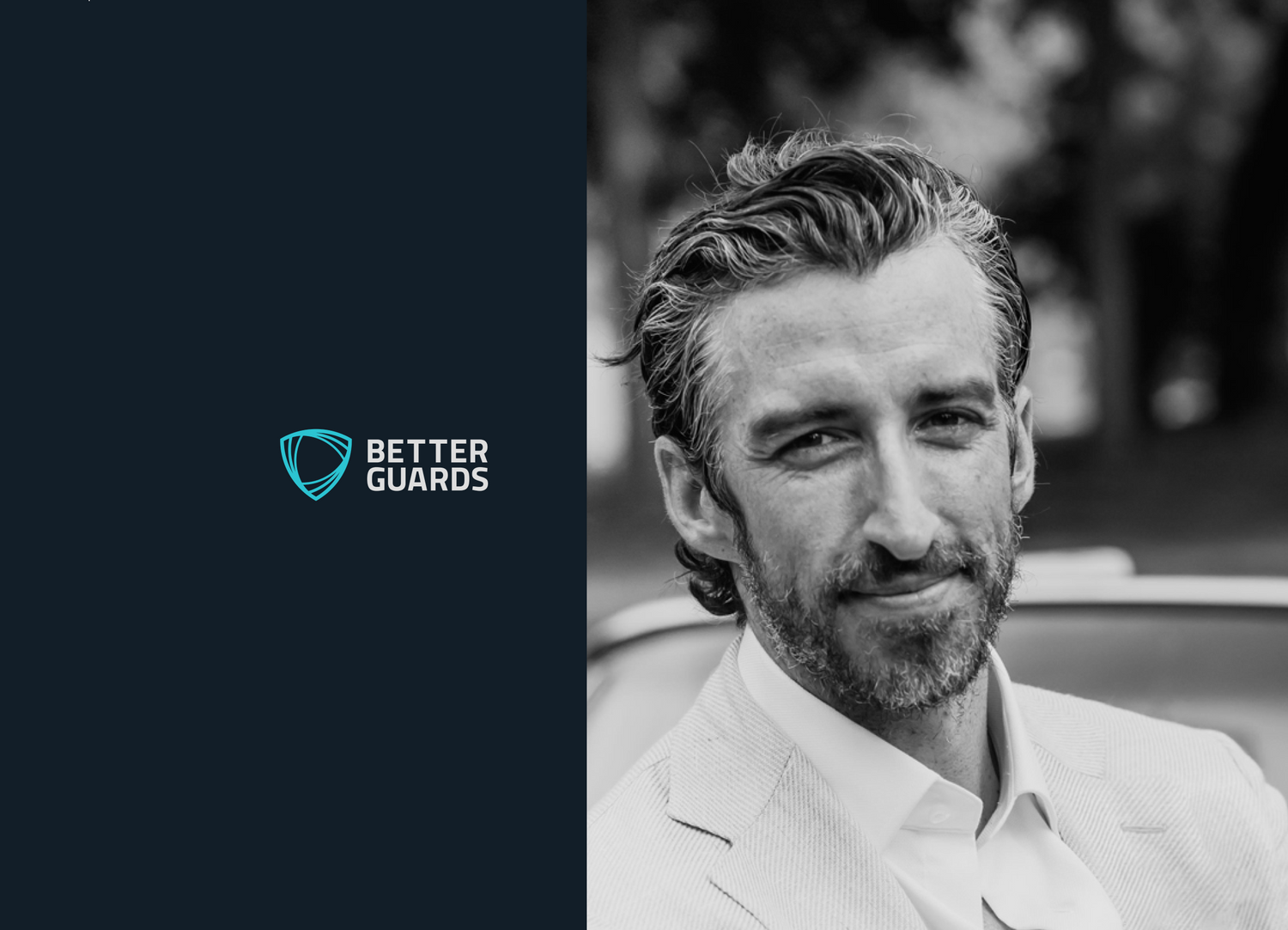
He sells a brace that does nothing until the split second it does everything. A seatbelt for the ankle, built in Germany, sold to the NBA.
Tony Verutti runs a company that solved a problem most people treat as weather. Every year, by his count, 200 million ankle injuries happen worldwide. The standard response has been the same for decades: strap the joint down, lose the movement, wait for it to heal. Betterguards, the German company Verutti has led since April 2023, sells the opposite bargain. Its brace uses a micro-hydraulic piston that behaves like a seatbelt. During normal play it stays flexible and does effectively nothing. The instant the ankle twists past a threshold, the piston goes rigid, roughly three times faster than the body's own protective reflex, then releases once the danger passes.
That is the entire product, and it is also the entire argument. Verutti did not invent the piston. Betterguards was founded more than a decade ago by biomechanical engineers and sports scientists near Berlin. What Verutti brought, when the board handed him the top job, was a way to explain the thing to people who buy sneakers, and a plan to get it onto the ankles of professional athletes. Under him the brace has reached roughly 30 NCAA Division I programs, Tier 1 players in the NBA and NFL, and four national Olympic teams.
His path there is a little strange. He spent the first decade of his career in management consulting, working with high-tech firms across Silicon Valley, then went to Milan for an International MBA at SDA Bocconi. Hardware for ankles is not the obvious next chapter for a Silicon Valley consultant with an Italian business degree. But Verutti had a head start nobody would want: he tore his ACL four times as an athlete, and his father is a physical therapist. He learned the recovery business the hard way, from the inside, long before he ran a company built to shrink it.
At a glance
Role
Chief Executive Officer, Betterguards Technology
Since
April 25, 2023
Education
International MBA, SDA Bocconi (Milan)
Prior life
A decade in management consulting for Silicon Valley high-tech firms
Based
New York City & Hennigsdorf/Berlin, Germany
People are creating products to fit the code rather than thinking about what the athlete needs.Tony Verutti, on why most ankle braces are built around insurance reimbursement
The brace stays flexible during play. Verutti's line: athletes should not restrict movement for a whole game to guard against an injury that happens in a split second.
A hydraulic piston engages instantly when the ankle rolls past a threshold - lateral, where 90% of sprains happen - then releases. Roughly 40% lighter than comparable braces.
The goal is to get athletes back to play sooner and keep them there. Verutti frames the future as "thriving, not just surviving."
Spends the first decade of his career in management consulting, working with high-tech firms across Silicon Valley.
Earns an International MBA from SDA Bocconi in Milan, Italy.
Betterguards is chosen as one of the first five companies in the NBA's Launchpad program - the accelerator that, in Verutti's words, "set us on the journey to develop The BetterGuard as our own product."
Appointed CEO of Betterguards Technology, effective April 25, to lead global expansion across Europe and the U.S.
Oversees the launch of BetterGuard 2.0 at the NBA Summer League and pushes adoption across the NBA, NFL, NCAA and Olympic teams.
We always say that Betterguards makes products based on science, not tradition.
Athletes should not be forced to restrict movement for the entirety of a game to protect against an injury that occurs in a split second.
Just like pro-model shoes can be inspiring, we see Betterguards becoming a kind of badge of honor.
My mission is to make this a piece of non-negotiable sports equipment.
Verutti tells the story plainly. "I have been an athlete my entire life, throughout high school and college, and during that time had many injuries. I had four ACL tears and injured my ankle as well. My dad's a physical therapist, so I spent a lot of time in rehabilitation." Most people would file that under bad luck and move on. He filed it under research. The passion for helping others recover, he says, is what pushed him toward injury prevention as a business rather than a memory.
His sharpest critique of the industry he entered is structural, not technical. Ankle braces, he argues, are largely designed around the codes that insurers will reimburse. Build to the code and you get paid; build to the athlete and you are on your own. Betterguards went direct-to-consumer, selling mostly to athletes between roughly 12 and 20 and to professionals, and leaned on scientific validation rather than a doctor's prescription pad. "People are creating products to fit the code," he says, "rather than thinking about what the athlete needs."
He is also, unmistakably, selling a brand. He wants the brace to carry the cultural weight of a signature sneaker - something an athlete wears on purpose, not because a trainer taped it on. "Just like pro-model shoes can be inspiring, we see Betterguards becoming a kind of badge of honor." It is an ambitious thing to say about a piece of orthopedic hardware, and it tells you which half of the market Verutti came up in. The engineering is German. The story is Silicon Valley.
Around 200 million ankle injuries occur worldwide, and we feel a deep responsibility to protect athletes at every level.Tony Verutti, on joining Betterguards