A fan taps a phone in Toronto. A television director in London asks for a new graphic. A referee waits for a line to be drawn across a football pitch. Three very different moments, but the machinery behind each may come from the same company. Deltatre is the rare sports business that can be everywhere on match day and almost nowhere in the fan's vocabulary. It builds the pipes, screens and control rooms; its clients keep the badge on the door.
That obscurity is intentional. Deltatre is a business-to-business technology operator, not a consumer league or a rights buyer. Its customers include the NFL, UEFA, NBA, NHL, MLB, MLS, UFC, WWE, BBC, Sky, ATP, Serie A and World Rugby. They hire it to stream video, publish scores, run websites and apps, collect data, create broadcast graphics, support officials and design the journey from casual viewer to paying subscriber.
The product is the nervous system
Most vendors can be explained by pointing to one box. Deltatre requires a diagram. VESPER manages an end-to-end video service, including content, security, analytics and monetization. AXIS gives editorial teams a library of more than 50 interface modules for arranging live, linear and on-demand programming without asking an engineer to rebuild the page. FORGE handles high-volume publishing for sites such as NHL.com and MLB.com. DIVA turns video into something viewers can explore, with data and interactive layers. NEXUS, publicized in 2026 with New Zealand Rugby, joins editorial and streaming experiences in one product ecosystem.
Those names map to three ways of buying. A customer can take a managed platform, select modules around a technology stack it already trusts, or commission a tailored service. That range matters when two organizations both say “streaming” but mean different things. A film service cares about seasons and household profiles. A league cares about blackouts, an immovable kickoff and a scoreboard that must agree with the official feed. Deltatre's expertise is making the product bend without letting the live operation buckle.
Then there is the machinery around the screen: live production, data collection, automated graphics and officiating. Through Sportec Solutions, its joint venture with Germany's DFL, Deltatre offers video assistant referee systems, goal-line technology, semi-automated offside and virtual offside lines. The company says it is one of only two providers with FIFA Quality Pro certification for officiating technology. A CMS update can wait. An offside decision cannot.
One match, four pieces of machinery
The business model follows the layers. Deltatre licenses configurable software, builds bespoke products and sells the managed operations needed to keep them alive. Customers can use an integrated platform or mix modules into an existing stack. Those customers earn from subscriptions, advertising, in-app purchases and distribution. Deltatre gets paid for the technology and expertise, without gambling on who wins the rights auction.
“We recognize that our work is behind the scenes, to help the sports and entertainment clients we serve.”Giampiero Rinaudo, co-founder
A stopwatch grew into a platform
Giampiero Rinaudo and Luca Marini founded Deltatre in Turin in 1986. The opening assignment was deliciously literal: Formula 1 timing and graphics, working with Olivetti. In 1987 the team launched a teletext-based commentator information system at the athletics world championships. By 1995 it was publishing championship results to the web in real time. The media changed; the requirement did not. Capture an event, interpret it immediately and deliver it before anyone loses patience.
The company began working with UEFA in 1994. It delivered live video for NBC at the 2008 Beijing Olympics and won an Emmy the following year. London 2012 brought a Games-time website, mobile site and results app, plus BAFTA-winning work on Channel 4's Paralympics coverage. FORGE later cut MLB.com's publishing time by a reported 95 percent. The name stayed off the scoreboard, but its fingerprints spread across it.
Timing the beginning
Formula 1 consulting, timing and graphics with Olivetti.
Video becomes interactive
DIVA launches after the company's Olympic live-video work.
The front end arrives
Massive Interactive adds interface design and OTT experience technology.
Streaming gets larger
Endeavor Streaming and its VESPER platform join Deltatre.
A 40-year handoff
Marc Watson becomes CEO as Andrea Marini moves to deputy chairman.
The $127 million missing piece
Deltatre's expansion was not merely a heroic march from teletext to cloud. It had a gap. The company was strong in back-end video delivery, but customers increasingly wanted a single supplier to handle the face of the product too. Requests for proposals were shifting away from coalitions of specialists. Rights holders did not want to referee their own technology vendors while also running a season.
In 2018, Deltatre acquired London-based Massive Interactive in a cash-and-earnout deal valued at up to $127 million. Massive brought user interfaces and audience engagement; Deltatre brought streaming infrastructure, data and live-sport experience. Andrea Marini, then president of the Americas, described complementary skills with little overlap. The purchase made the strategic answer tangible: join the front and back ends, then sell accountability along with software.
Buyers wanted fewer seams
Multi-vendor bids were giving way to one end-to-end relationship. Deltatre bought the missing interface layer.
Up to $127 million
The 2018 Massive deal combined cash and earnouts and took the workforce close to 1,000.
There is a second lesson in what Deltatre declined to buy. Rinaudo said the company deliberately avoided acquiring, trading or distributing sports rights because doing so would put it in competition with its clients. That boundary distinguishes it from vertically integrated media companies. The pitch is simple: Deltatre may understand the audience, but it will not turn around and bid for the match.
The moment the price almost lost
One early principle came with consequences. Rinaudo told an interviewer that Deltatre insisted on charging full price for its work, a stance that nearly cost the company the London 2012 Olympic contract. The contract survived. The more interesting point is what failed first: not the software, but the commercial conversation. Deltatre refused to position mission-critical delivery as a cheap commodity.
That posture only works under particular conditions. The supplier must have scarce expertise, a record under live pressure and a customer for whom failure costs more than the discount saves. It does not travel well to routine websites, small audiences or buyers willing to assemble lower-cost point products. An integrated platform can also become a concentration risk. If one vendor controls publishing, identity, video and operations, replacing it is a renovation, not a quick swap.
The same caveat applies after Deltatre's 2025 acquisition of Endeavor Streaming. The combined portfolio is unusually broad: D3 VOLT, FORGE, AXIS, DIVA and VESPER, plus strategy and growth services. Breadth wins when those pieces behave like one system. It becomes overhead when product names overlap, integrations drag or a client needs only one excellent tool. Deltatre's next contest is less about adding boxes than making the larger box feel simple.
A playbook worth stealing
Deltatre fits between specialist vendors and in-house engineering. Sportradar, Stats Perform and Genius Sports compete around data; Brightcove, Kaltura, Quickplay and ViewLift compete around video; graphics companies and agencies fight for other slices. Deltatre's difference is the promise that data can flow from the field to the graphic, the app, the stream and the subscriber record without the client stitching every handoff together.
Five things another operator can copy
- Own the ugly handoffs. Integration becomes valuable where customers are tired of coordinating specialists.
- Stay out of the customer's core conflict. Deltatre's no-rights rule makes partnership easier to believe.
- Productize repeatable work, but leave room for bespoke deployment when the client is genuinely unusual.
- Measure operational outcomes. A 95 percent reduction in publishing time says more than a feature list.
- Build for the spike, not the average. Live sports audiences arrive suddenly and complain publicly.
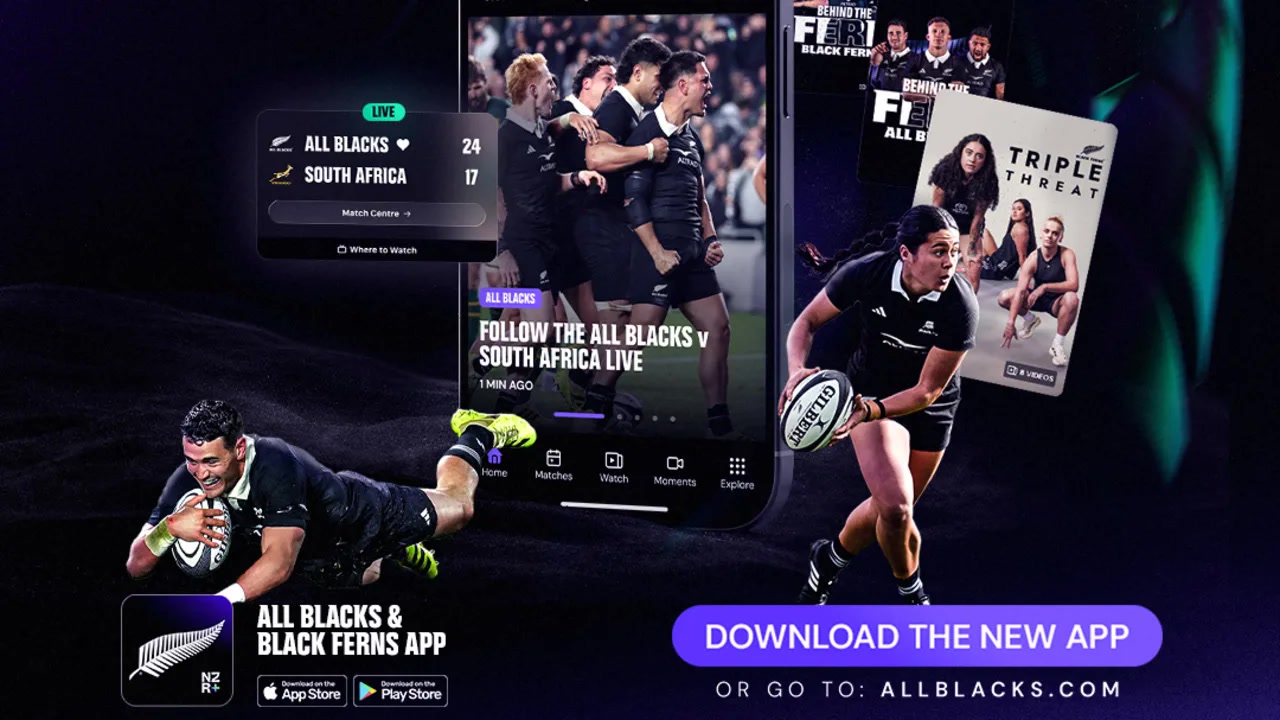
The latest projects show the idea in practice. New Zealand Rugby's 2026 digital home joined sites, apps, a match center, streaming and an archive, building on NZR+, which had attracted nearly 450,000 registered fans. DFB.TV+ uses VESPER for a federation-owned streaming service. ATP Media is introducing automated, data-led graphics and drone augmented reality. These are not identical briefs. Deltatre's bet is that they are variations of one problem: turning an event into a durable direct relationship.
Forty years after Turin, the company says more than a third of its 1,000-plus employees have stayed for at least eight years. That continuity matters in a field where the glamorous part lasts 90 minutes and the preparatory work takes months. The useful result is not technological theater. It is that the score arrives, the stream holds and the line appears before the argument begins.