The modern sports highlight arrives with the manners of a firework. A tunnel walk, a laughing player, a confetti-soaked embrace - it flashes across a phone, gathers a small republic of comments and disappears beneath the next bright thing. The machinery that moved it there is meant to be invisible. Daniel Kirschner has spent more than a decade making that machinery work.
His company, Greenfly, collects short-form photos and video, makes the material searchable and sends it to the staff, athletes, sponsors and media partners who can use it. The product occupies a peculiar but valuable patch of ground. It sits after the camera and before the post, where raw emotion meets a swamp of permissions, filenames, text threads, cloud folders and clocks. In sports, a clip delivered tomorrow may be a record. Delivered now, it can become part of the event.
Kirschner did not take the customary route to this job. He studied at Harvard, earned his law degree magna cum laude from Harvard Law School and served as president of the Harvard Law Review. He worked in the U.S. Department of Justice, then at the Federal Communications Commission as counselor to the general counsel. In 2012, he helped the FCC's Open Internet Advisory Committee begin its work. His world was internet policy: the rules, incentives and institutions beneath the screen.
A lawyer walks into a locker room
Then came an instructive detour. Kirschner moved to Los Angeles and joined Activision Blizzard as a senior corporate affairs executive and counsel. The lawyer edged closer to software, games and the commercial physics of digital attention. About 50 miles away, his cousin Shawn Green was worrying at a problem left over from baseball.
Green, a two-time MLB All-Star, still received requests for timely interviews and reactions after retirement. The exchange was awkward. A broadcaster wanted a relevant voice now; a former player wanted to answer in his own time and in his own way. Green imagined a network that could connect rights holders with people close to a story. He built a working video Q&A product and tested it in Toronto with former Blue Jays around the 2014 trade deadline.
He also knew the person he wanted beside him. Kirschner and Green are cousins who had known each other since birth. Green has described Daniel and his two brothers as his closest cousins. Family affection is no guarantee of corporate harmony, of course. Thanksgiving has launched fewer software companies than arguments. But their histories provided something useful: Green understood the athlete's irritation, while Kirschner understood systems and had long wanted to build a startup.
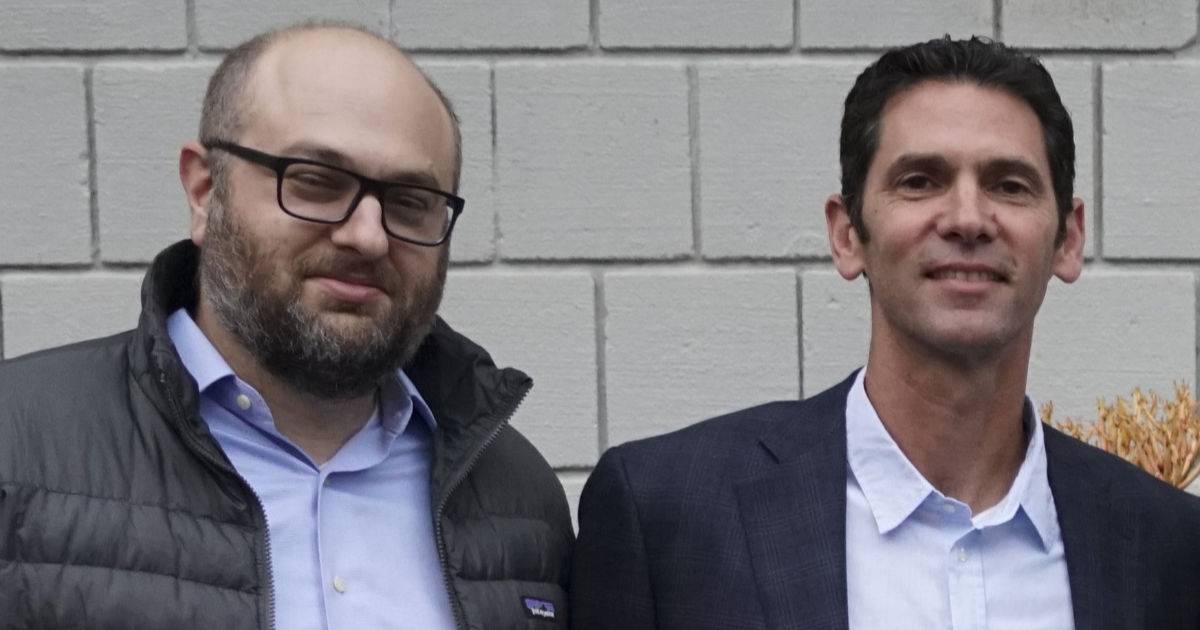
They raised a small friends-and-family round, hired engineers and incorporated Greenfly in 2014. The name is a wink: in baseball slang, a greenfly is someone who bugs players for autographs, souvenirs or favors. The company's first version tried to make a better sort of asking.
“One of our first contributors was LeBron James, who used the platform to give a tour of his shoe closet.”Daniel Kirschner, recalling an early Greenfly moment
The shoe-closet tour became one of Bleacher Report's better-performing videos for weeks. Other experiments followed: celebrity pep talks around March Madness, work with NBC Sports and Notre Dame, and requests for reactions from athletes. The clips were charming because they felt close to the person holding the phone. Their rough edges were evidence, not defects.
Yet the more durable discovery was happening behind the clips. Customers did not merely need a polite way to ask for a video. They needed a shared place to collect media, organize it and move it through a network. Kirschner helped turn Greenfly from a series of individual solicitations into collaboration software - less digital autograph seeker, more operating layer.
The phone is not an institution
Kirschner's legal and policy background becomes most visible when he describes the boring failure modes. A social media manager may keep athlete relationships in personal texts and WhatsApp conversations. This feels swift until that employee leaves. Then phone numbers, context, history and the unofficial map of who answers what all walk out together.
Greenfly's answer is continuity. The relationships remain human, but their working history persists in a system the next staff member can enter. Athletes still choose what to share and how to say it. Organizations gain a durable way to provide the raw material, set a brief, record rights and preserve context. Kirschner calls the objective a balance between authenticity and quality.
That balance explains why Greenfly is more interesting than a bulk-transfer service. Sports content is not a pile of interchangeable files. The same photograph can matter differently to a player, a league, a broadcaster and the sponsor whose logo appears in frame. Distribution is partly a question of identity and timing, but also of relationships. Software must route without sanding away the person.
Teaching the archive to recognize a game
Scale created the next problem. It is easy to generate oceans of video. It is much harder to locate the right six seconds before attention drifts elsewhere. Generic visual tools could recognize a face under friendly conditions. Sports supplies helmets, odd angles, uniforms, obstructed faces, logos and actions that matter only in context.
Greenfly found a specialist in Miro AI. The company had trained computer-vision systems to identify athletes, teams, brands and scenes in sports images and video. Kirschner's team first became a customer, then acquired Miro in a multimillion-dollar transaction in 2023. He praised both the technology and the team's habit of pragmatic, generous problem solving. The acquisition also brought RunnerTag, a service for identifying endurance-event participants.
This was AI attached to a specific queue of work. Greenfly already had media entering its platform and thousands of people waiting for relevant assets. Better metadata meant faster search, more precise feeds and less human trawling. Kirschner's proposition is blunt: abundant content destroys value when nobody can find the useful part.
In 2024, Greenfly closed a $14 million equity round led by ADvantage, with participation from Ryan Sports Ventures, Mercato Partners and NBA Equity, among others. Kirschner said the money was for growth: serving large customers, bringing smaller organizations onto the platform and expanding abroad. At the time, he identified Europe, Asia, South America and Africa as opportunities.
Fandom as a distribution system
Kirschner talks about short-form media with an operator's vocabulary and a fan's susceptibility. In recent writing, he has described photos and videos as a language for sharing stories. He has also lingered over the communal delirium of a World Cup match on a shopping-mall screen and the moral posture of optimism in a basketball comeback. The posts are revealing. His business depends on the claim that these compact images do more than market a larger product. For many people, they are where the sport first becomes personal.
That idea has widened Greenfly's map. The company works across professional leagues and teams, broadcasters, entertainment and college athletics. In 2026, Kirschner highlighted a BYU partnership spanning 21 varsity programs and more than 760 student-athletes. The practical promise was a common content system. The larger argument was that athlete visibility, recruiting, sponsorship and institutional storytelling now share the same infrastructure.
He was announced for a related talk at the 2026 PEAK SportsTech Conference: content is becoming a revenue driver, so organizations need an operations layer capable of scaling it. The phrase “operations layer” will never inspire face paint. It is still the right phrase. Stadium emotion may be spontaneous; delivering it to millions of different people is an industrial act.
“The future of the fan experience will be powered by AI curation.”Daniel Kirschner on the Miro AI acquisition
There is a risk in every prediction about artificial intelligence: the machine can swallow the people in the sentence. Kirschner's more compelling work points the other way. Identification and routing are useful because they return a moment to the person for whom it carries meaning - the athlete who lived it, the fan who recognizes it, the sponsor connected to it, the editor racing the clock.
Greenfly's evolution also offers a quieter lesson in company building. The original idea did not need to be wrong for the larger business to be elsewhere. A better request produced good videos. Repeating that request exposed a workflow. The workflow exposed a network. The network produced so much media that it required intelligence. Each stage was already hiding inside the previous one.
Kirschner's career has followed a similar logic. Law led to internet policy; policy led closer to technology; games led to sports media; a cousin's annoyance led to infrastructure. From the outside, the route looks winding. From inside the work, it has a consistent subject: how people, rules and technology arrange themselves around attention.
The next time a locker-room celebration reaches a player's feed while the floor is still sticky, no one will applaud the metadata. They should not. Good plumbing allows us to admire the fountain.