Aviv Arnon arrived at his first meeting with David Stern wearing torn jeans. The former NBA commissioner noticed. Years later, Arnon was still hearing about it. In his defense, the WSC Sports co-founder explained that his other trousers had been “off-duty that day.” Some introductions produce a business card. This one produced a running joke.
The incident is a useful entry into Arnon’s working life. He belongs to a group of engineers who became familiar faces in sports media, carrying a technical proposition into rooms full of people accustomed to hearing technical propositions. Their software could find the action inside a broadcast and turn it into clips. The people across the table needed a reason to believe it.
Today, Arnon is WSC Sports’ co-founder and Chief Business Development Officer. His work concerns the commercial life of a sporting moment: who owns it, who wants it, how it reaches them, and what happens next. It is a career built around an oddly intimate transaction. Somewhere, a person wants to watch one player do one thing again.
A hobby with a useful replay
Arnon studied electrical engineering at Tel Aviv University, then returned for an MBA. His early professional experience included systems engineering and project management at the Israeli Ministry of Defense. Those two kinds of education sit neatly beside each other in his later role: understanding how something works and understanding why someone would buy it.
The founding group included Daniel Shichman, Shmulik Yoffe and Hy Gal. Engineering friendships and an appetite for sport preceded the company. During their military years, the founders experimented with video-analysis software for coaches. The Israeli national basketball team used the early tool, followed by Maccabi Tel Aviv and other teams. Their first audience watched footage with the next game in mind.
A coach studies repetition differently from a spectator. A possession might reveal a defensive habit. A sequence might help prepare for an opponent. For a fan, the same footage can be a souvenir, an argument or a small pleasure worth replaying. The founders eventually found a business in that other way of looking.
WSC Sports was founded in 2011, following those earlier experiments. Arnon’s account of the transition is refreshingly practical. The team began asking where the opportunity could grow, and what they themselves wanted as fans. An engineer can spend a long time making a system perform. A founder also has to decide whose problem the performance solves.
The NBA asks for proof
The NBA was an obvious ambition for basketball enthusiasts, though enthusiasm did little to reduce the burden of proof. When WSC approached the league at the end of 2014, it encountered skepticism. The NBA had heard promises about automated highlights before. A trial with its development league gave the founders something more useful than a polite reception.
The work expanded through trials involving the WNBA and NBA. By the start of the 2015-16 season, a multiyear partnership was in place. The tool could analyze the action and help create packages organized around teams, players and particular kinds of play. An editor no longer had to begin every request with a fresh journey through the footage.
Arnon’s business role sits at the meeting point between that capability and an organization’s habits. A league already knows how to tell a game’s central story. It also has a long tail of stories that a finite editing staff cannot pursue all at once. The reserve player’s contribution. The local favorite’s evening. The performance that matters to one country more than another.
Automation makes those choices less expensive to execute. It also changes what a customer can ask for. Once a highlight can be assembled around a specific player or event, a team can think in smaller audiences without giving up the whole league. The interesting part of Arnon’s pitch is the permission it gives people to be particular.
“It’s the hustling mindset.”
Aviv Arnon, on continuing to fly coach in 2019
A business built between meetings
Arnon’s engineering background helps explain the product. The airport story helps explain the job. At CES in Las Vegas, the founders had struggled to arrange a meeting with Cleveland Cavaliers owner Dan Gilbert. An opening finally came for the following morning at the airport. They took it, met him aboard his plane and afterward flew commercially back to Las Vegas.
There is something faintly comic about a business meeting that requires a return flight before the day has properly begun. It also makes the mechanics of business development visible. A software company needs access to organizations with valuable footage and established audiences. Getting the conversation is work in its own right. The demonstration still has to follow.
In 2016, the Dodgers Accelerator offered another route into that world. Arnon described the benefit in terms of meeting the right people at the right time. Connections had practical value for founders building from Israel into American sports. The company could have a working product and still need help finding the person empowered to use it.
David Stern and former ESPN digital executive John Kosner became part of WSC’s network of advisers and investors. Arnon’s career developed among people who knew both the promise of sports technology and the workings of sports organizations. The trousers remained a conversational souvenir. The relationships had more substantial work to do.
The same game, a different screen
As WSC’s partnerships spread, Arnon’s work followed the differences between markets. A 2020 agreement with Tencent covered automated, personalized sports video for Chinese digital platforms. Work with volleyball’s international federation supported customized videos for different countries. In February 2025, Arnon announced the Taiwan Professional Basketball League as WSC’s first client in Taiwan.
The TPBL arrangement included game action, interviews and player arrivals. It also made room for creators to use league footage through a partnership program. That range matters. People follow a sport through more than its scoring plays. An arrival can tell a different story from a basket. An interview gives a face and a voice to the name on the score sheet.
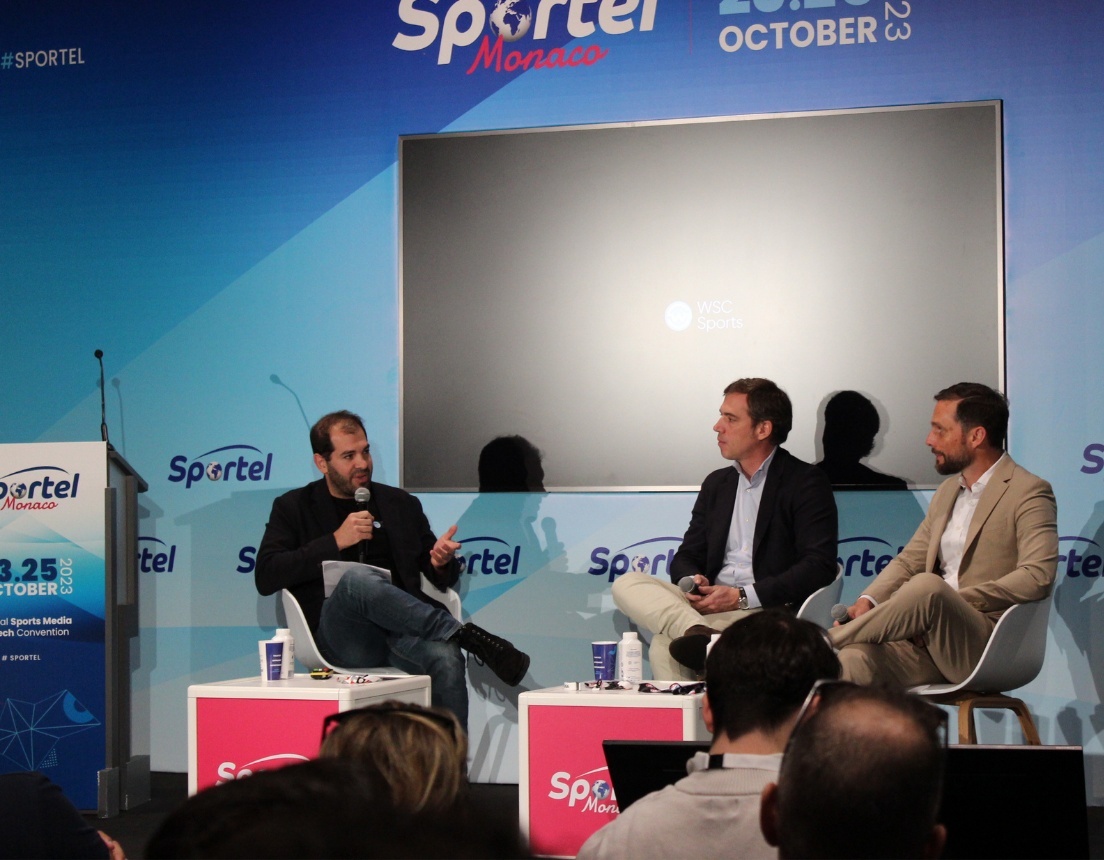
At SPORTEL in Monaco in October 2023, Arnon appeared alongside LALIGA’s Alfredo Bermejo and the NBA’s Bastien Lacheny to discuss vertical content and in-app stories. The shape of the screen had become part of the business conversation. A television broadcast supplies wide pictures. A phone held upright asks for a different treatment.
That adjustment reaches beyond cropping. A viewer opening a league app needs to find something worth watching. A short sequence may invite the next view, or help a less prominent player appear in the conversation. For Arnon, the commercial question has grown from whether a highlight can be made to how people encounter it.
A company-wide measure of production, rather than a count of unique viewers.
WSC reported more than 6.4 million videos created in 2023, up 64 percent from the previous year. It also received a Technology & Engineering Emmy for AI-ML Creation of Sports Highlights. These are company achievements, shared by the people who build, sell and operate the system. They give scale to the business Arnon helped develop.
Two brothers at the microphone
Arnon has another public role that suits the relationship side of his work. He co-hosts Sports Content Kings with his brother Shaka, also a WSC business-development executive. The program brings sports and entertainment figures into conversations about audiences, media and technology. A sales meeting has an intended destination. A podcast gives the conversation more room.
In May 2023, the brothers hosted Ice Cube to discuss the BIG3 basketball league. Their guest list has also included people from streaming, broadcasting and sports partnerships. An April 2025 episode with NBC Sports’ Jon Miller examined major rights deals and the NBA’s return to NBC. Later that year, Dodgers president and co-owner Stan Kasten joined them.
The format offers a different view of Arnon’s career. He spends time explaining what technology can do, but the show places him on the asking side of the table. What changes a viewer’s behavior? How does a broadcaster choose a property? How does a new league find its public? Those answers help describe the market in which his company works.
After the clip, the connection
By 2026, Arnon’s public argument had widened again. In an account published in April, WSC described his opening keynote at its first Tokyo Summit. Leaders from Japanese leagues, broadcasters and streaming platforms had gathered to discuss fan experience. Arnon argued that producing content was no longer the limiting factor for many organizations. Making the pieces work together was harder.
“Content feeds the experience. The experience generates data. That data shapes how content is distributed and monetized.”
Aviv Arnon · Tokyo Summit, reported April 2026
Content02
Experience03
Data04
Distribution
& revenue
The argument follows naturally from the earlier story. The scouting tool organized footage for a coach. The highlight system organized moments for a fan. The later business has to consider the route between the two: where content appears, how a person responds and how that response informs the next decision. Each stage creates another question for the partnership.
Arnon’s distinctive place in this story is between the engineering and the audience. He understands the system’s origins, while his job brings him into contact with the organizations deciding what to publish. The moments themselves remain stubbornly human. A favorite player scores. A rival misses. A fan wants to see the evidence once more, preferably before the group chat moves on.
That is the second life of a sporting moment. It travels beyond the arena, acquiring a language, a format and an audience. Arnon has helped build the business that sends it on its way. For all the automation involved, his own story still contains the old necessities: friends, introductions, a chance to prove the idea and occasionally a meeting memorable enough to survive its dress code.