The first thing to notice about a Drone Racing League pilot is how little the pilot moves. The aircraft hurtles through a course in three dimensions; the person stays put, wearing goggles. Inside those goggles is a live camera feed. The exhilarating part happens elsewhere. For a spectator, that creates a problem: how do you follow a race when its best seat belongs to someone whose face you cannot see?
- DRL built identical racing drones and produced its own competition footage.
- Its simulator taught flying and once offered a route to paid pilot contracts.
- A $250 million acquisition announcement preceded a postponed event and a 2026 equipment auction.
Founded in 2015 by Nicholas Horbaczewski, the New York company approached that problem as a manufacturer, promoter, and television producer. Each part depended on the others. Beautiful footage needed reliable aircraft. Reliable aircraft needed engineers. A reliable business needed viewers who would come back after the novelty wore off.
01 / The sport had to be engineered
In January 2017, DRL had 19 staff, including 10 engineers and technologists maintaining a 350-drone fleet. That is an unusual payroll for something called a league. Product director Ryan Gury and the team worked on frames, circuit boards, radio communications, and courses. DRL had to make the competition function before it could make the competition famous.
“The drones have a single purpose.”
Nicholas Horbaczewski / 2017
The purpose was spectator racing. DRL supplied identical aircraft, making pilot skill easier to distinguish from equipment advantage. In the first televised season, six pilots raced custom-built Racer2 drones through thematic courses. In-house production turned those flights into a program a broadcaster could schedule. The viewer bought into a contest with rules, identifiable competitors, and a result.
Speed alone was an insufficient design brief. A machine also had to survive the demands of racing and be useful to a camera crew. The distinction matters: a hobbyist may enjoy building the quickest aircraft; an entertainment company needs a repeatable show. Standardizing equipment helped DRL control that difference.
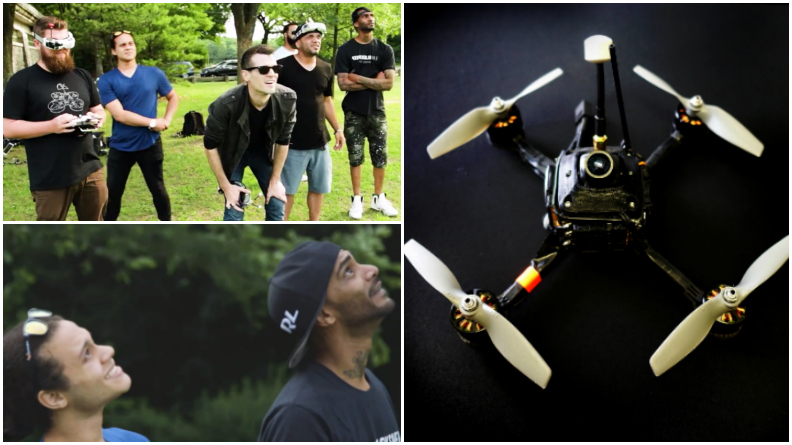
Its engineering ambitions also produced the separate RacerX speed project. In 2017, the 800-gram quadcopter achieved a Guinness-certified 163.5 mph record. Earlier prototypes burst into flames under peak acceleration. Here, at least, the answer to “what failed first?” is quite literal: pushing more power through a small flying machine had combustible consequences.
02 / The video game with a job at the end
A sport needs an entrance. FPV racing presents an expensive one if every lesson ends with broken hardware. DRL’s simulator let players rehearse flights on a computer, including courses associated with the league. A crash became a chance to try again without rebuilding an aircraft. It gave the curious viewer something more useful than another highlight clip.
The clever move was attaching recruitment to the game. Jacob “Jawz” Schneider won the 2017 simulator tryouts, earned a $75,000 professional contract, and competed in that year’s championship season. The subsequent Swatch-backed tryouts offered another $75,000 contract; the 24 fastest qualifiers across five simulated levels would advance to a live esports tournament.
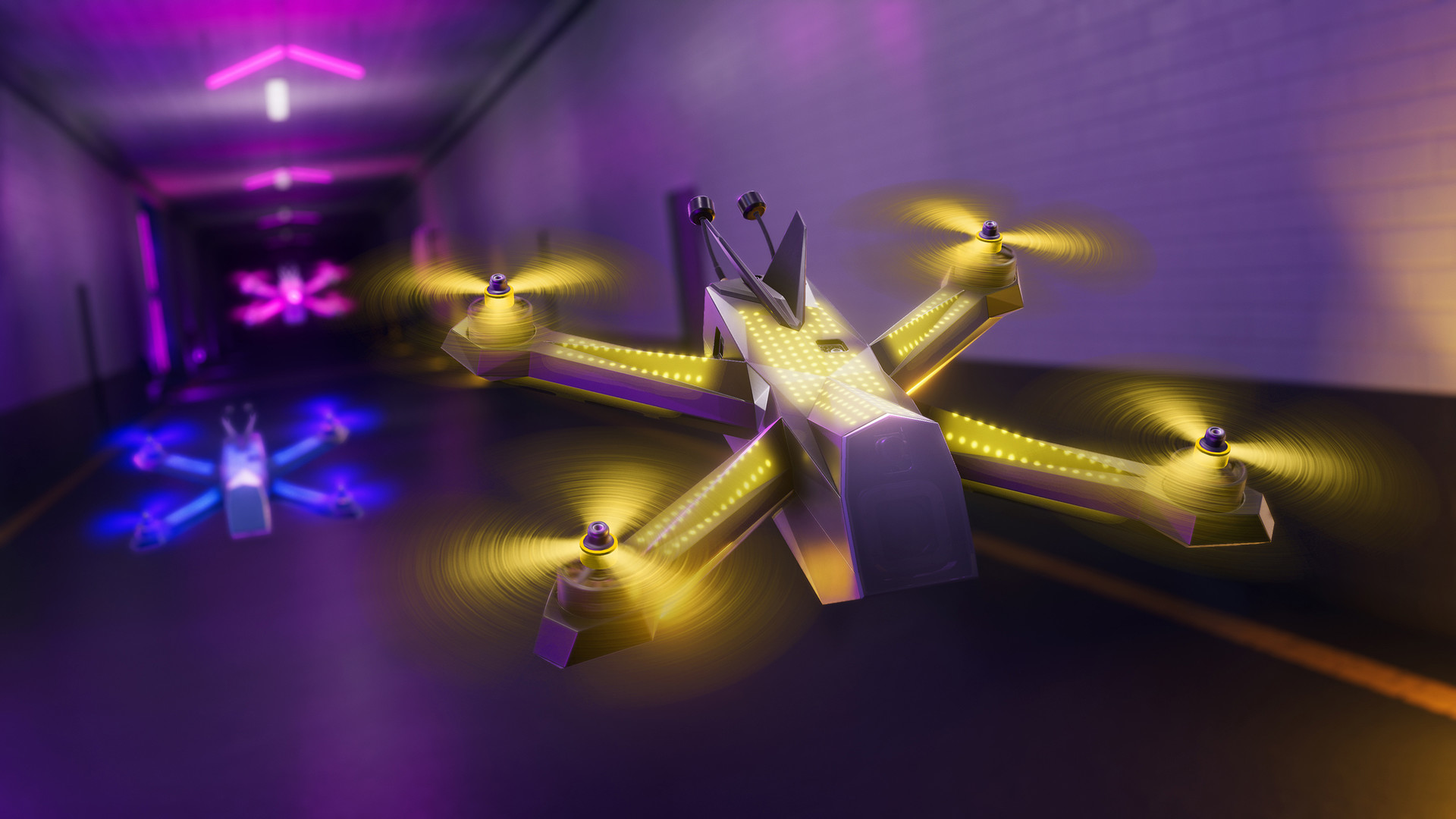
The same product could entertain a fan, teach a newcomer, and help find a competitor. That overlap is worth copying: let the introductory experience exercise the skills your main activity actually rewards. A leaderboard becomes more interesting when the ability it measures can travel outside the game.
For a reader who wants to try FPV, the simulator is the practical entry point. Its Steam listing includes single-player play, multiplayer, and a level editor. Practice can help you understand the controls and race lines; it does not confer a drone qualification or promise a professional seat. The historical tryout prize belongs to its particular competition.
03 / What the sponsors were really buying
DRL’s customers sat on both sides of the screen. Fans consumed races and bought simulator software or event tickets. Broadcasters licensed programming. Sponsors bought association with a technology-oriented sporting audience. The company’s expertise joined aircraft engineering, race design, and media production; it was selling an entertainment property with machinery underneath.
Audience attention and participation gave sponsors places to appear.
This required capital. A $12 million round accompanied international television agreements in 2016. More than $20 million followed in 2017, led by Sky, Liberty Media, and Lux Capital. Those are financing figures, rather than a disclosed cost per race. They nonetheless show why copying the entire operation would require rather more than a camera and enthusiasm.
Partnerships sometimes gave a sponsor an activity beyond a logo. Google Cloud’s 2022 Fly Cup invited developers to work with race data. Lockheed Martin’s AlphaPilot challenge attracted 424 teams from 81 countries before nine were selected for the 2019 autonomous racing circuit. Software had to fly the drones without human intervention, GPS, or data relay. A sports course became a research test.
In 2022, DRL announced distribution into more than 320 million households across nearly 170 markets. Read that carefully: potential distribution is not measured viewing. Drone Champions League offered another professional circuit, while MultiGP organized community racing through local chapters. DRL occupied the intersection of televised sport and gaming, competing for attention as much as lap times.
04 / The hardware returns to earth
In April 2024, Infinite Reality announced a $250 million agreement to acquire DRL. The next chapter looked set for Miami: an Air Force-backed invitational at loanDepot park on February 1, 2025. The official announcement now carries an indefinite postponement notice and promises ticket refunds. Then Heritage Global Partners listed an August 2026 auction of DRL drones, course equipment, and broadcast hardware.
That sequence puts a limit on the growth story. The catalogue is evidence of equipment offered for sale; it cannot explain every decision behind it. Still, the lesson is sharper than the promotional footage. Standardize the contest. Give beginners a useful way in. Make sponsors part of an activity. Those choices travel well. They work only when enough fans, partners, and venues keep returning to justify the apparatus. Even a sport built to fly needs somewhere dependable to land.