Between Rico Verhoeven and Badr Hari, Marshall Zelaznik looks almost mischievously misplaced. The fighters fill the stage at the COLLISION 2 press conference: shoulders square, fists raised, faces built for the billboard behind them. Zelaznik stands in the middle in a blue suit, hands down, wearing the patient expression of a person who knows that everyone else in the photograph is supposed to look more dangerous.
It is a useful picture of his career. Zelaznik has spent decades close to impact without pretending to be the impact. His business is the machinery around a fight: the contract, the broadcast, the country, the subscription, the arena date and the sentence that explains to a new audience why it should care. Combat sport supplies the violence. He supplies the route to market.
The route has taken him from a Los Angeles law practice to pay-per-view television, across ten years at UFC, through Activision Blizzard and esports, and twice into the chief executive's office at GLORY Kickboxing. It has also taken him through one unsentimental corporate exit and one global interruption. When he returned to GLORY in March 2024, his explanation was neither grand nor complicated. He had “unfinished business.”
Act I / The fine print
Before the roar, there was a lawyer
Zelaznik holds a law degree from the University of San Francisco. He spent more than a decade practising law, ultimately as a shareholder at Schaffer, Lax, McNaughton & Chen. There is an agreeable irony in what followed. A profession famous for managing conflict led him to an industry that puts conflict on posters.
In 2003, he joined iN DEMAND as vice president of programming. Pay-per-view was then a gate made of coaxial cable. Events arrived at a set hour, on a set channel, for a set fee. The job taught the grammar that would organize the rest of his working life: live attention is perishable; distribution determines scale; and a fight without a screen is just a room full of witnesses.
UFC hired him in 2006. Over the next decade, his titles changed as the company changed. He led the UK division, managed international development, oversaw media and content, and worked on expansion into markets including Britain, Brazil, Canada, China and Singapore. The assignment was never as simple as exporting an American show. Each country brought broadcasters, regulators, venues and fans with their own habits.
Asked in 2010 how UFC chose its next country, Zelaznik gave the kind of answer that resists a movie trailer. He talked about television ratings. He talked about the strength of a local partner. He talked about venue availability. Global ambition, in his telling, was built from regional spreadsheets. The lights were glamorous; the calendar was sovereign.
One career, three routes to the fan
The bars show widening channels, not audience size. The work moved from one television gate toward a bundle of platforms and partners.
Fight Pass made that work visible in a new way. Zelaznik helped lead the launch and management of UFC's subscription streaming platform, a library and live-service business that could reach viewers without waiting for a conventional broadcaster to find room. Today the idea sounds ordinary. At launch, it asked fight fans to adopt a new habit and a sports company to behave partly like a technology service.
“No one ever wants to leave that way, but in the end, now with hindsight, it was probably the best thing that ever happened to me.”Marshall Zelaznik on leaving UFC
Act II / The walkout
He saw the ending before it arrived
When WME-IMG bought UFC in 2016, Zelaznik understood the corporate geometry. IMG already knew media distribution. His team did media distribution. Overlap has a way of acquiring a polite name in acquisition meetings, usually “redundancy.” He warned his staff that the new owners might see it.
The warning did not make the day pleasant. Zelaznik was among the employees let go that October. He later described it without varnish: “I was asked to leave.” He and others were walked out before they could say proper goodbyes. Colleagues gathered at a nearby bar later, turning a corporate procedure into something closer to a farewell.
He could be candid about the bruise because he did not make it his biography. At Activision Blizzard, he worked in business development and content and played a role in launching the Overwatch League. The scenery changed from octagons to game maps, but the operating question remained: how do you turn competition into an appointment, then make that appointment travel?
In January 2018, GLORY offered another answer. Zelaznik became its CEO, moving from mixed martial arts to the compressed rhythm of elite kickboxing. He explained the sport as stand-up combat stripped of prolonged grappling. He also accepted a less comfortable assignment: becoming a public promoter. “It's not a role that I'm overly comfortable being,” he admitted, before promising to take the reins anyway.
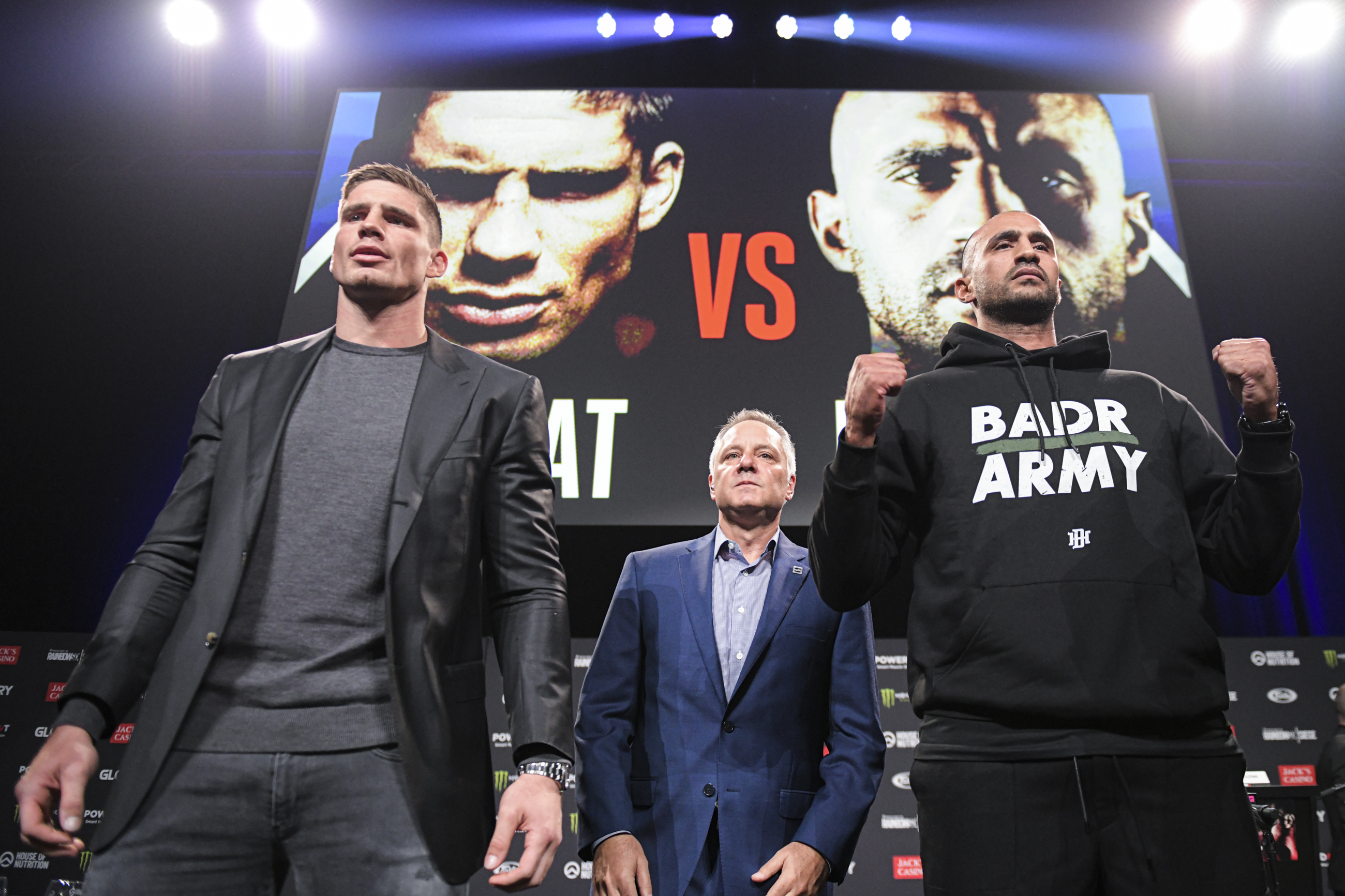
His first GLORY term produced broader television distribution, higher sponsorship revenue and, at the end of 2019, COLLISION 2. More than 30,000 people attended in the Netherlands. It was the sort of night that makes a promoter's strategy look physical: a strategy you could count in occupied seats.
Then the seats emptied everywhere. The pandemic stopped live-event calendars and ended Zelaznik's first run at the company in 2020. He moved to Vindex and became CEO of Esports Engine, overseeing league operations, broadcasts, production and technology for partners that included game publishers and platforms. Esports was not an escape from live events so much as another laboratory for them. Its audiences already understood that a crowd could be a community without sharing a building.
Act III / The return
The second bell sounds different
Zelaznik did not return to the same GLORY, because nobody returns to the same anything after four years. The company had been restructured. The media landscape had acquired more doors. A broadcaster might still carry an event, but a creator could carry its story to an audience that never consults a television schedule.
His first public instinct was restraint. He said he planned to listen and speak with the people involved before making large changes. His announced ambition was international: deepen the business beyond its Dutch stronghold, with France, Germany, Japan and other markets in view. It echoed his old UFC playbook, but his years in esports had added an emphasis on social platforms and digital communities.
By 2025, the pieces were visible. GLORY announced distribution on DAZN. It returned to the United States with an intimate Miami event under the GLORY Underground name, produced with Betr for a room of creators, athletes and guests and streamed free on YouTube. The promotion also built a season around Last Heavyweight Standing, a multi-event tournament designed to make one division carry a continuing plot.
The following year extended that argument. GLORY placed its 2026 Dutch events with KIJK, announced tournament formats across three weight divisions and revived GLORY Rivals with a regional Dutch partner. Zelaznik described the last of these as part of a healthier ecosystem: more platforms for developing fighters, more exposure and more cooperation between promotions.
The formats differ, but the bet beneath them is consistent. A fighter's ability can be obvious inside the sport and nearly invisible outside it. Zelaznik has reduced his task to a plain sentence: “These fighters are different. Our job is to get it exposed.” The grammar may be blunt. The business problem is exact.
“I felt like there was unfinished business here due to the pandemic.”Marshall Zelaznik on returning to GLORY
There is a temptation to make a return sound like destiny. Zelaznik's version is more practical. One job stopped before he believed the work was complete. Four years in another branch of live competition gave him new tools. Then the original problem called again.
This may explain why the lawyer remains visible in the promoter. He is careful about the case he is making. He does not need kickboxing to impersonate mixed martial arts. He wants its difference understood: elite striking, limited clinching, action that can be read quickly even by a newcomer. The advocate's task is not to invent an appeal. It is to put the existing appeal in terms the jury can see.
On fight night, Zelaznik still occupies the space between larger figures. He is the person looking at the bout and the broadcast, the arena and the audience, the evening and the next country on the calendar. Fighters deal in decisive endings. Sports executives live with continuations.
That makes “unfinished business” less a slogan than a job description. The work of finding the next viewer is never finished. The screen changes. The partner changes. The crowd develops a new way to gather. Somewhere, a bell rings, and the quiet operator in the blue suit starts arranging for somebody elsewhere to hear it.