Giampiero Rinaudo’s early ambition was to time Alpine ski races. It is an unusually precise answer to the question of what you want to do when you grow up. Other children might imagine the podium. Rinaudo was interested in the measurement that decided who belonged on it. Born in Cuneo in 1959, he would build a career around the information travelling between an athlete’s performance and somebody else’s understanding of it.
That career eventually put his company, Deltatre, into World Cups, Olympic Games and the digital machinery of professional sport. Yet the original attraction was quite tangible: sport, computers and data. The distance between a ski slope and a streaming platform looks considerable. Follow Rinaudo’s working life, and the connecting thread becomes easier to see.
He is known as Gipi. He studied computer science at the University of Turin, graduating in 1984. While still a student, he joined work supporting Olivetti’s involvement in Alpine skiing and Formula 1. Here was a way to use computing somewhere rather more animated than a classroom. A race produced numbers, and the numbers had somewhere urgent to go.
The clock was only the beginning
In 1986, Rinaudo and two partners founded Deltatre in Turin. Luca Marini was one of those partners and would share its leadership. The company’s early work included consulting, timing and graphics for Formula 1 with Olivetti. It was a business built around actual events, with equipment to transport and results to deliver.
The smallness of the beginning matters. Deltatre did not arrive with the range of services it would later sell. It began with a narrow practical problem and accumulated adjacent ones. Timing led towards results; results needed presentation; presentation acquired new screens. Each extension preserved something of the original job: make the event intelligible to people who want to follow it.
One early step was a commentator information system using teletext at the 1987 athletics world championships. Another came in 1994, when Deltatre began supplying Champions League results and broadcast services to UEFA. In 1995, real-time results appeared on the athletics world championship website. The clock’s output was finding an audience beyond the venue and the television control room.
Same urgency. New destinations.
- 1986Formula 1
Timing & graphics - 1994Champions League
Results & broadcast - 1995Athletics on the web
Real-time results - 2008Beijing Olympics
NBC streaming work
These were shifts in who could receive information, how quickly, and in what form. A system designed for a commentator serves a particular professional. A website opens another route to the spectator. Rinaudo’s business grew by following those routes while keeping relationships with the organisations that staged and broadcast the sport.
A company comfortable outside the credits
In June 2007, Deltatre won the work of developing and technically managing FIFA’s website, taking over a role previously held by Yahoo. It had about 150 employees, spread between Turin, London and Lausanne. The contract ran towards the 2010 World Cup. A relatively small Turin company had acquired a rather large address on the internet.
Rinaudo was still running the business alongside Luca Marini. The work was becoming more visible, even if the company’s own name remained unfamiliar to many of the people using it. That distinction suited the business. Its customers were governing bodies, leagues and broadcasters, each with audiences and identities of their own.
“Our relative public anonymity is by design.”
Giampiero Rinaudo · 2019
For a founder, that is an interesting accommodation with success. Deltatre could benefit from an enormous audience without asking that audience to remember its name. Rinaudo explained that it avoided owning content because it wanted to serve the organisations that owned and distributed it. Competing with a client would complicate a relationship built on being useful.
There is something almost courteous about the arrangement. The sport keeps the applause. The technology supplier earns the next assignment. It also makes commercial sense: a broadcaster can buy tools from a company whose ambitions do not include taking the broadcaster’s audience away.
The match cannot wait for the software
By October 2005, UEFA had appointed Deltatre and NTT Communications to develop a live internet video service for broadcasters. It was intended to help those broadcasters offer simultaneous live coverage online. The relationship had travelled from the organisation of results into the distribution of moving pictures.
The Beijing Olympics brought another step in 2008, with Deltatre involved in NBC’s first Olympic streaming website. Four years later came extensive work around London’s digital Olympics. The technical demands changed, but the calendar retained its inconvenient firmness. Sport has little interest in whether its suppliers would appreciate another fortnight.
This helps explain why Rinaudo’s account of growth gives so much room to relationships. A supplier working through successive tournaments learns what its clients need, and clients learn whether the supplier will deliver. The history has commercial value. A familiar name on an email can carry years of evidence behind it.
He also recognised that a company built through individual service assignments had to develop products that more customers could use. Deltatre’s expanding range included publishing, interactive video and the management of viewing experiences. A sports federation needed different things from a broadcaster, but both had to get material to an audience.
New owners, a wider playing field
In 2016, Bruin Sports Capital acquired a 75 percent stake in Deltatre. Rinaudo and Luca Marini retained the balance. George Pyne, Bruin’s founder, became an important business partner. The transaction connected the company’s European base with an American network at a moment when its ambitions were expanding across markets.
Rinaudo valued the time horizon. Sports relationships unfold across seasons and competition cycles, and he wanted an owner comfortable with that rhythm. He described an acceleration in the United States following Bruin’s arrival. Access mattered, but it still left the company with the obligation to build and deliver the work.
The year also brought Sportec Solutions, a joint venture involving Deltatre and the German football league’s Sportcast business. Its remit covered the collection, administration, quality control and provision of official Bundesliga match data. The original interest in recording sport accurately now sat inside a much broader operation.
The reported cash-and-earnout value of the Massive Interactive deal, adding interface and viewing-experience expertise to Deltatre’s streaming capabilities.
Massive Interactive joined in 2018, bringing software for video interfaces and audience engagement, along with a stronger presence in entertainment. The combination addressed a practical buying preference: customers increasingly wanted one supplier to take responsibility for more of the service. A working stream and a usable interface belong to the same viewer’s experience, however many contracts sit behind them.
In 2019, Deltatre also became MLB’s technology services provider. The transition to its content management platform had to be ready for Opening Day. MLB described a move from publishing delays of several minutes to delivery often measured in less than a minute. The old fascination with time was still finding employment.
Delegation, without a management bookshelf
Rinaudo’s reflections on running the company are less theatrical than its sporting surroundings. He has emphasised trust in colleagues, understanding the other side in negotiations and learning when the business gets something wrong. His preferred account of authority leaves room for somebody else to know more.
“I regard one of my greatest strengths to be delegation.”
Giampiero Rinaudo · founder interview
He described an informal workplace with an open door. Asked how he wanted people to regard him, he chose “honest and loyal”. Those are aspirations about conduct, rather than claims about technical foresight. They fit a company whose work requires people in different roles and countries to depend on one another.
His reading offered a small departure from the expected executive syllabus. Rather than gravitating towards management books, he singled out Yuval Noah Harari’s Sapiens. Outside work, his interests included skiing, swimming and hiking. The skiing, at least, brings the story back to its starting point. A long career in sports technology had not exhausted the appeal of going outside.
Passing the job, keeping the interest
In October 2021, Deltatre announced that Rinaudo would retire as CEO after more than 35 years with the company. Andrea Marini, its deputy CEO and chief commercial officer, would succeed him at the end of the month. Rinaudo’s next role was announced as non-executive chairman and board member.
The succession had a particular continuity: Andrea was the son of co-founder Luca Marini. He credited Rinaudo as a mentor. By the handover, Deltatre counted more than 130 sports leagues, federations and media companies among its partners. The business had grown far beyond the founders, while still carrying relationships that reached back into its origins.
Rinaudo subsequently became a partner and board member at Promemoria Group, which works with corporate and institutional archives. He spoke of helping it grow internationally. He also backed Epico Play and DHTA Sports, now Veevi, joining their boards. His work after the chief executive’s office continued to involve younger businesses, technology and the practical questions of expansion.
Now he is listening
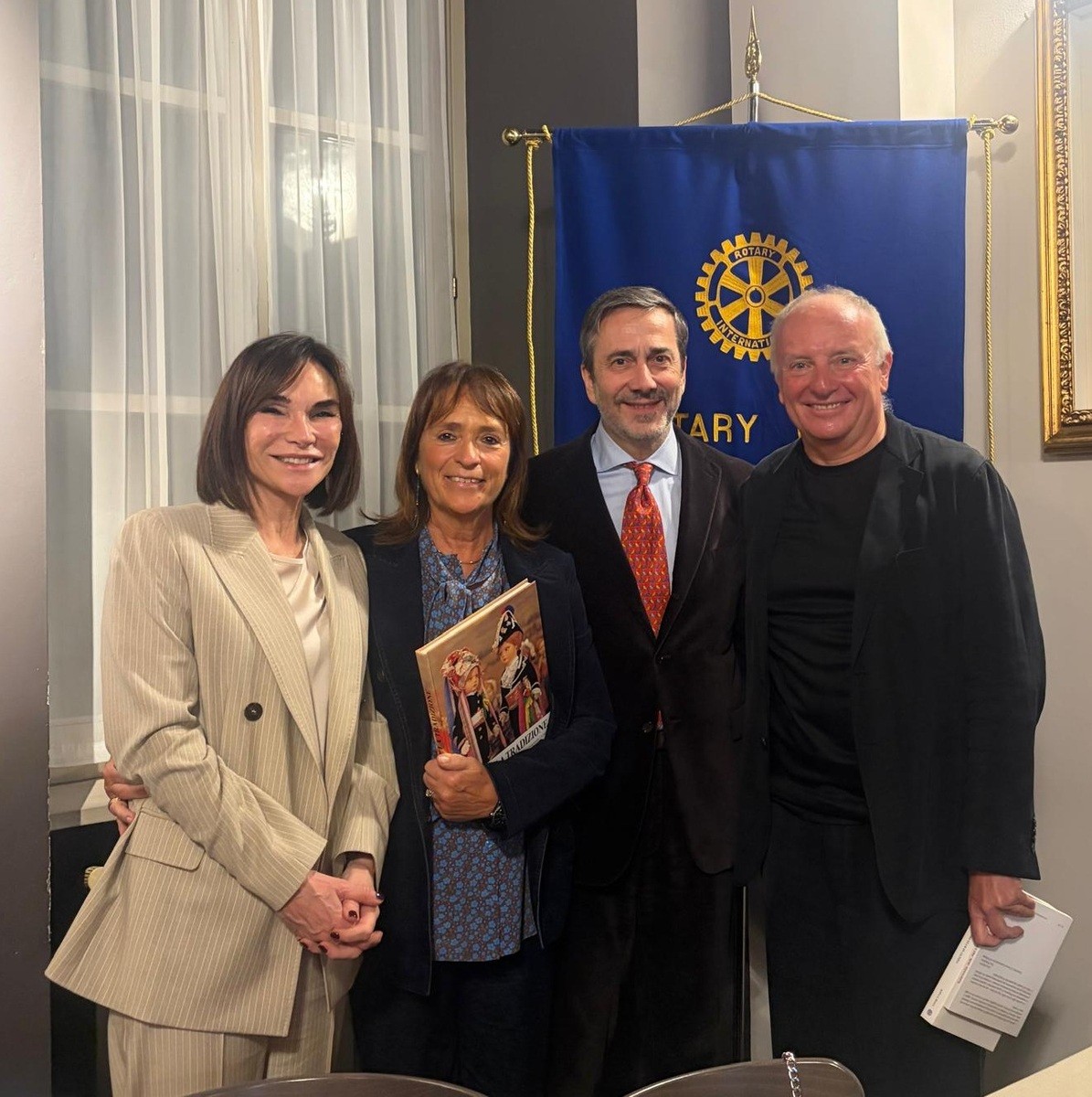
On 24 March 2026, he was the guest speaker at a Rotary Club gathering in Cuneo, the city where he was born. The occasion placed an international business career back in its local setting. He was now sharing experience gained from decades of taking a Turin company into work around the world.
Three weeks later, Personar announced his appointment as senior advisor and confirmed that he had invested personally. The company works on audio analysis and decision intelligence in sport. Its products include TrackSwift and CoachScribe, using speech-to-text and AI categorisation to turn spoken information into something teams and other sports organisations can use.
He joined an advisory group that included Jost Capito, Ugo Mola and João Capela, bringing together experience from motorsport, rugby and officiating. Rinaudo’s stated interest was in helping Personar expand internationally. His attention had moved towards another kind of sporting information: words spoken during the work of competition.
It is a fitting development for somebody who began with results. A lap time, a live score, a video stream and a spoken instruction each require a way to reach the person who needs them. Rinaudo’s career has followed that requirement through several generations of technology. The boy interested in the stopwatch has kept finding something else worth paying attention to.