George Pyne was six feet five inches tall and, by the standards of his family, a little small for the family business. His father had played professional football. His grandfather had, too. His younger brother Jim would spend nine seasons in the NFL. George played offensive tackle at Brown, captained the team and collected All-Ivy and All-New England honors. Then the professional playing career failed to materialize.
“I’m the first George Pyne,” he joked, “not to make the NFL.” It is a good line for a family reunion. It also supplies the opening to a career in which the action gradually moved away from the ball. Pyne would become NASCAR’s chief operating officer, president of IMG Sports and Entertainment, and founder of Bruin Capital. Sport remained the subject. The businesses around it became his work.
An offensive lineman offers a useful vantage point for that work. The crowd watches the person carrying the ball. A good deal of the result depends on people it barely notices. Pyne’s later investments would give that arrangement a commercial expression: companies distributing video, interpreting fan data, serving guests and supplying technology. There is considerable enterprise in making somebody else’s moment possible.
The route ran through Atlanta
He grew up in Milford, Massachusetts, and graduated from Brown in 1989 with a degree in political science. The first jobs were less glamorous than the eventual client list. He worked in his family’s real estate business, then moved to Atlanta, where an assignment for the Chamber of Commerce involved reviewing the public school system’s budget and operations. The work led to reforms and helped put him in the orbit of the Portman Companies.
At the real estate and architectural business founded by John Portman, Pyne helped organize a $2 billion debt restructuring. He also began working in sports marketing. There is something pleasingly untidy about this origin. The future sports executive was learning about organizations through property, civic budgets and debt, all subjects capable of removing the romance from a spreadsheet.
A more direct entrance came through hospitality. Before Super Bowl XXVIII, he underwrote $600,000 in sales for an event sponsored by the NFL Players Association. Guests, former players and VIPs needed somewhere to gather around the game. The venture helped establish his position in Portman’s sports events operation. NASCAR became a client. In 1995, it hired him to lead new business development.
Selling the Sunday around the race
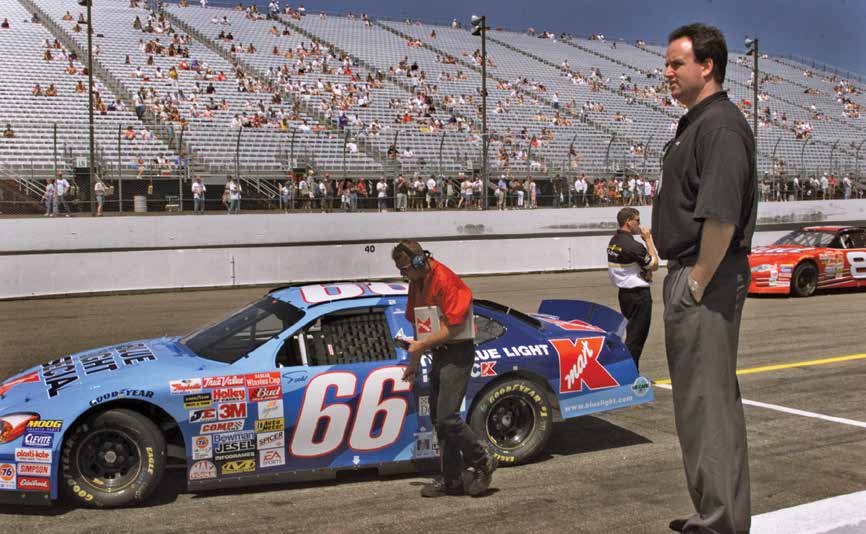
Pyne entered a racing organization with room to expand its commercial operation. The assignment was to connect what happened on the track with what national advertisers, broadcasters and consumers might want to buy. Under the France family, NASCAR developed a wider commercial presence, and Pyne rose to chief operating officer and a place on its board.
The transactions grew large. His tenure included a $4.5 billion television rights package in 2005 and Nextel’s $750 million title sponsorship, which began in 2004. Those figures represent different arrangements, but together they show how many kinds of customer a sport can have. Fans buy an experience. Broadcasters buy programming. Sponsors buy an association with an audience.
A multi-year television rights agreement.
A ten-year series sponsorship.
The products could be unexpectedly domestic. Mattel sold more than a million NASCAR-branded Barbie dolls in three months. A stock-car racing organization had found a place in the toy aisle. Pyne also helped bring Sunoco into the sport in 2004. Commercial expansion meant taking the audience seriously enough to imagine it beyond the grandstand, in places an automotive supplier might never think to look.
When he left in 2006, the lessons included a farewell lunch with Bill France Jr. and Jim France at Steak ’n Shake. Asked for advice, Bill Jr. supplied a compact negotiating principle: “Know when to squeeze and when not to squeeze.” It is unusually useful counsel to receive over lunch. A deal requires pressure, but the relationship must survive the meal.
The office next to Ted Forstmann
IMG introduced another scale of operating problem. Pyne became president of its sports and entertainment business and a board member, working alongside Ted Forstmann. The company had activities in numerous countries and across several commercial lines. His responsibilities extended through representation, media, events and other businesses. Experience building NASCAR’s operation now had to travel.
One consequential move was into collegiate sports. IMG acquired the Collegiate Licensing Company in 2007, then Host Communications that autumn and ISP in 2010. The acquisitions assembled a business around universities’ commercial rights. Pyne had played college football; now he was helping organize the business that surrounded it. The distance between the two jobs was measured in contracts.
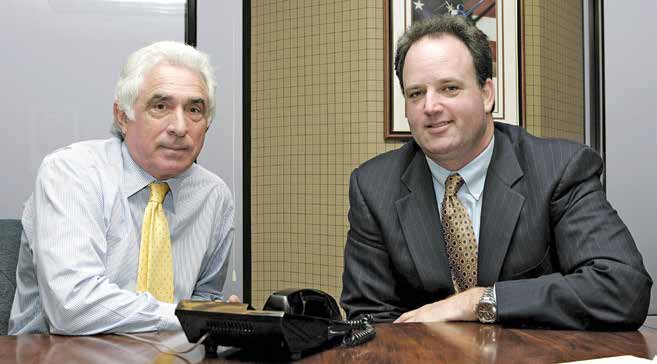
Forstmann’s office was next to his. The proximity gave Pyne an education in assessing risk and the downside of a transaction. At IMG, the operating responsibilities and investment questions occupied the same working day. That combination would become central to Bruin: understand the business well enough to see what it could become, then work on getting it there.
The recognition also brought him back to football. In 2013, the National Football Foundation made him a charter inductee in its Leadership Hall of Fame. The following year he received the NCAA’s Silver Anniversary Award, which recognizes former athletes 25 years after their college careers. The sport that had declined to employ him as a professional player had supplied an enduring set of connections.
A place at the table
Bruin Sports Capital launched in 2015 with a $250 million equity raise. Pyne had wanted to start a business of his own years earlier, but felt better prepared after NASCAR and IMG. Family investors and WPP helped back the venture. He wanted to work with entrepreneurs and grow businesses, using capital alongside operating experience. His description of himself was brief: “I’m a builder.”
Even the name brought the playing years with him. Bruin was a tribute to Brown’s football team, known as the Bruins during his time there. He wanted the values he had learned on that team to run through the company. A college nickname had become the name on the door.
“I’m a builder.”
George Pyne · 2015
The building involved a recognizable management routine. At Bruin, a company’s arrival came with a three-year plan, including revenue, profit and capability goals. At NASCAR, Pyne had listened to departmental presentations and followed them with detailed questions. Terrence Burns remembered the intensity of those sessions. The collegiate lineman had acquired a less physical way of making everyone prepare.
His relationships also have a dining calendar. Pyne and Sandy Montag gather around 75 people for an annual fall lunch at Le Bernardin in New York. A three-course meal is followed by a speaker and questions. Pyne has hosted dinners, Super Bowl parties and a sports conference as well. People get opportunities to exchange ideas before a transaction gives them a reason to call.
Colleagues describe a demanding, practical and loyal person. They also repeatedly mention his wife Helene and their four children, and his willingness to cross the country for the children’s collegiate sporting events. The business of sport and the experience of watching one’s own family play occupy different emotional registers. His schedule has made space for both.
The businesses beneath the broadcast
Bruin’s investments make more sense when grouped by what they help someone do. Deltatre, acquired in 2016, supplied streaming, broadcast graphics and other technology. Bain Capital and Nextalia announced their purchase from Bruin in 2022. Its work put the investment business close to the mechanics of distributing sport to a global audience.
Two Circles approached the audience through data. It helps sports organizations understand fan behavior and use that knowledge in commercial decisions, from ticketing to sponsorship. Charterhouse announced an investment in the company in January 2024. The business asks questions that a television rating alone cannot answer: who is engaging, how, and what might bring them back?
Investment examples across different years; Deltatre, Two Circles and Full Swing have since exited Bruin ownership.
Box to Box Films adds storytelling to the picture. Bruin’s minority investment supported a production company with plans to expand projects and business lines. AS1, launched in December 2024 with Pyne as chairman, brought together football representation businesses. These are distinct operations with different customers. His history at IMG helps explain why a sports investment business might find room for both a production company and agents.
A billion dollars and the next question
In January 2026, Bruin established a new investment vehicle with $1 billion, led by 26North and TJC. The intended targets included companies providing technology and services around the sports economy. This was its fourth investment vehicle since 2015. A larger pool of capital gave the existing approach more room to work.
May brought an agreement to take a minority interest in Matchroom Holdings. The Hearn family would retain majority ownership and continue running the business, while Bruin would join the board. Matchroom’s activities span boxing, darts, snooker and other sports. The partners identified expansion in the United States, digital distribution, data and direct consumer engagement as areas to develop.
- Capital$1bn new investment vehicle
- PartnershipMatchroom minority agreement
- ExitFull Swing sale completed
Then Full Swing changed hands. Versant agreed in July to buy the sports technology company from Bruin and minority investors for approximately $530 million in cash, subject to adjustments. Its products include simulation, launch monitors and performance data. The transaction closed on August 3. Another investment had reached the point where a new owner would take responsibility for its next phase.
Pyne’s attention remains on how audiences change. He writes the Channel Change newsletter, examining the economics behind sports consumption. He expects a closer connection between sports businesses and individual fans, while acknowledging a question that money alone cannot settle: will viewers keep giving live events hours of their time as habits shift?
That question returns him to familiar territory. Before any broadcast agreement, there has to be something people want to watch. Around it, there must be businesses that make watching, attending and participating work. Pyne has spent a career learning those neighboring trades. The family’s first George to miss the NFL found plenty to do on the other side of the sideline.