At some point in 2008, somebody looked at an athlete's reputation and decided it needed a decimal point. This was the charmingly severe premise behind Legacy Direct Inc., a small company in Tarrytown, New York. The firm took everything soft and unruly about public life - goodwill, charity, partnerships, fan sentiment, the quality of the people around you - and pressed it into a score out of 100. Get above 90 and you had achieved what the company called “legacy status.” Peyton Manning, offered as the model specimen, came in at 95.13.
The number was not the business. It was the doorway. Legacy Direct sold athletes, entertainers and their representatives a way to coordinate the parts of fame that did not fit neatly inside a playing contract. Its founders, Ken Brenner and Mark Rockefeller, had already built Sponsor Direct, which helped corporate sponsors manage and measure sponsorships. Their second company approached the same crowded intersection from the other curb. What if the athlete, not the sponsor, had the dashboard?
“We're not agents. We're not displacing anyone. We're supporting the team that's around the athlete.”Ken Brenner, founder and original CEO
The wedgeA number with teeth
Reputation consultancies usually sell reassurance in a handsome binder. Legacy Direct tried to sell operating discipline. Its assessment examined philanthropic impact, the breadth of resources supplied by an athlete's representatives, the quality of business partnerships and public opinion. The score made the awkward conversation unavoidable: your community work may be generous but scattered; your sponsors may be prestigious but unrelated; your fans may know your statistics and almost nothing else.
The 100-point conversation
The dimensions are documented. The bars are illustrative. The clever bit was not pretending goodwill could be perfectly measured - it was giving a management team the same starting line.
That starting line led to a technology and philanthropy assessment wrapped inside a three-year game plan. Legacy Direct waived the initial fee. If the client wanted to execute, then the meter started: software maintenance, ongoing analytics, measurement and consulting. Even there, the athlete might not write the check. A sponsor could pay, receive branding on the community-facing tools, and move closer to both athlete and audience.
The three-party sale
The first customerTwitter, before it was obvious
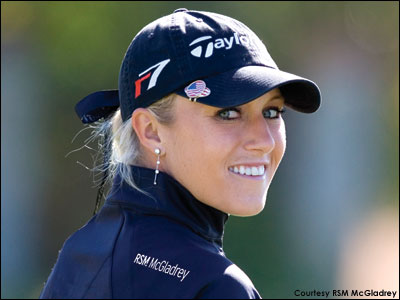
Golfer Natalie Gulbis was the early public test. Legacy Direct began with an assessment focused on technology and philanthropy, then recommended ways to reach new audiences and engage fans. Twitter was one of them. In January 2009, when the company's blog noted that Gulbis had roughly 1,700 followers, this was not the stale advice it sounds like now. Brands were still deciding whether a status update was a communications channel or a place to announce lunch.
The proposed next layer was LegacyPort and LegacyDashboard. LegacyPort accepted proposals for appearances, speeches, corporate partnerships and charitable opportunities. It filtered requests, supported evaluation, produced personalized responses, and tracked what happened. The dashboard gave the agent market data and a common desktop for decisions. In plain English, the software tried to stop a famous person's inbox from becoming strategy.
By September 2009, the company also named Philadelphia Phillies outfielder Shane Victorino and Olympic decathlete Bryan Clay as clients. Its first paying client, Vitaminwater, agreed to fund work with five endorsers. Sports Media Challenge founder Kathleen Hessert served as lead adviser, bringing media coaching and a product called Buzz Manager for measuring online word of mouth. Legacy Direct was assembling a bench because that was the product: a bench the agent could borrow.
The crack in the recordWhat failed first
The LegacyPort trademark application was abandoned for failure to respond or responding late. One month later, the company was still publicly promoting the software.
This is the useful sort of failure because it is precise. The trademark path failed first. We cannot honestly promote that into proof that the product, company or customer need failed on the same day. In fact, the timing argues against the easy story. Legacy Direct continued to describe LegacyPort in its formal launch coverage. The legal wrapper had cracked while the operating thesis remained alive.
The larger constraint was structural. An elite athlete may have an agent, business manager, publicist, foundation, sponsor and league, each with authority over one tile in the mosaic. Legacy Direct needed cooperation from nearly all of them while owning none of the primary relationships. The sponsor-funded model was ingenious when the incentives aligned. It became slow when a sponsor did not see enough audience value, an agent feared intrusion, or the athlete lacked the public visibility to justify a custom system.
The second actThe famous person disappears
The most interesting change came later. Rockefeller became associated with Legacy Connect in 2012, and the company's public story widened from helping famous people do good to helping anyone do good. The eventual product, ThatHelps, let users discover actions, events and communities organized around causes. Its underlying diagnosis was strikingly similar: people had good intentions, but lacked trusted information, useful tools and an easy way to act.
Assess the athlete's technology, philanthropy, partnerships and public standing.
Use LegacyPort and LegacyDashboard to turn requests into decisions and reports.
Legacy Connect and ThatHelps recast impact as something ordinary people could discover and share.
What changed their mind? The narrow celebrity problem exposed a universal one. Nonprofits were good at asking for donations and less good at building a durable relationship with the person who wanted to help. Opportunity was fragmented. Information was tedious to compare. Action was rarely social or fun. The customer expanded from a person with too much incoming attention to millions of people whose attention was hard to convert into action.
What to stealBuild the scorecard before the software
There are five things worth copying, and none requires a celebrity client. First, turn a cloudy problem into a visible assessment. Second, give away enough diagnosis for the customer to recognize the gap. Third, charge for implementation rather than revelation. Fourth, work with incumbents instead of declaring war on them. Fifth, find the stakeholder who benefits from the change even if that stakeholder is not the daily user.
A shared scorecard makes an invisible coordination problem discussable.
A free plan lowers risk when buyers do not yet understand the category.
The payer must receive measurable value, not a tasteful logo beside a charity story.
The incumbent adviser must see a stronger bench, not a rival entering through the side door.
The model needs a high-value client, several disconnected workflows and a third party with a commercial reason to fund improvement. Without those conditions, the free assessment becomes expensive lead generation. If the outcome cannot be measured, sponsor support looks like patronage. If the agent controls every decision and sees the new tool as surveillance, collaboration freezes. And if requests are scarce rather than overwhelming, LegacyPort solves a problem the user would be thrilled to have.
Legacy Direct sat between sports consulting, reputation management, philanthropic advice and software-as-a-service. Traditional agencies could coordinate deals. Public-relations firms could shape attention. Philanthropic advisers could design giving. Workflow software could organize intake. Legacy Direct's distinction was the attempt to join all four without demanding the athlete fire anyone. It was a systems company disguised as a score.
That is why the story travels beyond sports. Many young companies begin by praising their technology. Legacy Direct began by naming the mess: too many requests, too many advisers, too little coordination, and good intentions that vanished between inbox and action. The 95.13 was theater, certainly. But good theater makes the audience notice the machinery behind the curtain.