A bank app has a peculiar ambition: to be forgotten as soon as the money moves. Nobody wants an adventure while paying the electricity bill. Veritran has built a business around that modest wish, supplying the technology that lets financial institutions put accounts, payments and identity checks on a phone. Now the Argentine company is applying that experience to a place where people very much do want an adventure: the football stadium.
Manchester City named Veritran its Official Fan Identity Partner in January 2025. Atlético de Madrid followed with an Official Global Supplier agreement in March 2026, beginning with plans for a new club app. Behind the sporting glamour sits familiar work: establish who someone is, connect their account to the right services and help them complete a transaction. The shirt changes. Much of the engineering problem survives.
That makes Veritran an interesting inhabitant of the financial technology industry. Its customers include institutions such as Banorte, Banco Provincia, Banco Nación and BancoEstado. People encounter the bank’s brand on their screens; Veritran supplies software underneath. The company reports that its solutions reach more than 50 million people. Its business depends on helping other organizations own the customer relationship.
A wallet gets a bigger job
For a concrete example, start with Cuenta DNI, Banco Provincia’s digital wallet in Argentina. The product existed in 2019 as a closed ecosystem, allowing transactions among its users. Then lockdown made the limitations of that remit painfully relevant. The government needed to distribute emergency assistance while keeping people apart, including people who had little practical connection to banking.
Banco Provincia expanded the wallet’s scope, working with Veritran and Red Link. The April 2020 relaunch enabled transfers across banking institutions and added functions suited to the emergency, including collecting assistance without a debit card and paying bills online. A narrow transaction tool had acquired a public-service assignment.
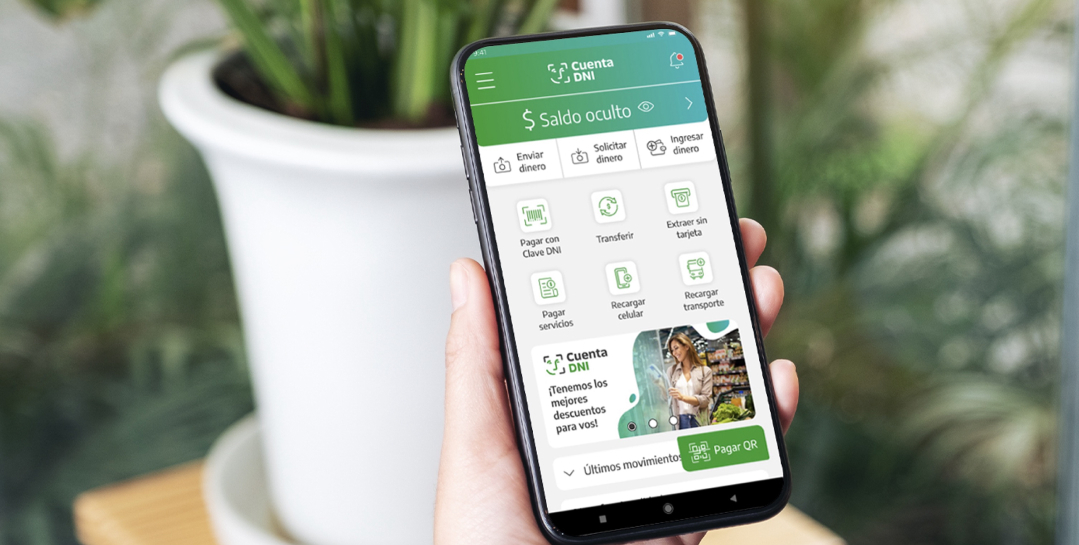
The enrollment sequence was deliberately ordinary: photograph both sides of an identity document, take a selfie and provide personal information. Those small actions connected a remote user to a formal account. Veritran’s case study reports more than three million users by April 2021, with 53 percent new to the bank.
The decision worth copying is the expansion of the product’s job when circumstances changed. Opening an account meant more when the same tool could receive assistance and pay a bill. For another institution, the useful question is what a newly enrolled customer needs to do immediately afterward. An impressive registration count can conceal an app that nobody has a reason to reopen.
The work hiding behind the screen
Veritran organizes its banking offer around retail banking, business banking, payments, onboarding and security. Its enterprise low-code platform supplies reusable components and integration capabilities so institutions can assemble and customize digital services. The proposition is practical: avoid solving every recurring banking task from scratch while leaving room for the customer’s own requirements.
Retail banking covers the familiar daily menu: account balances, cards, transfers, bill payments and financial products. It also includes savings pockets, letting users separate money for particular goals. The institution chooses how to combine those functions and present them. A customer trying to control spending has a different immediate need from someone applying for a loan.
Business banking introduces a different kind of friction. A company may want one employee to prepare a payment and another to authorize it. Veritran’s business offering includes permissions, transaction limits, payroll, liquidity views and approval flows. Afirme Biss, an app for SMEs and larger companies, illustrates the territory: supplier payments and payroll movements governed by profiles configured by the business.
Here, an extra step can be the point. An approval requirement protects company money; a confusing approval screen wastes the approver’s time. Good software has to preserve the control while making the action legible. This is where financial expertise becomes visible in a product: in the details of who can do what, and when.
Identity extends beyond the initial selfie. Veritran’s offering includes document validation, facial biometrics, device authentication and soft tokens. Account recovery matters, too. The person locked out of an app needs a route back that remains credible to the institution. Connecting enrollment, login and recovery makes identity part of the continuing service, rather than a hurdle at the entrance.
Read the arithmetic under the promise
Veritran’s commercial pitch includes a striking number: 373 percent return on investment. It comes from a November 2022 Forrester Consulting study commissioned by Veritran. Six representatives of four organizations informed a model of a composite retail bank with 15 million customers and $1.5 billion in annual revenue.
For that modeled institution, three-year present-value benefits totaled $65.73 million against $13.89 million in costs. Subscription fees accounted for about $12.7 million; implementation and ongoing operations added further costs. The resulting ROI belongs to that scenario. It is neither an individual bank’s invoice nor a price list.
The study also identifies the old constraints: limited app-building skills and difficulties connecting modern experiences to legacy systems. Most of the modeled benefit came from operational efficiencies, rather than cheaper coding. That distinction matters to anyone evaluating the proposition. Faster development earns its keep when it changes how the bank and its customers work.
Buying therefore involves more than choosing software. Veritran’s AWS Marketplace listing offers custom pricing based on requirements and scope. A prospective customer has to define the channels, integrations and support it needs. The same listing includes architecture consulting, configuration support and round-the-clock technical assistance. This is an institutional purchase with an operating relationship attached.
The sensible procurement test is to follow a real task from beginning to end. Can someone complete enrollment, recover access or approve a payment using the systems the bank already has? Veritran’s own onboarding guidance flags underestimated integration complexity and neglect of compliance as common pitfalls. A faster interface will disappoint if the systems behind it cannot finish the work.
Born in Buenos Aires, selling the plumbing abroad
Marcelo González and Daniel Attar founded Veritran in 2005, before the iPhone arrived. González remains its CEO; the company’s older leadership material identifies Attar as a former president. That history helps explain its specialization: mobile finance was the business before the smartphone became the default place to conduct it.
In August 2021, Trivest Growth Investment Fund II invested in the company. Contemporary coverage reported a $225 million valuation. The investment backed ambitions to expand geographically and recruit talent. That figure is a dated financing milestone, useful for understanding the company’s development rather than pricing it today.
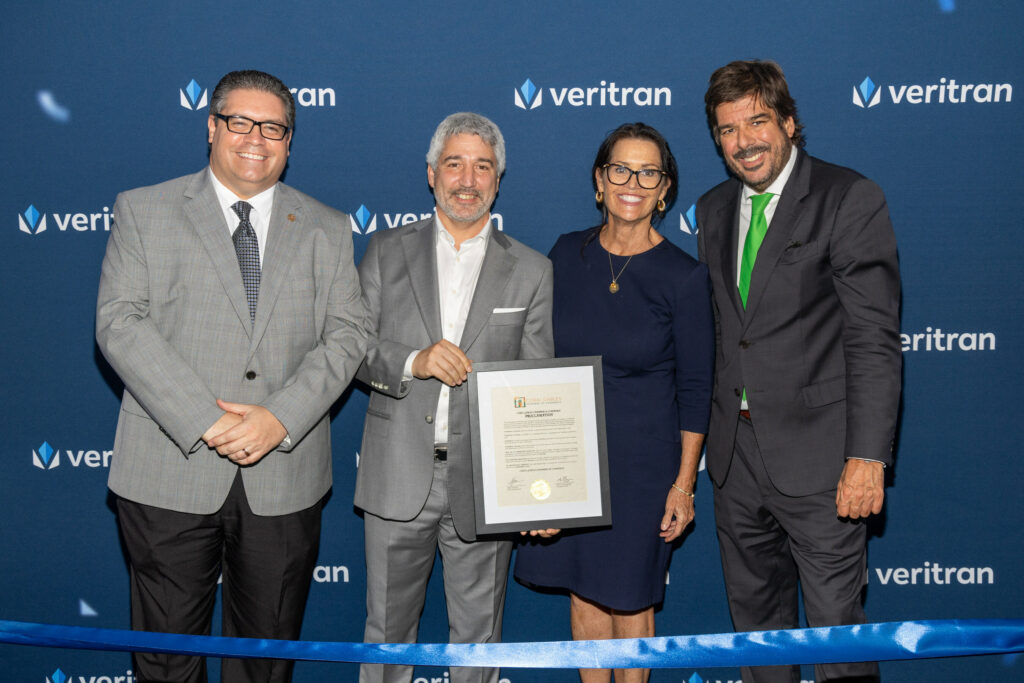
The September 2024 opening of a North American headquarters in Coral Gables gave that expansion a physical address. Reporting at the time described more than 50 clients across 14 countries and four US financial institutions already working with Veritran. The office could accommodate more than 50 people. Its location also placed the company in a region with established connections to Latin American finance.
Veritran operates in a crowded market. Backbase also sells digital banking technology, while Alkami serves US banks and credit unions with digital banking, onboarding and related tools. Banks can also develop channels internally. Veritran’s distinguishing evidence is its own mix of Latin American deployments, reusable banking functions and identity expertise. Low-code alone does not settle a buying decision.
Partnerships help explain where it fits. Mambu lists Veritran in its technology ecosystem, linking customer-facing digital channels with a cloud banking provider. The bank still needs the underlying systems and institutional capabilities that operate its business. Veritran’s role is to help turn those capabilities into services people can actually navigate.
A different crowd, a familiar login
Football gives that capability a public stage. Manchester City’s announcement describes integration with existing infrastructure across registration, memberships and ticketing. These are consequential tasks for a supporter: getting recognized, accessing a membership and obtaining the right ticket. They also offer a more visible demonstration of enterprise software than a private banking implementation.
In an August 2025 interview, chief marketing officer Jorge Sanchez Barcelo described the sales tension: banks want to see working technology, while banking customers can be reluctant to expose their strategies. The Manchester City relationship offered another setting in which to demonstrate the work. That is a commercial reason for entering sports, alongside the technology overlap.
“Our technology without a purpose is nothing. It’s just code.”Jorge Sanchez Barcelo
CMO, Veritran / August 2025
Atlético de Madrid’s March 2026 agreement extends the experiment. The club identified a new official mobile application as the first milestone, with the aim of bringing a more personalized experience into one channel. Its technology leadership emphasized integration, security and scalability. Those are recognizable priorities from banking, now attached to a supporter’s relationship with a club.
The product catalog goes further, listing Club App, Fan ID, Fan Pass, Fan Pay, Fan Engagement and Crowdfunding. Those offerings describe Veritran’s ambition; each club’s announced assignment remains more specific. The interesting question is how much of the underlying technology can travel while the finished service feels native to its new audience.
A bank customer and a football supporter both notice when a digital door refuses to open. Veritran’s opportunity lies in making that door reliable, then giving the person a useful reason to walk through it. The clearest test will be an everyday one: whether paying the bill or reaching the match requires less effort.