sales-automation
(98)
VIP figured out what happens after the beer leaves the brewery
A Vermont billing service became the connective tissue of beverage distribution. Its advantage is knowing what happens between the warehouse, the delivery truck and the shelf.

LaHaus and the art of not losing a buyer
LaHaus built a marketplace for new homes. Then it found another bottleneck: the months between a buyer’s first message and a decision. Now it sells the follow-up, too.

Aurea wants your software bill to buy more software
Aurea built an enterprise software library by acquisition, then gave customers a way to reuse their spending across it. Its turn toward AI puts a new question behind the old subscription: how much useful work can one bill buy?

Rep AI wants to catch the sale before the shopper leaves
The ecommerce software watches for hesitation, then offers product advice or handles a support request. Its most revealing customer stories show how much a sale can depend on one unanswered question.
Act! and the expensive art of forgetting
A six-person property firm kept calling the same prospects twice. Act!’s long-running bet is that a business grows more sensibly when its people share a memory.
Impartner and the art of selling through someone else
A partner signs up. Then comes the paperwork. Impartner’s business is turning that awkward interval between enthusiasm and a sale into a process that can scale.

VinSolutions knows who is shopping before the lead arrives
A dealership’s next customer may already be hiding in its old records. VinSolutions connects those records with Cox Automotive shopping signals, then gives sales teams a reason to call.
Better Car People and the Art of Answering
A car dealership can buy attention by the truckload. Better Car People has built a business around what happens next: answering the customer, keeping the conversation alive, and getting an appointment onto the calendar.

Chili Piper and the Customer Who Almost Got Away
A buyer asks for a demo. The company sends a thank-you page. Chili Piper built a business in that awkward gap - and is now chasing the interest that never reaches the form.

The Corner Shop Became the Checkout
Yalo put ordering inside WhatsApp for millions of small retailers. The clever part is less the chat window than the machinery behind it: stock, pricing, suggestions and a route to a real order.
The company that taught Salesforce to speak Slack had to learn a new language
Rattle made CRM work happen inside the messages salespeople already read. Then AI threatened to make that useful bridge look small. Its founders cut back, rebuilt, and introduced Von - while keeping Rattle running for existing customers.

The Sales Tool That Refused to Leave the Inbox
Mixmax began by making email more useful. A decade later, it is betting that the best sales assistant lives where the unfinished conversation already is.

The Sale Begins With a Message
Clientify has made a business of the moment after a customer says hello: who answers, what they know, and whether anyone remembers to follow up.

The Sales Tool That Started With the Rep
Groove built sales software around the account executive’s day, with Salesforce as its record keeper. Clari bought it to join the act of selling to the numbers executives use to predict revenue.
Koala Found the Buyers. Then It Found the Harder Problem.
The sales startup taught teams to recognize a warm prospect. Then its own customers asked the awkward question: now what?

The Three Scientists Who Tried to Sell Their Way Out of Selling
Amplemarket began with founders who hated the busywork of finding customers. Their answer is a single sales system that spots a reason to call, finds the right person, and helps a human decide what to say.

The Sales Stack Ate the Sales Day. Reevo Wants It Back.
Four founders, $80 million in disclosed funding, and one stubborn idea: a sales team should not need a scavenger hunt to understand its own customers.

The Sales Rep Who Never Picks Up the Phone
Artisan made its name telling companies to stop hiring humans. Its more interesting lesson came after the slogan: autonomous sales works best when the machine knows exactly when to hand the conversation back.
The Sales Stack Ate Itself. Sprouts.ai Wants the Crumbs.
B2B teams bought a tool for every leak in the funnel. Sprouts.ai is betting that the real fix is one clean data layer - and a set of agents willing to do the plumbing.

The Million-Dollar Lead Was Already in the Phone
LocalizeOS built an AI to work the leads real estate agents have already paid for - especially the quiet ones. Its wager is that the next commission is hiding in yesterday’s inbox.
The $200,000 Hire Uncapped Wants Founders to Postpone
The San Francisco consultancy sells founders an unusual bridge between doing every deal themselves and hiring a full revenue chief: a small embedded team, an AI-wired sales system and a promise that the client keeps the machinery.
RD Station taught Brazil to find customers. Then it followed the sale.
A marketing lesson became a software business worth roughly R$2 billion in its 2021 sale. Now RD Station is stitching together campaigns, sales pipelines and WhatsApp conversations.
CitNOW taught car dealers to show. Now it wants them to remember.
A personalised video can explain a repair. CitNOW Group is betting that connected software can keep the whole dealership conversation from getting lost.
Natterbox wants your phone calls to do their own paperwork
The London company put business telephony inside Salesforce. Now it is teaching AI to answer routine questions, qualify callers and leave the customer record in better shape.
The Company That Tells Sales Teams Who Looked but Never Knocked
Lead Forensics built a business around the 98 percent of B2B visitors who leave without raising a hand. The clever part is identifying the company; the hard part is turning that clue into a timely, tactful sales conversation.

SendPulse Lost America - Then Built the Marketing Stack for Everywhere Else
A six-month U.S. sales push ended with two expensive hires and no breakthrough. The Ukrainian software company found a better wedge: let small businesses start free, speak to customers in the channels their markets actually use, and keep the whole journey in one system.

SugarCRM Put AI in Its Name. Now It Has to Make Salespeople Love CRM.
The 22-year-old CRM company has renamed itself around a bet: sales software should stop asking reps for updates and start telling them where the money is hiding.
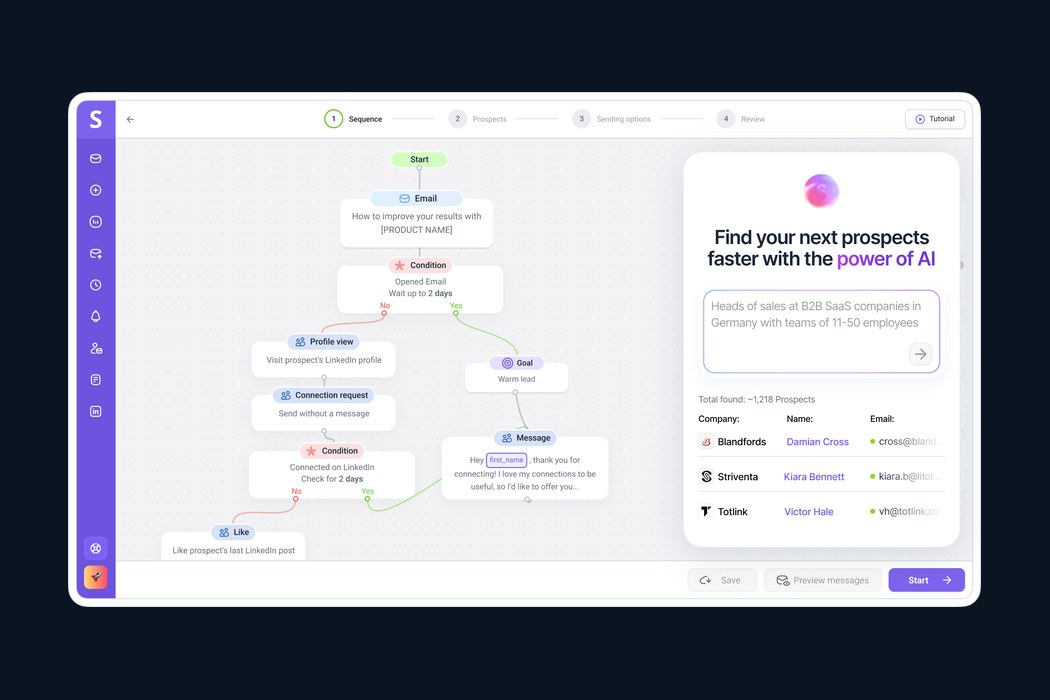
Snov.io Found the Email. Then It Learned the Hard Part Was Everything After
The Ukrainian SaaS started as a Chrome-friendly email finder. Its more interesting move was admitting that a found address is useless until prospecting, verification, follow-ups and pipeline all share the same room.
Digistore24 Built a $3 Billion Checkout by Doing the Work Creators Hate
The German-born platform bundles payments, tax, refunds, affiliate payouts and funnel tools into one transaction fee. For online sellers, the promise is simple: give up a slice of every sale to get your back office - and a distribution network - in return.
SalesboxAI Wants to Turn B2B's Messy Growth Stack Into One Machine
B2B teams bought a tool for every stage of the funnel and inherited a coordination problem. SalesboxAI's bet is that one signal-driven layer can make the ads, intent data and follow-up behave like a single revenue team.