A salesperson ends a call, writes a follow-up, fixes a calendar invitation and returns to an inbox that has quietly swallowed the afternoon. Somewhere else, a manager opens Salesforce and asks why the account looks untouched. Both people are looking at the same work. Only one can see it. Groove built a business in the gap between those two screens.
The company was founded in 2014 by Chris Rothstein and Austin Wang. Its proposition sounded modest enough: let revenue teams conduct outreach from the tools they already use, then put the evidence of that work where the company keeps its customer record. In enterprise sales, modesty can be an advantage. You do not have to persuade thousands of people to love another destination app if the useful part appears in their inbox.
- What it does: Groove runs sales outreach, captures activity and guides work across email, calendar and Salesforce.
- Who uses it: Account executives, prospecting teams and customer teams at large B2B organizations.
- Why Clari bought it: Clari had the view of the revenue pipeline; Groove supplied the daily actions that move it.
- The caveat: Customer gains are case study results, not a promise that every deployment will repeat them.
A category built around the wrong desk
Sales engagement software grew up around the sales development representative: a specialist who works a queue of prospects, sends a sequence of messages and hands a promising conversation to somebody else. Groove looked at the account executive. That person might prospect on Monday, negotiate on Wednesday and help an existing customer on Friday. A rigid sequence is useful for one part of the job; it cannot be the entire job.
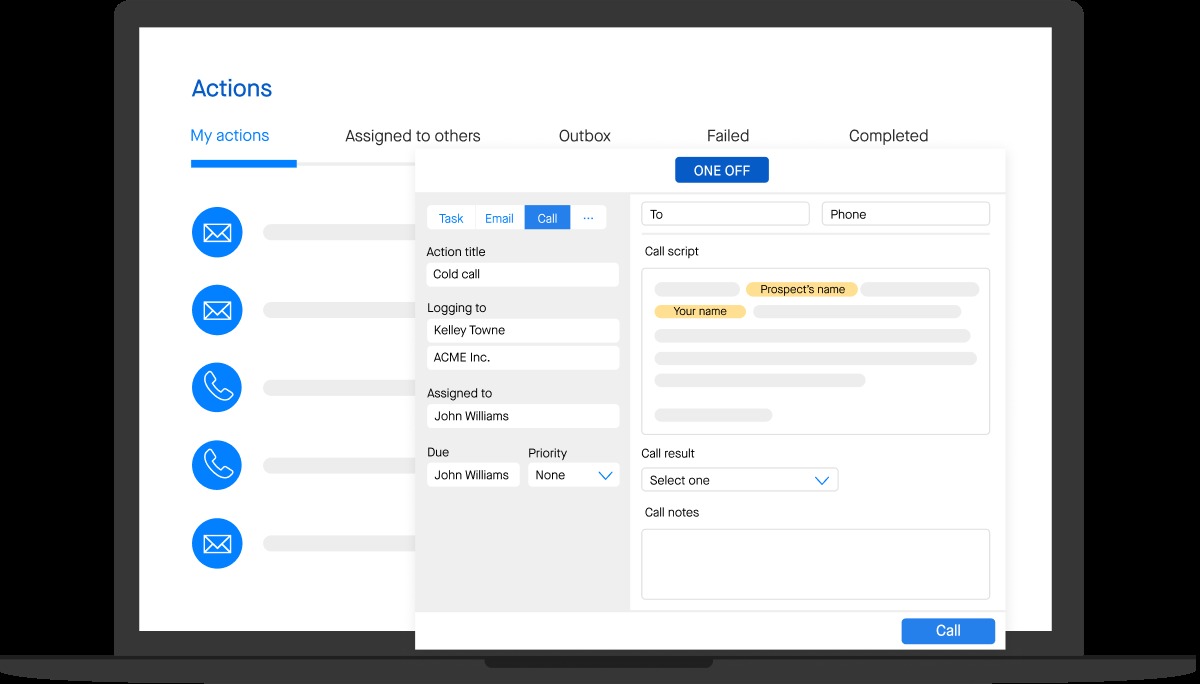
Groove therefore tied repeatable outreach to account context. Its Flows organize the steps in a campaign. Templates make approved language easy to find. Activity capture saves the call, email or meeting back to Salesforce. Spaces gives a team a shared view of account work. The product now sits inside Clari’s broader revenue platform, where a forecast signal can lead toward a concrete seller action. The point is less glamorous than “AI transformation,” but more testable: fewer lost handoffs, fewer blank records, fewer minutes spent copying a meeting into a database.
Its architectural preference matters. Groove describes itself as Salesforce native. In a customer account published by Clari, a Slalom consultant said that a managed package kept Salesforce as the database of record and reduced the field mapping and synchronization work she had faced with other engagement platforms. That is a technical distinction with a very human consequence. A rep can distrust a dashboard that is two hours behind. A manager can distrust the forecast built from it.
What failed before the switch
Brooksource, a technology staffing business with nearly 200 full-cycle sales reps, offers a useful example. Its prior engagement platform was hard to use, difficult to customize and poorly connected to Outlook and Salesforce. Reps complained that the messages made them feel like robots. Adoption never exceeded 74%, according to Brooksource’s account. Managers consequently lacked a reliable view of what the field was doing.
The firm compared leading providers and chose Groove for its flexibility and fit with full-cycle selling. It used Flows and templates to distribute marketing language while leaving room for individual changes, and Spaces to coordinate account work and coaching. Brooksource reported 98% adoption after the switch, along with an 83% rise in revenue per rep measured against its last full quarter on the old solution. It also reported 20% revenue growth in the first quarter of use. Those figures belong to this customer’s account, and the software arrived alongside a change in process. That combination is the interesting lesson.
“Reps didn’t see the value in it, and their inability to customize messages made them feel like robots.”Mitch Thomas, Brooksource sales enablement manager
A Fortune 500 manufacturer had a different first failure: its outsourced inside sales operation produced weak leads and generic responses. It brought the function in-house and asked consulting firm Slalom to evaluate the software. Slalom selected Groove, reporting technical implementation in hours and a broader rollout in weeks. The manufacturer reported a 32% higher conversion rate for leads in the new process than in the previous outsourced arrangement. Again, the process and the platform moved together. The number is evidence of one redesign, not a laboratory verdict on a product alone.
The patient capital that became impatient
Rothstein had been a sales director at Google. By 2020 he told Forbes that he had resisted raising more money until the company proved people would pay. “We have to prove that this is valuable enough and that people are going to pay us,” he said. Groove had raised roughly $4 million before its $12 million Series A that May. Level Equity led the new round; Capital One Ventures joined as a particularly telling investor because Capital One was also a customer.
The money bought a faster push into a market that was suddenly selling through video calls and email. Groove reported about 50,000 users and nearly 450 enterprise organizations in 2020, along with annual recurring revenue just under $10 million. In October 2021, it announced a $45 million Series B led by Viking Global Investors to expand internationally and into larger enterprise accounts. The supplied company record stops at the Series A; the public funding announcements tell a longer story.
This was never an empty field. Outreach and Salesloft were established sales engagement alternatives; Salesforce had its own engagement tools. Groove’s pitch was its particular fit: Salesforce native data, lighter switching between tools and workflows for people who own the whole relationship. That position can be copied only in part. A buyer also needs a CRM that matters, disciplined account definitions and a team willing to agree on which activities should be captured. Without those conditions, automatic logging can merely make a bad process faster.
Clari needed a verb
Clari announced the acquisition in August 2023. Its revenue platform helped companies inspect pipeline, forecast outcomes and spot risk. Groove supplied the verb after those observations: contact the customer, run the next play, record what happened. Clari executive Kyle Coleman later said the companies had already partnered and built an API integration. Customers wanted to take action from a Clari insight without jumping to another application. Buying Groove made that loop part of one product family.
There is a pleasing symmetry here. Groove began by arguing that sales software should meet the rep where work happens. Clari bought it because leadership wanted the same courtesy: an insight should meet an action. Neither idea abolishes the messy judgment in a customer relationship. Both admit that software earns its place when it removes a small, repeated tax on that judgment.