The modern sales meeting has a curious prelude. Before a seller speaks to a customer, they often have to investigate the customer. The email thread is in one tab. The last call lives in another. The account record, if anyone updated it, is somewhere else. By the time the meeting begins, the salesperson has done a small piece of detective work just to remember what the company already knows.
Reevo, founded in 2024, is built around the argument that this prelude should disappear. Its product puts prospecting, outbound messages, calls, CRM records and forecasts in one system. The promised payoff is practical: when a prospect replies or a buyer raises an objection, the next person working that account should see it and act on it without reconstructing the story from scraps.
- The job: Find buyers, contact them, run meetings and track deals in one workspace.
- The customer: B2B founders, sales teams and revenue leaders who juggle separate tools.
- The bet: A shared record of calls, emails and activity makes useful automation possible.
- The price: Core, Pro and Enterprise plans are published, but dollar rates require a quote.
The first thing to fail was the handoff
The company’s origin story is unusually specific. David Zhu, Cindy Hao, Clement Fang and Curtis Tan had worked across DoorDash, OpenStore and other technology companies. Zhu and Hao met while leading growth at OpenStore. Zhu had known Fang since elementary school and Tan since sixth grade. They knew how to build software, but the irritation they chose to pursue was the mundane one facing a revenue team: information slipping between applications.
Zhu wrote that their previous companies had spent heavily on software and consultants, only to end up managing the integrations themselves. The first failure, in other words, was not that the CRM could not store a contact. It was that the contact’s story had to be carried from database to sequencer to call recorder to forecast by people doing clerical work. A transcript that never informs the opportunity record is an expensive diary.

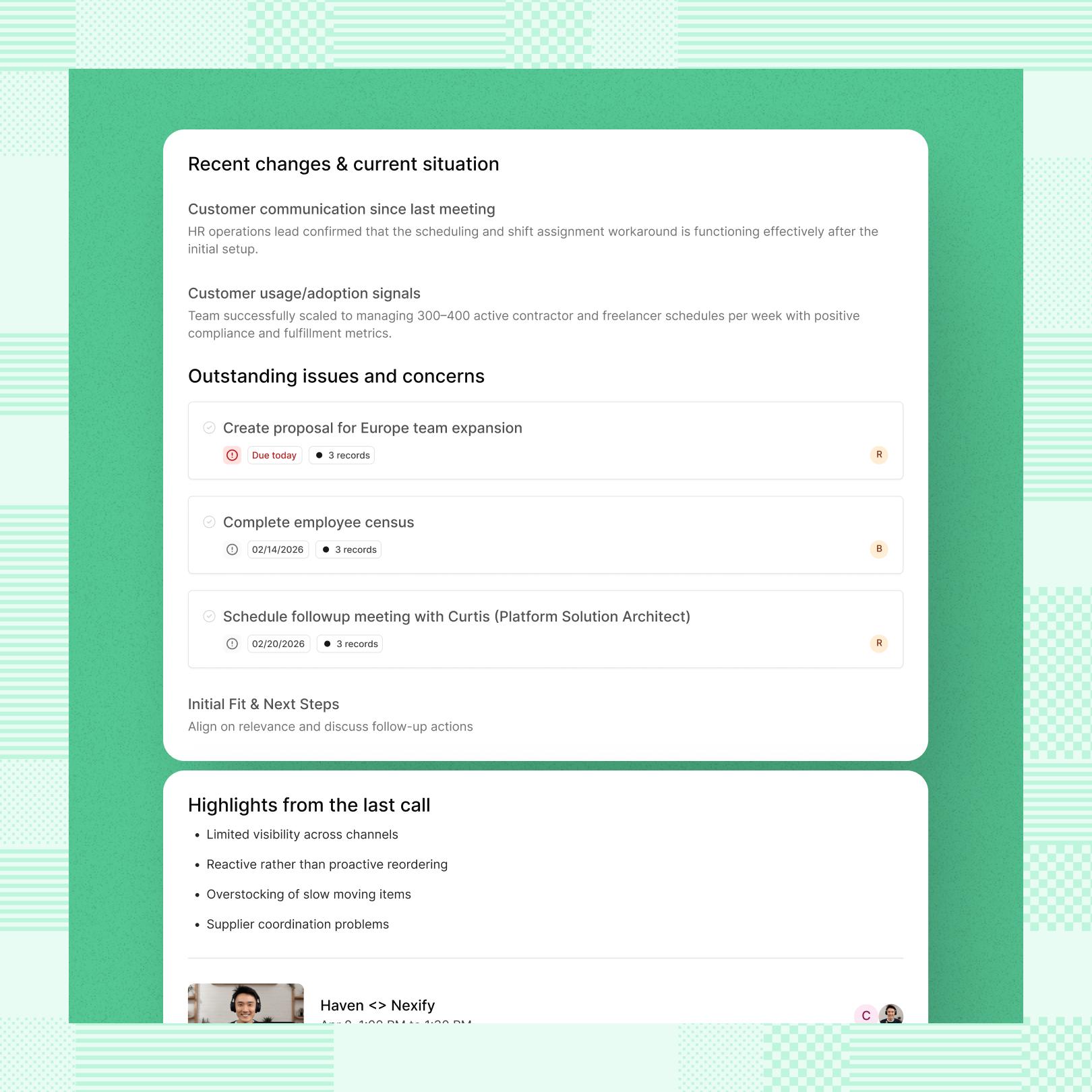
Reevo’s answer is a five-part product arranged around the sales day. Find builds and enriches prospect lists. Connect handles email infrastructure, sequences, calls and scheduling. Sell prepares and records meetings, extracts actions and drafts follow-ups. Manage turns activity into pipeline reporting and forecasts. The Foundation underneath is the CRM and a shared memory layer; Ask Reevo lets staff ask questions about deals and get answers tied to calls, emails or records.
A long sales cycle has a long memory
The clearest test is Casca, an AI lending company selling into banks. According to Reevo’s customer account, Casca began with HubSpot for CRM, Fireflies for call notes and Gmail for outreach. A colleague preparing for a meeting might have to search all three to learn what a buyer said months earlier. That is a particularly awkward habit when a deal involves executives, account managers and technical specialists over many months.
Adlon Adams, Casca’s revenue leader, had seen a larger version of the problem elsewhere. A stack of Salesforce, Gong, Apollo and Outreach required a revenue operations specialist to tend integrations and duplicate records. At Casca she configured Reevo’s dialer, email sequences, recordings, sentiment analysis and pipeline without that extra role, the company’s case study says. The reported gain is a change in who can see the account: the engineer and the seller consult the same history.
“Every single person involved in the sales cycle lives inside Reevo.”Adlon Adams · Casca, quoted in a Reevo customer story
Propel offers the small-team version. Its founder, Tony Dong, tried Salesforce and HubSpot, found them too cumbersome for his early sales process, and went back to spreadsheets. As opportunities multiplied, the spreadsheet went stale. Propel imported its data into Reevo and, according to the company’s account, was live within a day. Dong now uses the Reevo bot in Slack to ask about deals and add opportunities after calls. The shift is from remembering to update a table to asking the system to do it while the conversation is fresh.
The distinction lives between the features
There are plenty of CRMs, data vendors, call recorders and sequencing tools. Reevo’s competitive claim is architectural: these functions should share the same account context from the start. A prospect found in its database can become an outreach target without exporting a CSV; a meeting can create follow-up work and inform the deal record; a manager can ask why a forecast changed and trace the answer back to an interaction. The company also lists integrations with Salesforce and HubSpot, so customers can use parts of Reevo alongside an existing system.
That distinction has a limit worth understanding. A connected memory is only as good as the conversations it captures, the records it matches and the permissions a team grants. Reevo’s August 2026 recording health reports explicitly show missed meetings and why they were missed; its deduplication tools ask teams to review potential duplicate records. Those are revealing product choices. If a bot misses the call or the wrong person owns the record, a confident answer may be confidently incomplete. The firm is building tools to expose those gaps rather than treating capture as automatic by magic.
The financing is often compressed into a single $80 million announcement. Public descriptions from Reevo’s counsel and its own structured company information split it into a $10 million seed in 2024 and a $70 million Series A in 2025. Bloomberg reported a $500 million valuation at the announcement. These are large sums for a young company, but they do not answer the buyer’s immediate question: what does the software cost?
Reevo’s pricing page gives the structure but not dollar amounts. Core and Pro are sold by quote, with Enterprise tailored to the buyer. The allowances show the business model clearly: enrichment credits, dialer minutes, recorded meeting minutes, active sequences and workflow credits rise with the plan. Core lists 1,000 enrichment credits and 2,500 recorded meeting minutes per user each month; Pro doubles enrichment and offers 4,000 recording minutes. A team can compare its actual usage against those limits before it asks for a price. Any claim that Reevo saves money over a particular stack would need that quote and the old bills.
A prospecting engine joins the room
In July 2026, Reevo acquired Ciro, a prospecting agent that searches for buyers, qualifies them, enriches records and drafts outreach. It was a telling purchase: prospecting is often the point where a seller exports a list from one vendor and imports it into another. Bringing Ciro into Reevo’s CRM gives the company a more complete answer to its own complaint about handoffs. Reevo said at the time that it had grown fourfold since its November 2025 launch and passed 90 employees. Those are company-reported figures, not an audited customer count.
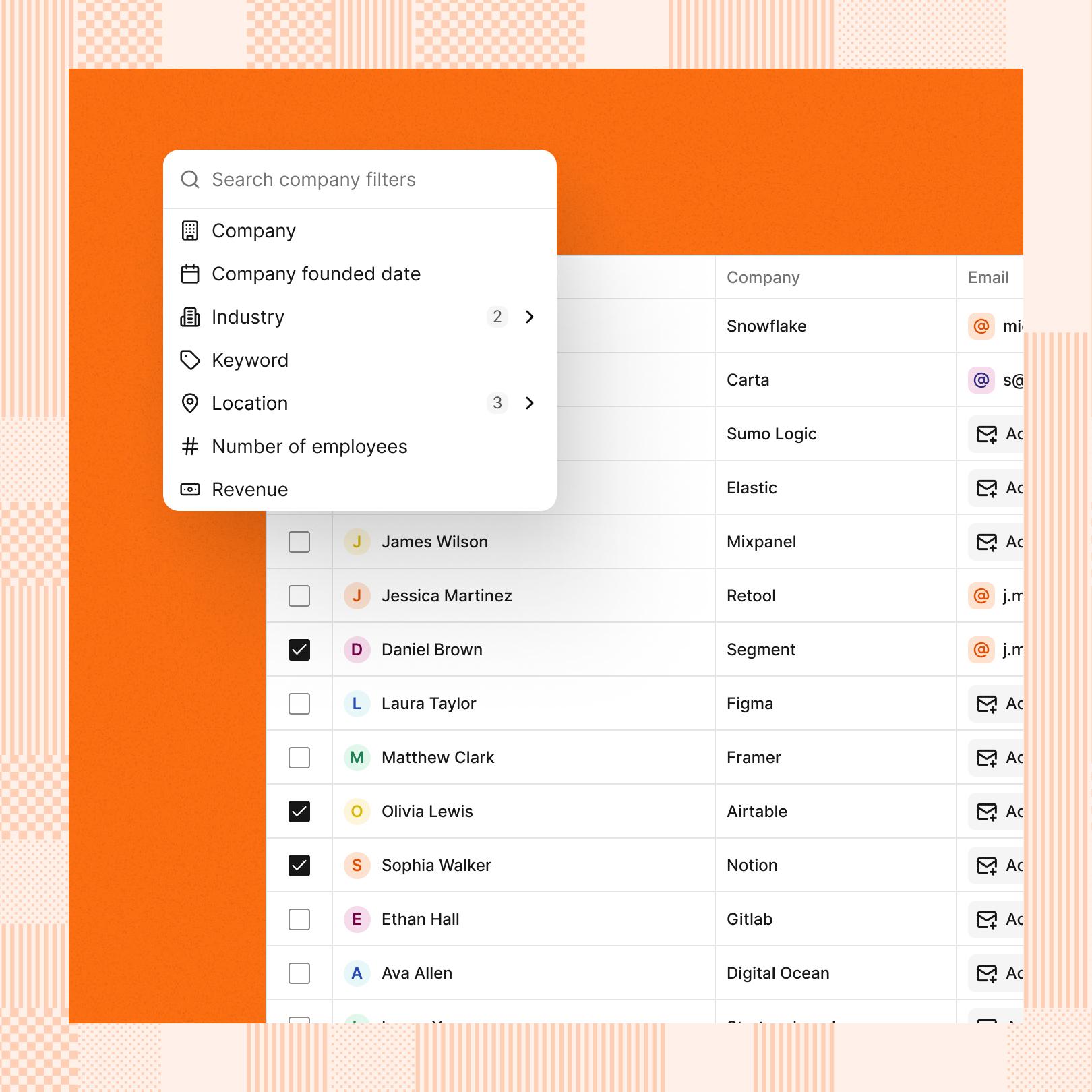
The company’s release notes suggest a practical direction beyond the acquisition. In August, Reevo added deduplication, a queue for CRM cleanup suggestions and a workflow builder that turns plain-language instructions into editable drafts. In September, it expanded desktop recording to more than 90 languages and made customer files private by default. That is the unglamorous work of making a shared memory useful: records must be clean, meetings must be captured, and actions must be reviewable.
What a sales team can steal from the idea
A team need not buy Reevo to learn from its premise. Pick one active deal and trace the path from first prospect to next forecast. Count where the customer’s words are copied, summarized, lost or retyped. Then decide which record should be authoritative and who should update it. Reevo’s product is a commercial answer to that audit; the audit itself is free.
For buyers, the useful trial is similarly concrete. Import a small, real pipeline. Record a few ordinary meetings, including one messy ad hoc call. Ask the system what changed, why a deal looks risky and which follow-up it proposes. Check each answer against the original conversation. If the team depends on a deeply customized incumbent CRM, complex permissions or calls the software cannot capture, consolidation may take more work than the demo suggests. The claim to test is not whether AI can write a summary. It is whether the next person entering the deal has the right story.