The best sales-software origin stories contain a little self-incrimination. Before Klenty became a platform, its founders were salespeople stuck doing the sort of work their future product would erase: cold calls, prospect research, one-at-a-time emails and the nagging arithmetic of follow-up. Vengat Krishnaraj, Praveen Kumar and Deepak Kumarasamy began building from an apartment in Velachery, Chennai, in mid-2015. The premise was plain. A carefully written email could work. Writing and tracking hundreds of them by hand could not.
The first version concentrated on personalized email prospecting. It extracted signals from email, helped decide when to follow up and automated the repetition around a human message. Then came the unusually neat proof: before Klenty had a paying customer, the founders used Klenty to send a cold email to an Australian company. That company bought. No grand launch, no celebrity waitlist - just the software completing the job it had been hired to do.

The original bruiseFollow-up was the feature hiding inside the company
A single cold email usually does nothing. That was not a surprising insight, but it was a commercially useful one. Salespeople know that outcomes live in the second, fifth or eighth touch. Their software often scattered those touches across an inbox, a CRM, a calendar and a handwritten list that went missing under lunch. Klenty packaged the sequence. A manager could turn a working playbook into a cadence; a rep could execute it across many prospects; the CRM could retain the record.
“A single email may not elicit a response. Sales requires immense follow up.”Vengat Krishnaraj, 2017
By June 2017, Klenty said it had more than 200 paying customers. It had also joined the NASSCOM Warehouse startup program and attracted early backing from M. Ramprasad and T. R. Santhanakrishnan. The amount was not disclosed. What mattered more to the product was the founders’ next constraint: the email sequence was only one slice of a rep’s day.
What it does nowA sequence grew arms, a phone and a memory
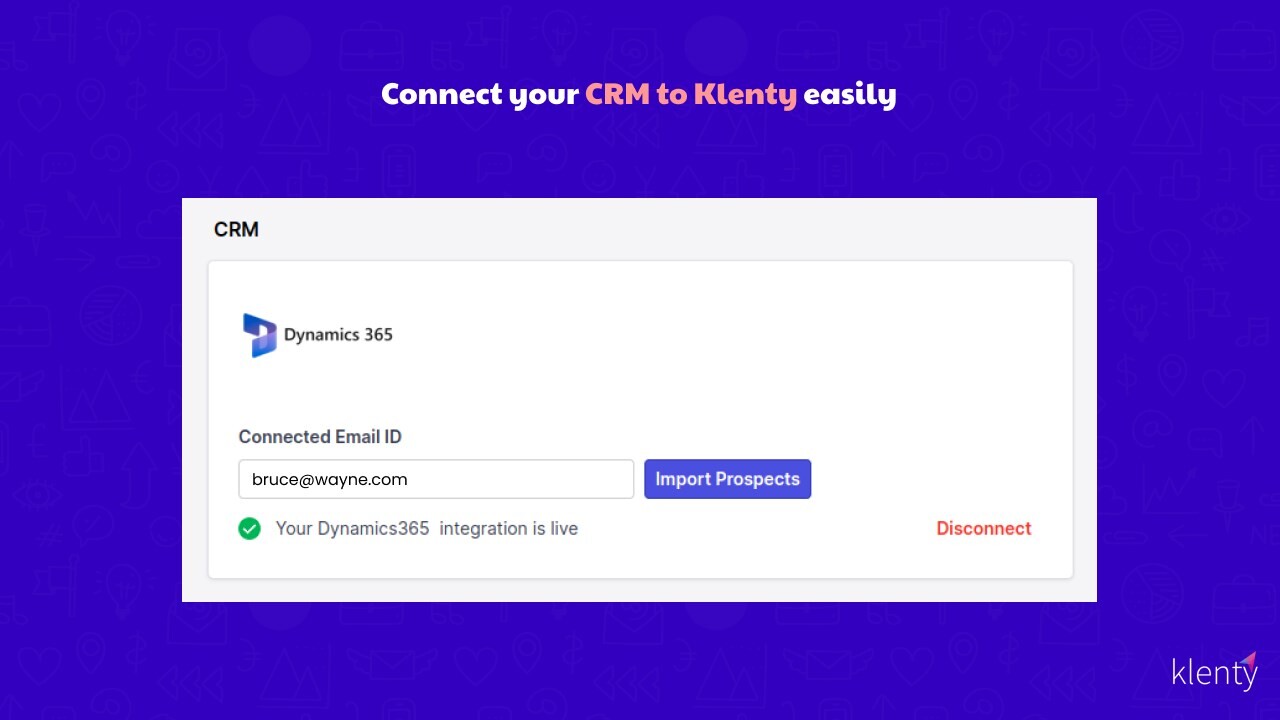
Today Klenty is a sales-engagement platform: software that sits between a customer-relationship-management system and the humans who must create pipeline. It can import prospects from Salesforce, HubSpot, Pipedrive, Zoho or Microsoft Dynamics; place them into a sequence; coordinate email, calls, LinkedIn, text and tasks; record the activity back to the CRM; and show managers what is getting replies, conversations and meetings.
The product line has widened in the direction of the work. Its sales dialer includes click-to-call, power and parallel modes, voicemail detection, transcription, call recording and coaching. Connect AI watches the less glamorous mechanics beneath calling: which local number should appear, whether a number’s reputation is decaying, and which prospects are more likely to answer. Action AI listens for an agreed next step in a call, then drafts the email, creates the task or schedules the follow-up. SDRx extends further upstream into list building, account research and personalized outbound.
The Klenty loop
or target list
That breadth is the differentiator and the danger. A cold-email tool is easy to understand. A sales operating layer asks a team to move daily habits into it. Klenty’s pitch to small and mid-market companies is that they can get the multichannel coordination associated with Outreach or Salesloft without adopting quite as heavy or expensive a stack. Its competitors now include those companies as well as Apollo, Reply, Groove, Nooks, Orum and the many cheaper tools that do one piece well.
The billWhat it costs - and what the sticker leaves out
Klenty sells subscriptions. On annual billing, its published sales-engagement prices are $50 a month for Starter, $70 per user per month for Growth and $99 per user per month for Plus. Starter is centered on email outreach. Growth adds calling, multichannel work and CRM integrations. Plus adds data credits, account-based selling, AI next actions and coaching. Parallel and power dialing is listed separately at $45 per user per month. There is a 14-day trial without a credit card.
The sticker is not the whole cost. Someone must define the buyer, clean the data, write the messaging, connect the CRM, set reasonable sending limits and teach reps when to leave the sequence. Automation saves execution time only after a team has paid the thinking cost. Add-ons also matter when calling is central. A bargain seat can stop looking cheap once every dialer seat, phone minute and data credit joins the invoice.
What failed firstThe manual method broke before the product did
Klenty’s early failure was not a famous pivot or a product crash. It was the method the founders knew from their previous work. One-to-one prospecting could be personal, but it stopped scaling. A single message rarely earned a reply, so every promising account created more reminders and more clerical work. Their change of mind was gradual: email automation solved the first bottleneck, then the surrounding channels became the bottleneck, then the record-keeping, then the decisions after a conversation.
The company’s 2024 rebrand made that evolution explicit. Klenty 2.0 placed “human plus AI” at the center, with two blues in the new logo representing human intuition and machine precision. The idea is tasteful marketing, but it also describes a real product boundary. Klenty does not need AI to invent selling. It needs AI to notice that a prospect asked for pricing, prepare the promised email and keep the CRM from becoming archaeological evidence.
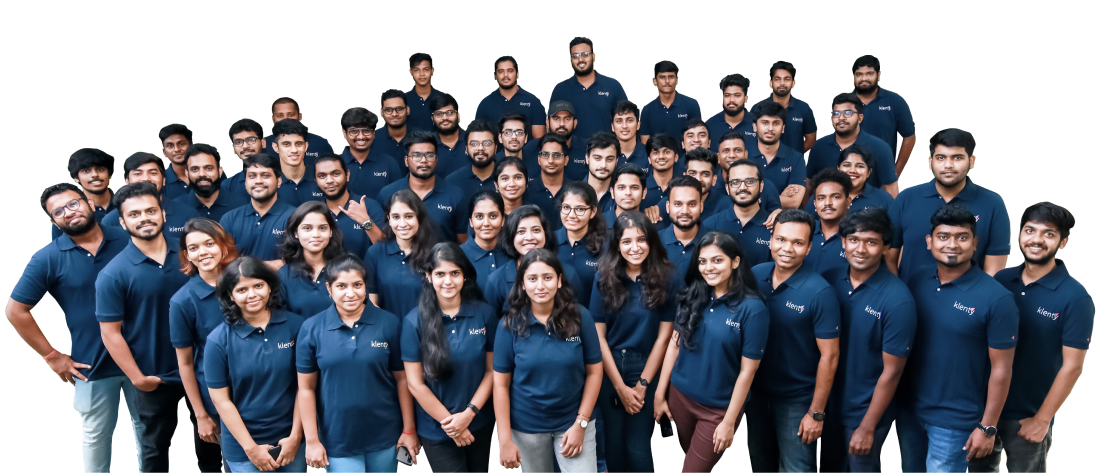
That split geography is part of Klenty’s shape. The company lists its headquarters in California and describes the product as built in Chennai. Its official page says 80-plus team members; LinkedIn places the company in the broader 51-to-200 range. Public culture language leans hard into mastery, learning and an almost suspicious amount of Friday energy. The vision is written as an equation - “Work = Play.” Behind the cheerfulness sits practical domain expertise in deliverability, CRM data flow, outbound calling and the daily mechanics of managing SDR teams.
The two-continent model also fits the market. Klenty sells globally, but its origin outside the usual San Francisco sales-tech cluster helped create a price-conscious alternative to American enterprise incumbents. That does not automatically make it simpler. A five-person sales team may find the platform broader than it needs; a global enterprise may demand governance, procurement and ecosystem depth from a larger vendor. Klenty’s natural territory is the growing team that has outlived an inbox and spreadsheet but does not want its engagement platform to become a transformation program.
Evidence, with a footnoteCustomers buy order, not merely output
Klenty’s customer stories show the job more clearly than its AI vocabulary. LearnWorlds used sequences tied to Pipedrive to standardize inbound follow-up and reported moving from 120 to 160 booked meetings a month. Double the Donation combined a shared sequence with Zoho synchronization and reported a 93 percent increase in outbound revenue. Synup describes using past conversation history, number rotation and intent signals across outbound, inbound and closed-lost motions. These are vendor-published case studies, not controlled experiments, but their common ingredient is process discipline.
What did the customers actually copy? They stopped asking each rep to remember the system. They wrote the system down as a cadence, connected it to the CRM, routed prospects by stage, automated low-judgment updates and kept the rep responsible for the message and conversation. That is more replicable than buying a particular button. A spreadsheet and calendar can imitate the logic at low volume. Software becomes useful when the handoffs, people and touchpoints multiply.
When this playbook does not work
- Your team has not defined a buyer or found a message that earns any response.
- The market is tiny, the deal is intensely relationship-led, or every account needs bespoke research.
- Your data is stale. A precise cadence aimed at the wrong person is still wrong.
- Local consent, privacy or call-recording rules restrict the channels you plan to automate.
- Managers reward activity counts, encouraging reps to use automation as a volume cannon.
The stealable lessonAutomate the choreography, not the judgment
The most useful thing to copy from Klenty is its sequence of product decisions. Start with a frequent pain you understand personally. Use the product on your own revenue motion, where bad automation hurts immediately. Turn the working behavior into a repeatable playbook. Connect it to the system of record. Only then let software take the next action - and preserve an approval step where context or reputation is at risk.
Klenty now occupies a crowded strip of the market between simple outreach utilities and enterprise revenue platforms. Its case rests on consolidation: one vendor for sequencing, dialing, prospect data, conversation intelligence and workflow automation, with a published price that remains legible to a growing team. The trade-off is the same one every suite makes. Breadth is convenient when the parts are good enough; specialists win when one channel is mission-critical.
The market will judge the newer AI features by a less forgiving standard than a product launch. Drafting a follow-up is easy to demonstrate. Drafting the correct follow-up, assigning it to the right person, respecting consent and not inventing a promise are operational tests. Klenty’s approval controls matter for that reason. The useful future is not a robot spraying plausible messages while the team watches a dashboard. It is a rep spending less time copying call notes and more time noticing what the buyer actually said.
A decade after the Velachery apartment, the company’s founding observation still does most of the work. Sales requires persistence, but persistence is a poor use of memory. Put the repetitions in software. Leave the reason to call - and the conversation when someone finally answers - with the person.