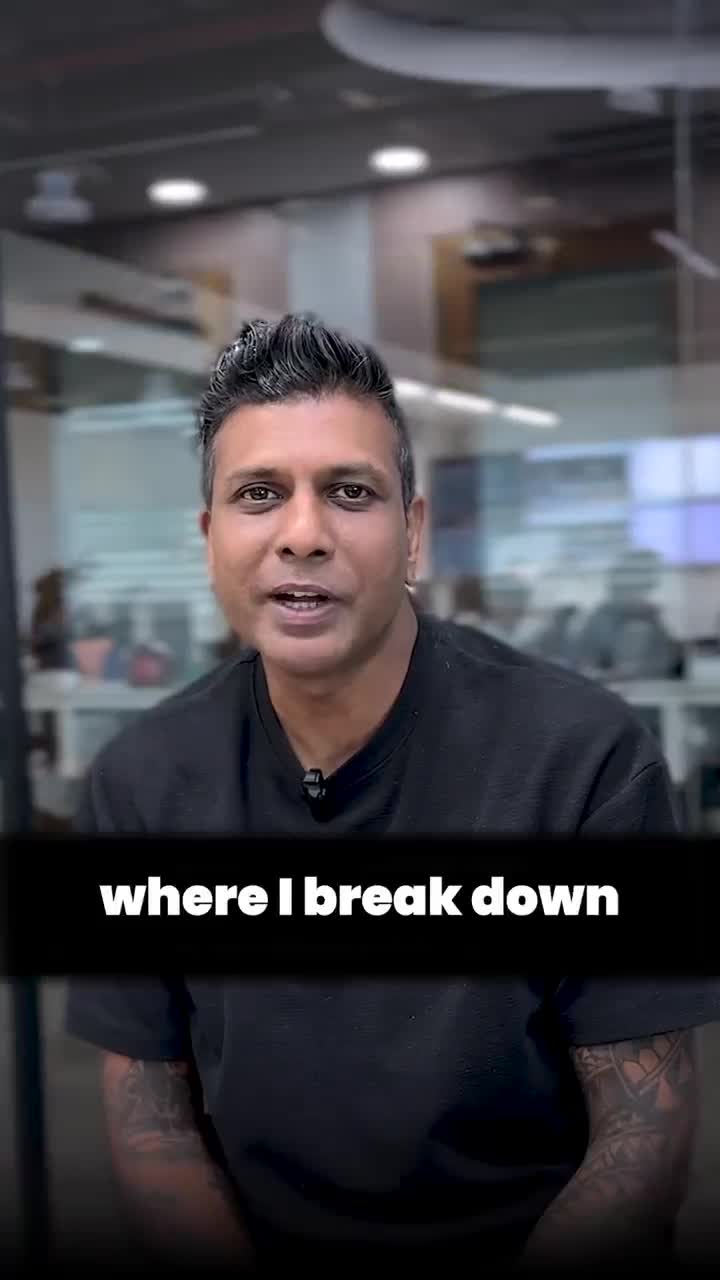
A cold call begins long before anybody says hello. It begins with the number a rep calls from, the time of day, the order of the list, the last email a prospect opened and whether a promised follow-up is hiding in another tab. By the time a phone rings, a dozen small decisions have already voted on the outcome. Ashok Kammara has made a second career out of counting those votes.
Today he is chief marketing officer at Klenty, the sales-engagement software company he joined as its founding marketer. His remit is unusually concrete for a title sometimes associated with atmospheric nouns: he owns the pipeline number across inbound and outbound. For nine years, he has helped build the company's go-to-market motions from the ground up. The work is part marketing, part product observation and part industrial housekeeping.
Before software, Kammara spent 13 years in financial services. He worked in financial research at Irevna, moved into equity-derivatives trading analysis at CRISIL, and then became a business analyst in equity derivatives at Credit Suisse. In 2017 he stepped into tech. The scenery changed from trading desks and risk models to cadences and connect rates, but the habits traveled rather well.
The analyst crosses the floor
Finance and outbound sales share an inconvenient feature: both generate more signals than a person can reasonably hold in mind. Some are noise. Some are early warnings. A good operator needs to know the difference and act before the distinction becomes painfully obvious.
Kammara's public explanations tend to begin at this level. He is less interested in the romance of persuasion than in the sequence of work. Consider the familiar SDR morning. A rep logs in to find fifty, eighty or a hundred activities stacked in a queue. Working from top to bottom feels diligent. It may also mean calling a stranger before returning the call of someone who has already shown interest.
In one episode of his weekly series, Building Outbound, Kammara describes the problem from his own management experience. High-intent prospects were spread across several places: missed calls in notifications, promised follow-ups among pending tasks, engaged email readers under a separate view. Ask a busy rep to check three places for one job and, sooner or later, the third place acquires cobwebs.
That observation informed Klenty's Smartlist workflow, which brings callbacks, scheduled follow-ups and email engagement into one prioritized view. The cleverness is not theatrical. It is the removal of a memory test. Warm prospects stop competing with the rest of the task pile on equal terms.
A number can be tired
There are other invisible failures. A rep makes one hundred calls and gets five connections. The standard suspects assemble quickly: a weak list, an awkward pitch, an underperforming rep. Kammara asks whether the phone number itself has been flagged as spam. Buying more numbers and rotating them by hand may help briefly, but the relief can expire as those numbers are used up in the same fashion.
His cold-call deliverability checklist treats the calling number like an operating asset. Assign numbers carefully. Match location when appropriate. Pay attention to the time and to previous pickup behavior. Rotate numbers before they are exhausted. Leave voicemails where they make sense. Put the warmest prospects first. None of this produces a cinematic sales montage, which is exactly why it is easy to neglect.
The former derivatives analyst is visible here. Volume by itself says little. Exposure matters. Order matters. A dashboard can report strenuous activity while the underlying system quietly makes each new activity less valuable.
Writing close to the product
Kammara was writing about the mechanics of outreach well before Building Outbound had a name. In a 2017 essay on the “breakup email,” he examined the final message in a sales sequence: the note that acknowledges a prospect's silence and closes the loop. Later Klenty articles ranged across cold-email structure, response triggers, remote sales management, personalized video and the point at which a company has outgrown its sales process.
The range is broad, but the unit of attention stays small. A subject line. A handoff. A follow-up. A record that did not reach the CRM. His explanation of Klenty's Zoho integration concentrated on the annoyance of moving between a CRM and a sales-engagement platform: importing contacts, scheduling meetings and recording activity twice. The larger promise of software arrived through the removal of toggling.
He has also appeared as a maker around Klenty's newer AI products. On Product Hunt, Kammara answered questions about SDRx, an outbound product that draws on account and prospect research to personalize messages, and SchedX, a website agent designed to qualify visitors and schedule meetings. His replies stayed close to implementation. He described customizable qualification methods such as BANT or MEDDIC, CRM connections and the work required to make a response feel immediate. When a commenter suggested LinkedIn Sales integrations for SchedX, his answer was cheerfully unfinished: “We are just getting started.”
This is a useful posture for a marketing executive in a product conversation. The message is allowed to meet an edge case. Instead of polishing the rough edge out of view, Kammara explains what the system does now and where it may go next. A product launch becomes less like a trumpet blast and more like office hours.
Consistency without the confetti
Kammara also applies cadence to his own publishing. At the start of 2025, he promised himself he would show up on LinkedIn more consistently than he had the year before. His year-end tally recorded around 150 posts, roughly two million impressions, more than 3,500 new followers and about 5,000 reactions and shares.
His chosen summary was better than the figures: “Nothing viral. Nothing sensational. Nothing flashy. But definitely more regular.” It is a marketer's account of compound interest, delivered by someone who once worked in finance. Regularity gave him a public laboratory for explaining the work while keeping the claims close to what an SDR manager might actually test.
Building Outbound extends that habit into a weekly format. Episodes have covered follow-up gaps, connect-rate problems, cold-call deliverability and the order in which reps attack a day of tasks. In July 2026, he also shared Klenty's analysis of 6,125 answered calls across the United States and Europe, using the data to argue that an opener effective in one region may not travel intact to another.
Financial research at Irevna, followed by equity-derivatives trading analysis at CRISIL.
Business analyst in equity derivatives at Credit Suisse.
Joins Klenty as founding marketer and begins building its go-to-market motions.
A year of regular publishing brings roughly two million LinkedIn impressions by his count.
Publishes the weekly Building Outbound series for SDR managers.
The operator in the org chart
Colleagues describe Kammara as approachable, clear and inclined to simplify. One former designer recalled joining without a dedicated head of design and relying on Kammara to structure thinking, validate creative direction and find a way through blockers. Another colleague credited him with teaching the fundamentals of SDR work and the value of being metrics-driven, while creating room for ideas and sharing credit.
Those accounts place a useful counterweight beside the machinery. Kammara's systems are designed for people who forget, get interrupted and must decide under pressure. Automation, in his telling, is not an excuse to treat a sales team like a set of pistons. It should spare the team from preventable confusion so that a rep can attend to the distinctly human part: a conversation with somebody who may not wish to be called.
Outside work, his Klenty biography lists cycling, football and DJing. Three hobbies organized by pace, space and timing feel almost suspiciously on theme. Still, they offer a livelier portrait than the standard executive collection of airport lounges and strategic alignment. There is pleasure in cadence as well as discipline.
His formal record adds one more clue. Kammara earned a bachelor's degree from the University of Madras and holds the Financial Risk Manager certification from the Global Association of Risk Professionals. The credential belongs to his first career, yet its central instinct remains legible in his second: find where a system is exposed before the loss arrives. In outbound, the losses come in miniature. A number gets flagged. A callback waits. A prospect's interest cools while a rep completes lower-value tasks. Each is too small for a dramatic meeting and large enough to matter in aggregate.
Kammara's career pivot is tempting to frame as a leap from numbers to storytelling. The evidence suggests something subtler. He moved from one numerical world into another, then learned which numbers had a person waiting behind them. A missed callback is a data point, but it is also someone who tried to talk. An email open is a signal, but its shelf life is short. A hundred completed tasks can be a fine-looking failure if the important task was number 101.
His work at Klenty lives in that narrow interval between signal and action. It is not glamorous territory. Neither is plumbing, and a city notices when the plumbing is poor. Kammara has spent nine years making the pipes of outbound sales easier to see, easier to arrange and a little less likely to leak.