At Gatewise, the trouble began with a sequence that would not behave. A person who replied might remain in the automated campaign. The software kept talking after the human conversation had already moved on. For a sales director, that is the sort of flaw that makes every other feature feel decorative.
Gatewise tried two engagement platforms before landing on Mixmax. Its director, Jeff Lyons, described problems with CRM duplication in one and broken sequencing and slow Gmail performance in the next. He installed Mixmax for himself, used it for roughly 45 days, and only then brought the rest of the company across. In the customer’s account, the new contract cost 30% less than the old Groove deal. The more interesting saving was harder to invoice: fewer moments spent wondering whether the system had just embarrassed you.
- Mixmax puts tracking, sequences, scheduling and CRM updates beside everyday email.
- Its three AI copilots help sort inbox work, prepare meetings and manage outreach.
- A free tier makes it easy to try; paid plans start at $29 per user monthly with annual billing.
- The strongest case is practical: a reliable follow-up is worth more than a larger pile of alerts.
The stubborn little email
When Mixmax launched in San Francisco in 2014, the ambition sounded modest: make email more useful at work. Co-founders Olof Mathé, Brad Vogel and Chanpory Rith built into a place people already opened each morning. The early product offered templates, scheduling, send-later controls and signals about opens and clicks. Its wager was that a better business message needed fewer detours between tools.
By its 2018 Series A announcement, the company said it had more than 10,000 customers. The $10.35 million round backed a move from small business adoption toward larger teams. Mathé’s explanation at the time was unusually durable: email crosses organizational boundaries, while most corporate systems do not. A seller can ask a prospect to answer a message. Asking the prospect to join the seller’s software is another matter.
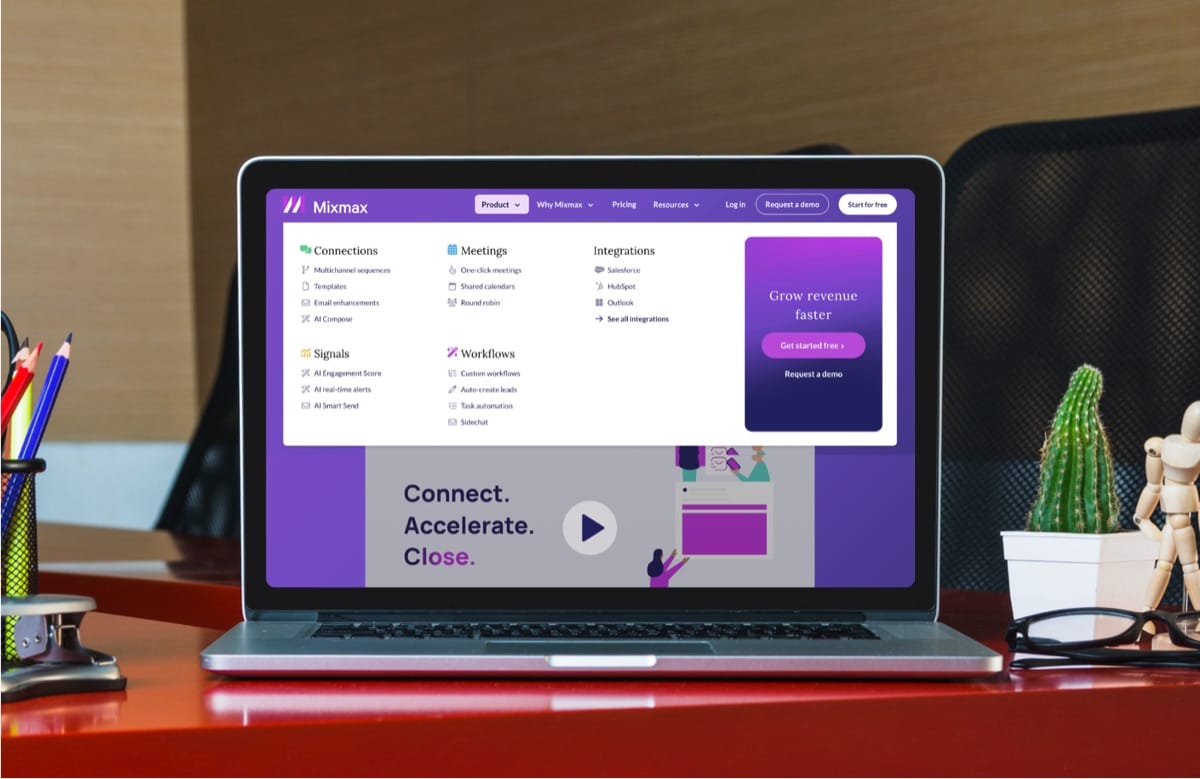
That starting point still defines the company’s place in the market. Outreach, Salesloft, Groove by Clari and HubSpot Sales Hub all compete for parts of the sales workflow. Mixmax emphasizes work inside Gmail, alongside Salesforce and HubSpot sync. It also markets Outlook support. That matters for teams whose sellers resent a second command center, though each buyer still has to check how well its own mail and CRM stack behaves in practice.
What the machine actually does
Consider a common Tuesday. A sales development rep sends a tailored note. Mixmax can show whether it was opened or a link clicked, set a reminder, place the prospect into a sequence, offer a booking link, and record the activity in the CRM. A manager can inspect response patterns. An account executive can look up prior meetings before the next call. A customer success manager can use the same machinery to handle a renewal, where a forgotten promise can be more costly than an unanswered cold email.
The point is the loop, not the number of messages.
In November 2025, Mixmax named a more ambitious version of this loop. It relaunched as Mixmax AI with three copilots. Inbox Copilot prioritizes mail and follow-ups. Meeting Copilot prepares for calls, captures notes and drafts what comes next. Engagement Copilot handles sequences across channels. The product vocabulary is new; the daily problem is ancient. Somebody must remember who said what, and then do the next sensible thing.
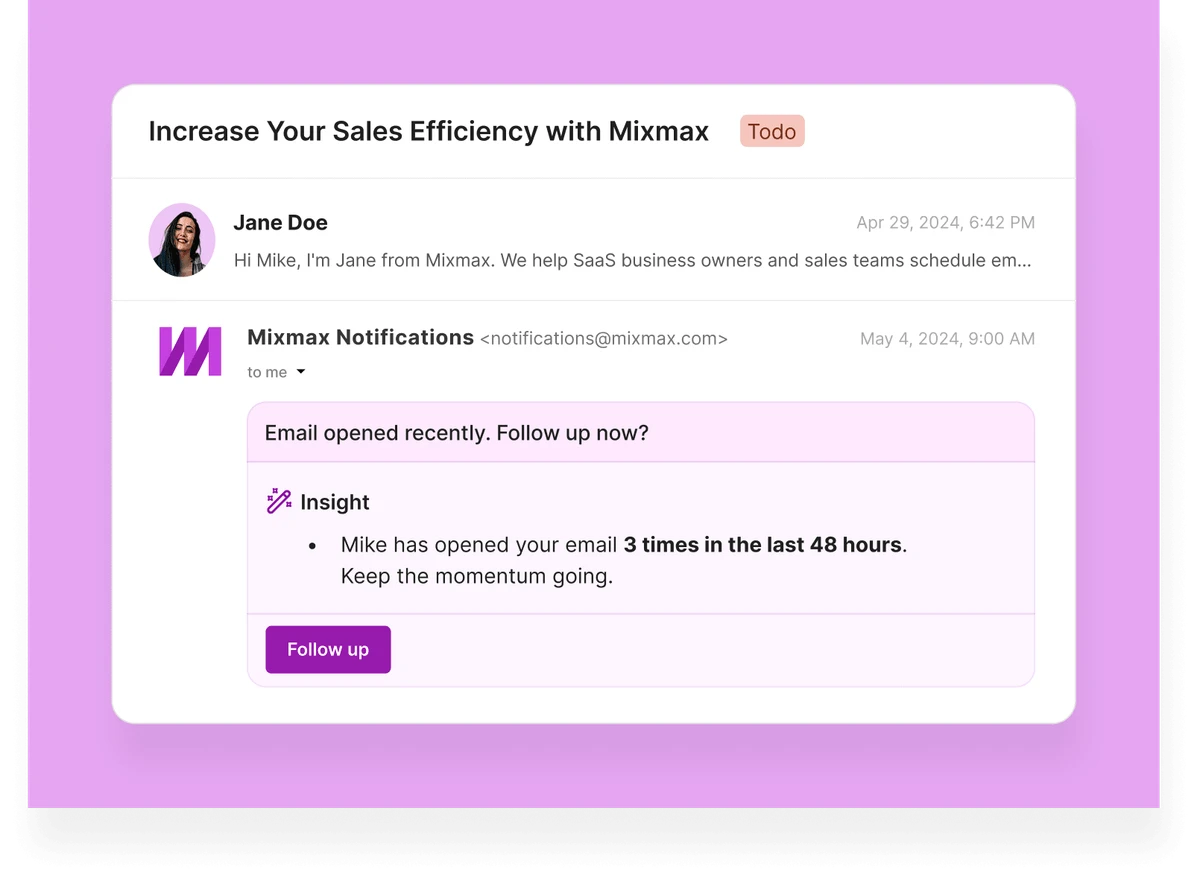
Mixmax’s AI sequence builder can draft a multi-stage campaign from a description of what is being sold, including subject lines and timing. Smart Send picks a send time based on engagement patterns. Meeting Prep, added in 2026, combines earlier notes, email history and Salesforce or HubSpot data into a pre-call brief. These are useful forms of memory, provided a rep checks the draft and the underlying record. If the CRM is stale, a beautifully written brief can still be beautifully wrong.
The customer who kept the human part
A less obvious example comes from Three Day Rule, a matchmaking service. Its staff were arranging introductions, scheduling meetings and tracking responses - relationship work with an administrative shadow. Matchmaker Marisa Reisel described using templates with two meeting choices, reminders for later check-ins and sequences for follow-up. She said each matchmaker could work with 50% more clients after those steps were automated.
more clients per matchmaker, according to Three Day Rule’s customer account.
Customer-reported result, not a promise for every team.The firm went further than standard email automation. Its developer described using Mixmax polls, rules and webhooks to update match statuses when a person responded. That detail is revealing. The copyable idea is to identify one repetitive handoff, give people a simple way to answer, then move that answer to the system of record. It works best when responses fit clear categories and the team has enough process discipline to maintain the automation.
Gatewise copied a different part of the playbook: test the tool in a real inbox before making it a teamwide procurement event. Its account identifies the failure that came first - contacts remaining in sequences - and the change of mind that followed. Lyons wanted a platform inside Gmail that kept Salesforce clean. Mixmax won because he could use it through ordinary work, not because it produced the grandest dashboard.
The price of the promise
Mixmax sells subscriptions per user. Its published free plan includes limited tracking, templates, scheduling and sequences for up to 50 recipients per month. With annual billing, Inbox Copilot is listed at $29 per user per month, Engagement Copilot at $49, and the full Suite at $89. Monthly billing is higher; larger team pricing is custom. The figure on a quote is only part of the cost. A team must also decide who owns sequence rules, CRM field hygiene, consent and review of AI-generated follow-ups.
There is a market reason for this packaging. A seller who needs tracking may not need meeting summaries. A team with long, consultative deals may value preparation more than sequence volume. Mixmax’s modular approach gives each use case a price, then invites the organization to buy the combined workflow. Its competition includes both specialized sales engagement platforms and the features already bundled into large CRMs.
In 2026 the company took another step: an MCP server that connects Mixmax records to compatible AI assistants. The beta can expose meetings, sequences and engagement data, and its expanded actions can prepare sequences, add recipients and send tracked email. That is an extension of the original thesis. The inbox remains central, but the assistant can now meet a seller in another AI workspace with the company’s sales context attached. The prospect on the other end still receives an email from a person, and the judgment in that email remains the part software cannot buy by the seat.