A shopper can spend ten minutes in a store and leave carrying something they never intended to buy. Sometimes the explanation is a discount. Sometimes it is a person who notices the hesitation, asks a useful question and makes the choice feel manageable. Rep AI is built around that second possibility: the sale that needs a little conversation.
- Rep sells shopping guidance and support automation to ecommerce brands.
- Its behavioral engine helps decide when to offer assistance.
- The useful test is better answers and incremental margin, alongside fewer tickets.
In the company’s origin story, Yoav Oz goes birthday shopping for his partner in a sportswear store. An associate helps him choose the gift; he buys something for himself too. Online, he cannot reproduce the experience. The merchandise is present. The helpful person has vanished.
The moment before the exit
Oz, the CEO, and co-founder Shauli Mizrahi, the CTO, turned that observation into ecommerce software. Their experience spans advertising technology and behavioral machine learning. In an Honest Ecommerce interview, they describe a friendship that included roughly five years as roommates. One suspects they had ample practice deciding when to interrupt each other.
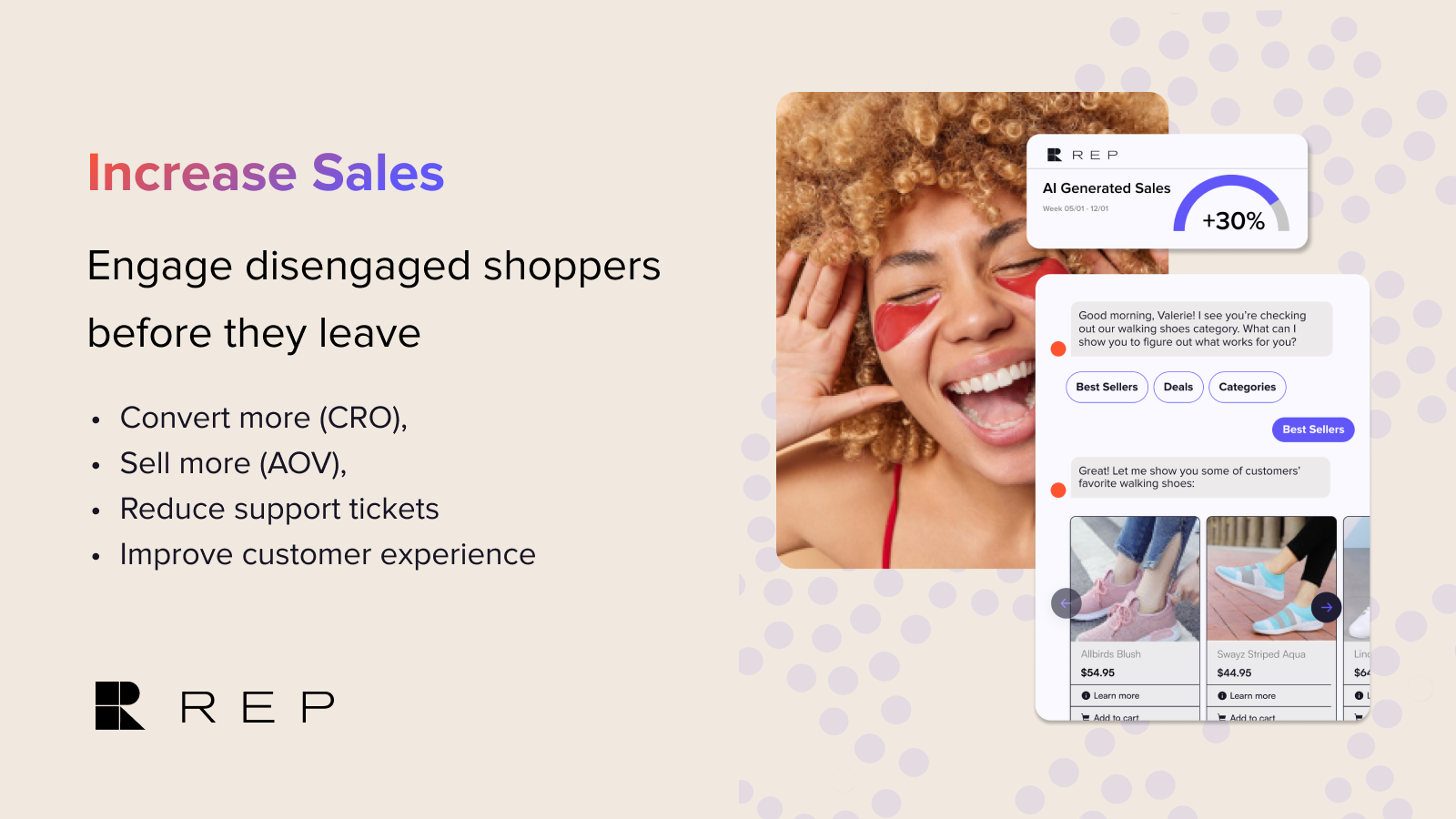
The technical proposition is specific. Rep combines browsing context with conversational AI. Viewed products, clicks and other session signals help the system decide whether to approach a shopper and what to discuss. Recommendations arrive with some knowledge of the journey that preceded the chat window.

That makes timing part of the merchandise. A salesperson who pounces at the door can be a reason to leave. Rep’s Rescue Algorithm documentation gives merchants an “eagerness” control, page-specific settings and engagement tests. It recommends monitoring default settings for two to four weeks before making adjustments. Even automated tact needs rehearsal.
- 01ObserveBrowsing signals
- 02EngageRelevant timing
- 03HelpRecommend or resolve
- 04EscalateHuman judgment
When the homemade answer went stale
Bikes Online supplies a useful account of what failed first. According to Rep’s case study, the retailer built an internal chatbot that could access company data and answer product questions. Then policies and product details changed. The bot sometimes supplied outdated information; sometimes it invented answers. A tool intended to prevent enquiries was generating them.
The team began looking outside. Rep’s interface, shopping guidance and analytics helped change the calculation. The lesson for merchants considering an internal build is rather unglamorous: the first answer is only the beginning of the expense. Someone must keep the hundredth answer current.
Rep’s product range reflects that maintenance problem. Sales guidance includes recommendations and conversational product discovery. Support covers routine order enquiries and configured actions, such as cancellations or address changes. Connected helpdesks let a person take over. Merchants can use the software across Shopify and other supported storefront platforms.
A bill is more useful than a boast
Charlie B Collection’s experience offers unusually concrete arithmetic. Its company-published case study reports $3,839.87 in AI-generated sales over a trailing 30-day period against $462 in platform cost. That produces the advertised 8.3x return. The same account says an inadequately configured Zendesk widget had previously turned ordinary questions into tickets. Trialling Rep persuaded the team.
8.3x sales-to-fee ratio. Company-reported figures; this comparison does not measure profit.
The distinction matters. Revenue still has to pay for merchandise, fulfilment and other costs. A sale associated with an AI conversation may have happened anyway. An operator should ask what changed against a comparable baseline, then calculate the margin left after the software bill. Arithmetic is a splendid antidote to adjectives.
Rep charges subscriptions with usage allowances and overages. Its Shopify listing includes a $104 monthly Starter plan and $12 for each additional 1,000 visitors. A December 2024 pricing announcement explains why sales and support became separate modules: customers wanted different combinations. A brand buying ticket relief and a brand buying sales assistance are making different economic bets.
The jewelry shop needed more pictures
At Kinn Studio, a luxury jewelry brand, the work included teaching Rep the desired tone and providing product guidance. Its case study describes a small customer experience team trying to answer promptly without losing the warmth customers expected. Gorgias handled conversations that needed a person.
The delightful detail is what happened beyond the chat. Shopper insights suggested customers wanted more product visuals before buying expensive jewelry. Kinn passed that finding to its social team. The software had uncovered a job for photography. Sometimes the best answer to a customer’s uncertainty is another picture.
“Conversation is the interface. Action is the product.”
Rep AI’s description of its approach
Rep sits between ecommerce conversion software and customer support automation. Merchants can compare it with Gorgias AI, Siena AI or Zendesk’s AI offerings, as well as an internal bot. Rep’s distinguishing pitch is proactive sales assistance informed by behavior. Whether that distinction earns its keep depends on the actual storefront and customer questions.
Teach it before you trust it
The practical starting point is Rep’s Test & Train interface. Merchants can preview chat, email and Meta replies, correct answers, add FAQs and set instructions. The documentation allows private testing of email and Meta channels before live AI answering is enabled. A refund exception makes a better examination question than a friendly greeting.
Incomplete policies, stale catalog details or questions requiring human discretion weaken this approach. Rep’s own guidance stresses knowledge gaps and escalation. A sensible trial concentrates on a recurring problem, reviews conversations and measures comparable outcomes. The work includes deciding when the assistant should stop.
In May 2026, Rep announced $6.2 million in follow-on funding, with Silicon Road Ventures leading and Zendesk participating. It followed the $8.2 million Series A announced in 2024. The broader ambition is a unified commerce platform. The everyday proposition remains easier to grasp: when a shopper has a question worth answering, have something useful ready.