new-york
(383)
Ladenburg Thalmann sells access. The rest is history.
A $13,550 exchange seat helped open the door in 1879. Today, Ladenburg Thalmann connects growing companies with capital by knowing the business on both sides of the trade.

Sotheby’s and the price of wanting it.
A rare object needs a buyer. Sotheby’s supplies the scholarship, the stage and the competition. Its short-lived experiment with simpler fees reveals who really holds the power.
JetBlue made flying nicer. Now comes the expensive part.
Free Wi-Fi and a seatback screen made JetBlue easy to like. Turning that affection into a durable business has proved a much harder flight.
Tapestry and the art of wanting less
After an $8.5 billion deal fell apart, the owner of Coach and Kate Spade had a smaller portfolio to work with. The interesting part is what happened inside it.

The beauty of getting closer
The Estée Lauder Companies built a business by putting beauty into people’s hands. Its recovery depends on finding those hands again.

iTechArt Group built other people’s big ideas
A water dispenser, a fitness membership, a virtual clinic. Behind very different products, iTechArt found the same business: helping companies build software faster than they could hire.
Mojo Supermarket makes advertising worth doing.
A music video you can code. A trend report you can wear. The New York agency builds campaigns that give people a part to play.

Caretaker put the apartment to work.
It began as a way to escape a lease. Taking responsibility for the rent turned Caretaker into a company that wanted to automate the landlord’s job.

ConvertMedia found video where nobody filmed.
A text page. A video ad. An eight-year detour to connect them. ConvertMedia’s story is a lesson in changing the product, the customer, and finally the route to market.

Copywriting. Give the words a speaking part.
Caroline Casey’s independent advertising practice brings comedy and commercial writing into the same room. Its range offers a useful lesson: a brand voice has to survive being spoken aloud.
CreativeMornings runs on coffee. And people.
A free breakfast talk became a global creative network. The clever part is how CreativeMornings makes strangers feel they have a reason to come back.
Chip City made a cookie worth coming back for. Then the doors closed.
A tiny Queens bakery turned warm cookies into a multistate business with $17.5 million in backing. Its sudden closure reveals the distance between a product people love and a company that can keep serving it.
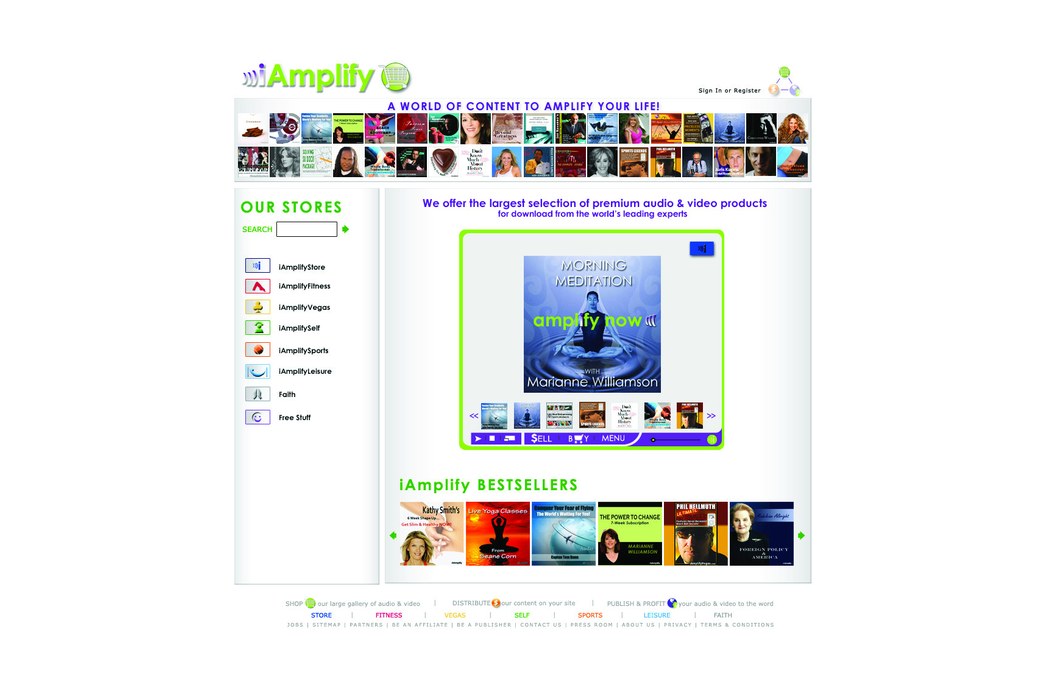
iAmplify put a price on know-how
Before the creator economy had its name, iAmplify sold lessons for your iPod. Its more interesting bet was putting the checkout wherever an expert already had an audience.

Transfix sold the brokerage. Kept the brains.
After a decade moving freight, Transfix sold its brokerage operation and put the software up for sale. Its first outside customer was the company that bought the business.

Elpis Labs: Your technology works. Will America buy it?
Elpis Labs helps international startups find U.S. customers and corporations find useful new technology. Its most interesting work begins where the demo ends.
CELA made networking a contact sport
Four mentors. Twelve minutes apiece. CELA put a clock on the warm introduction - then joined forces with WEVE to take its accelerator methods across borders.

Company Ventures made free rent an investment strategy
Before Company Ventures wrote checks, it put founders in the same room. Its bet is that the person at the next desk can help a young company as much as the investor across the table.

Solid & Striped found its future in someone else’s suitcase
A pair of old swim trunks started the company. Women shoppers, well-chosen collaborators and a wardrobe beyond the beach gave it somewhere to go.

Ellipsis Labs built an exchange. Then it went after the clock.
Phoenix put the order book on-chain. Now Ellipsis Labs is working on the machinery underneath finance - and the milliseconds that decide who gets a fair price.

Choxi made shopping cheap. The bill came later.
A $29 sheet set, a $52 million funding haul, and a shopping habit built on urgency. Choxi’s rise and collapse reveal what happens when the sale gets more attention than the parcel.

Orchard Platform built the plumbing. Who would open the taps?
Online lenders made borrowing faster. Orchard Platform tried to make their loans easier for institutions to buy, compare and trade. Its most revealing lesson arrived when the data business became a marketplace.

Citizen puts the sirens on your screen
A banned app called Vigilante became a live map of neighborhood emergencies. Now Citizen is selling the same street-level awareness to the people paid to keep others safe.

Koio made luxury sneakers cheaper. Then it had to make itself smaller.
Italian leather was the easy part. Koio’s harder lesson was learning how much business a beautifully simple sneaker could support.

Ohi put the warehouse next door. That was the shortcut.
A tiny Manhattan warehouse held a large idea: give independent brands rapid delivery by moving their inventory into the neighborhood. Ohi’s experiment shows why the shortest journey can require the most careful planning.

Fleur du Mal makes underwear worth wearing out
Jennifer Zuccarini built a fashion label around a mischievous proposition: the best thing under your clothes might deserve an audience. Keeping that proposition alive required some decidedly unromantic lessons in cash, fit and restraint.

Ever/Body sells Botox. Its real pitch is belonging.
A cosmetic dermatology chain built around an awkward question: how do you make a medical treatment feel approachable without making it feel trivial?

Envisagenics is hunting cancer targets in the edits
A gene can tell more than one story. Envisagenics reads the RNA edits that conventional drug discovery can miss - and pharma is paying for a closer look.

Argent puts ambition in your pocket
Women’s workwear had room for another blazer. Argent made a case for one that could carry a phone, hold its sleeves up, and let its wearer take up space.

Triplemint went looking for homes that weren’t for sale
A New York brokerage bet that the most interesting home was the one nobody had listed yet. Its journey from apartment rentals to The Agency reveals how much work sits between a prediction and a deal.

Fithouse sold the freedom to change your workout
Yoga on Monday. HIIT on Tuesday. One membership for both. Fithouse bundled boutique fitness into an All Class Club - then COVID tested how much of the club could survive without the room.