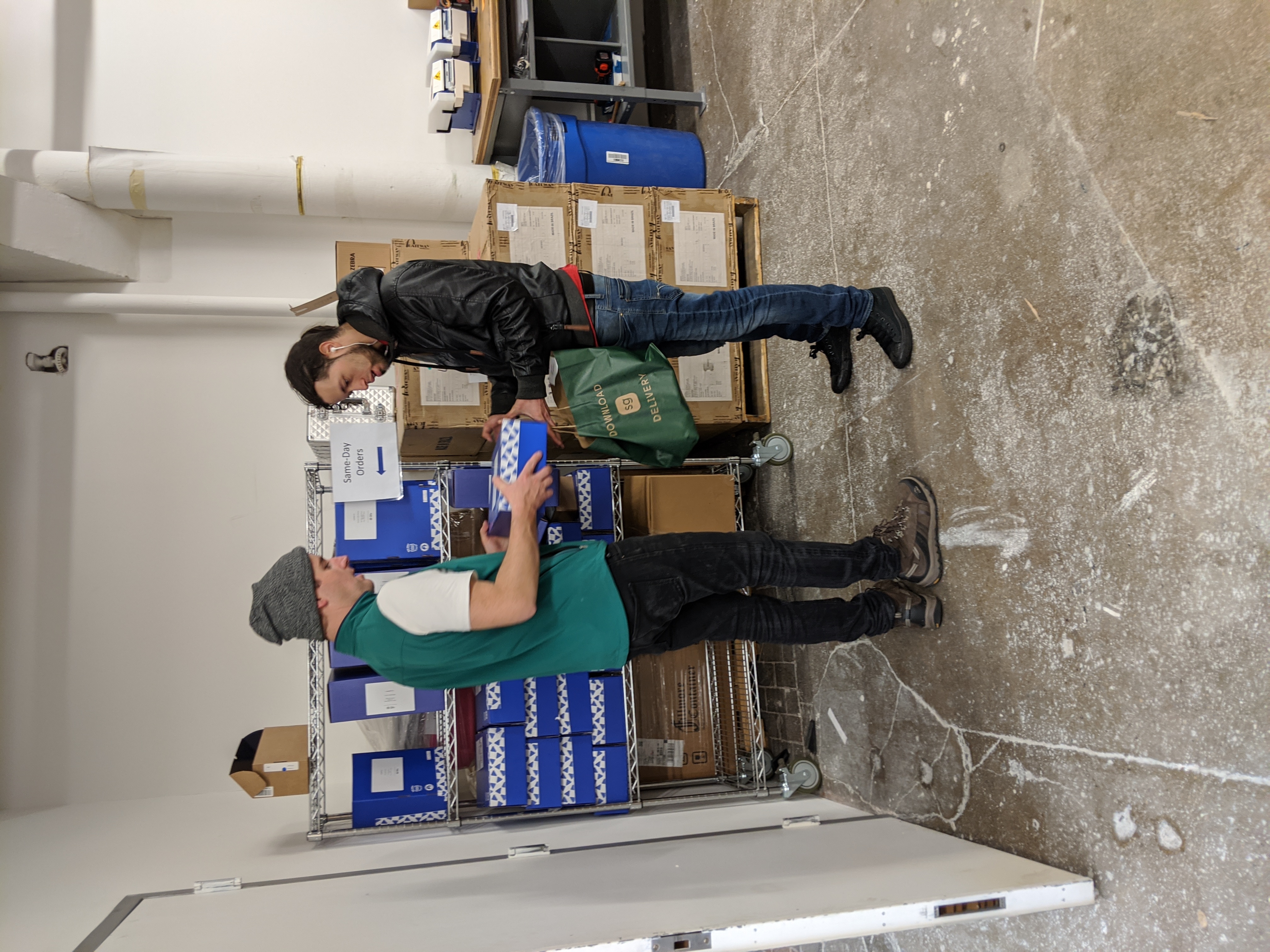
In February 2020, warehouse podcaster Kevin Lawton took an elevator to the third floor of a Manhattan office building. He had come to inspect Ohi’s fulfillment operation. There were no acres of loading docks. The warehouse occupied roughly 2,000 square feet. A terminal showed incoming orders and approaching couriers. Around 5:30, the couriers arrived, scanned their collections and left. The surprise was the address. A warehouse had moved into the neighborhood, and a delivery journey had quietly become much shorter.
- Store products near likely buyers before they order.
- Let brands sell through their own websites and keep the customer relationship.
- Use local couriers for the final trip.
- Make replenishment work: nearby shelves are useful only when the right stock is on them.
The wait that started it
For Ben Jones, waiting for an online order had once been more than irritating. A serious back injury in Britain left him with severely restricted mobility. Shopping in person became difficult; ecommerce became necessary. Amazon could deliver quickly. Other brands often could not. An ordinary inconvenience had become an accessibility problem, and a business question.
Founded in 2018, Ohi pursued a way for those brands to compete on convenience. Jones and co-founder Nicholas Blanchet discussed the idea after a mutual introduction. Their early education involved ordering products into their office and fulfilling purchases themselves. That detail matters. Software for moving boxes benefits from meeting a few boxes first.

Move the stock before the click
Ohi’s proposition was to predict where demand would appear and place inventory nearby. Its software connected storefronts, including Shopify, to small urban warehouses and delivery providers. Orders could then travel locally instead of beginning a long journey from a distant distribution center. Two-hour delivery depended on decisions made well before checkout.
The company worked with outside carriers, including Postmates, DoorDash and Uber. In 2021, Jones told Forbes that Ohi owned no delivery assets. The brand sold the product; Ohi coordinated fulfillment; a partner completed the last mile. Buyers did not need to discover their favorite beverage inside somebody else’s shopping app.
- 01ForecastWhere will buyers be?
- 02PositionStock local shelves.
- 03PurchaseThe brand’s checkout.
- 04DeliverA short courier trip.
This placed Ohi between conventional third-party logistics and marketplace fulfillment. Amazon offered a familiar alternative, but brands choosing Ohi could keep their storefront, presentation and customer data. Its expertise lay in inventory placement and operational coordination. A courier moving faster could never compensate for a product sitting in the wrong city.
Small spaces, real bills
In 2020, Jones described a deliberately modest setup: existing urban space, manual picking and a shared micro-fulfillment center costing approximately $10,000 to establish. This was his historical estimate, rather than a universal construction budget. Several brands could share a site, spreading the expense across their combined demand.
Merchants paid for the platform and fulfillment. Reported 2019 pricing began at $750 a month, with a $2.50 pick-and-pack charge; higher tiers added features and locations. That handling fee was not a complete delivered-order price. Storage, transport and the economics of each product still mattered. A cheap-looking line item can have expensive friends.
Separate charges. Neither figure is a current quote or an all-in delivery price.
Venture investors financed the wider bet. Ohi announced a $2.75 million seed round led by Flybridge in 2019, followed by a $19 million Series A announced in October 2021, led by Palm Drive Capital with JAM Fund participating. The stated ambition was 25 markets by the end of 2022. An ambition deserves its own tense.
The kombucha test
Health-Ade offered a particularly good reason to care about proximity. Kombucha comes in heavy glass bottles and needs cold shipping. In 2021, the brand explained that local delivery could sometimes cost less than sending an order on ice. Ohi’s customers also included Solawave and Untuckit; later announcements named OLIPOP and Manukora. The audience was brands with a customer relationship worth protecting.
Ohi reported average conversion increases of 28% and repeat-purchase increases of up to 120%. Those were promotional figures, not controlled proof that speed alone caused growth. The more revealing testimony came from Health-Ade founder Daina Trout. Delivery remained unresolved: stronger packaging cost money, bottles could break, and distributors could leave stock in the sun before it reached local hubs.
“It’s still something we’re trying to unlock.”Daina Trout, Health-Ade, on DTC delivery
A nearby warehouse could shorten the final journey. It could not reverse spoilage earlier in the chain. For an operator, that distinction is worth more than a glossy stopwatch.
The tiny warehouse needed a bigger friend
By April 2022, Ohi’s operations team described larger hubs that simplified inbound deliveries and replenished the smaller sites. Brands needed fewer places to send stock; Ohi handled allocation across the network. Their account explains a change in thinking: a system designed around many small warehouses also needed centralized support.
Convenience acquired a calendar, too. A June 2022 Recharge partnership offered subscribers four-hour delivery windows and reported coverage in 12 major metro areas. December brought a BigCommerce app. Merchants could connect their sites quickly, the announcement said, but starting sales still depended on receiving inventory. A software installation and a stocked shelf keep different schedules.
Copy the geography, audit the handoffs
The practical lesson is to map demand before renting space. Ohi’s team said compact items and lower SKU counts suited micro-fulfillment best. Sparse demand, bulky goods or unreliable replenishment weaken the arithmetic. A sensible pilot would measure total delivered cost, breakage, stock availability and repeat purchases together, before spreading inventory further.
For a brand considering this approach, the first useful spreadsheet would compare orders by neighborhood with the cost of holding stock there. Count the transfers into the local warehouse as well as deliveries out. Then ask whether a faster first purchase leads to another purchase. If the extra shelves merely divide slow-moving stock into smaller piles, the delivery promise has purchased a new inventory problem. The experiment should earn its next location.
As of October 2026, Ohi’s former website displays a domain-sale page. Its documented experiment remains instructive: the work of rapid delivery begins upstream, in choosing where products wait and making sure they arrive there intact. The courier gets the applause. The shelf has done much of the work.
The former corporate domain is currently listed for sale.