A delivery ends at the customer’s door. The work does not. Somebody has to get back, and the return journey can be a remarkably expensive way of carrying nothing. When Adam Price moved from California to New York in 2013, he noticed couriers making that journey for individual restaurants. Nearby kitchens dispatched people toward the same buildings. Each rider then retraced a private little route. Price saw capacity being wasted in plain sight.
- Homer pooled local deliveries for businesses that already had customers.
- Its early couriers were employees, with benefits and scheduled shifts.
- By 2018, expansion meant working with existing delivery providers.
- Waitr acquired Homer in 2019; the acquirer closed in 2024.
The company he founded in 2014, Homer Logistics, proposed a different arrangement: finish one job, then collect the next from another merchant nearby. The opportunity lay between businesses that competed for dinner orders but shared a problem once dinner left the kitchen. Rival salads could travel through the same delivery system without becoming the same salad.
A kitchen’s least appetizing job
Getting restaurants to accept the idea took persuasion. Early on, Price made deliveries himself by bicycle after winning over a restaurant in Hell’s Kitchen. That detail matters. Before the optimization software could improve an operation, there had to be an operation willing to use it. The first obstacle in the documented story was persuading a merchant to hand over the work.
By 2016, reported clients included Chopt, Just Salad, Dos Toros, Chick-fil-A, Pinkberry and Landmarc. Their orders could arrive through restaurant apps, ordering platforms or telephone calls. Homer organized the pickup and delivery. For an owner juggling food, staffing and customers, the appeal was practical: one specialist could manage the journey that otherwise interrupted everything else.

Homer occupied a particular place in the market. Consumer marketplaces assembled restaurant choices and attracted diners; a merchant’s own riders fulfilled that merchant’s orders. Homer offered businesses a shared fulfillment layer. A restaurant could keep its existing ordering channels while outsourcing the awkward physical work. Its rivals included the delivery team already on the payroll.
The empty minutes had to pay the wages
The employee model made this experiment especially interesting. In December 2017, Homer reported average courier pay of $19 an hour, plus stock options and medical, dental and vision insurance. These were company-reported figures, attached to a specific period. They represented a bet that coordinating demand would make paid working time productive enough to support a more substantial employment package.
Average courier pay reported by Homer in December 2017, alongside insurance benefits and stock options.
An early investor, Charlie O’Donnell, described the logic in 2015: a rider attached to one shop could sit through a quiet hour, while pooled demand created more opportunities to deliver. He also recounted a courier distributing Homer leaflets to former restaurant employers without being asked. The anecdote gives the proposition a human scale. A better organized shift might be worth recommending.
Merchants paid a fee per delivery. Price compared the service’s pricing in 2016 with the cost of a restaurant handling delivery itself. Homer also offered order-management software and licensed its logistics platform to EatStreet in ten other U.S. markets by June 2017. It could sell operational capacity locally and software elsewhere, without asking every diner to acquire another ordering habit.
The address was only half the destination
Homer’s technical work combined forecasting, employee scheduling and real-time dispatch. Its June 2017 Series A raised $8.5 million, bringing reported cumulative funding to $14.5 million. Led by Two Sigma Ventures, the round was intended to expand research and technical staffing. The investment thesis concerned the decisions behind each trip: how many workers to schedule, which order to assign, and where to send them next.
A city complicates those decisions vertically. A short journey on the street can end in a security queue or an elevator wait. Homer treated building access as useful operational information. For anyone copying the approach, that suggests a concrete habit: record where handoffs consume time. A street address can be correct while the delivery estimate remains thoroughly wrong.
“You really have an operations business.”
Adam Price, on businesses with large workforces / 2017 interview
Then the fleet became a constraint
By May 2018, the emphasis had changed. FreightWaves reported more than 1.5 million deliveries and described Homer coordinating existing delivery providers. Price identified regulation around operating courier businesses as an expansion obstacle. He called that approach “not the right way to scale the business.” The software could connect retailers with providers and select suitable transport modes, rather than reproduce an owned operation everywhere.
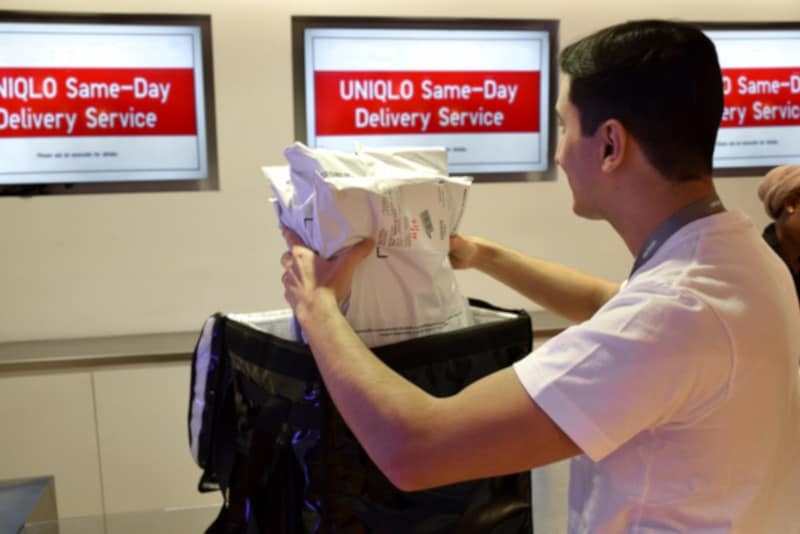
That shift exposes the distinction between making one neighborhood work and entering another. The early employment model offered control; existing providers offered capacity without building every network afresh. It would be too tidy to pronounce one arrangement the winner. The reported change shows a founder adjusting how the service expanded while preserving the central idea of coordinating local work.
The acquisition did not settle the arithmetic
Waitr acquired Homer in February 2019. Price and Simon Lee joined as chief logistics officer and chief analytics officer; Price became Waitr’s CEO that August. In April 2024, Waitr Holdings, whose delivery brand had become ASAP, entered Chapter 7 and ceased substantially all operations. The acquirer’s ending belongs in the history, but does not isolate the performance of Homer’s earlier system.
The useful lesson survives in a narrower form. As an operating inference, pooling helps when nearby jobs, service windows and available workers fit together. Sparse demand or incompatible deadlines makes that harder. Operators can copy the question before copying the company: which empty minutes could become useful work? Homer made the return trip worth examining. The bill still had to be paid.
Follow the route a little further
Historical website ↗LinkedIn ↗Twitter / X ↗Facebook ↗
The early restaurant operation ↗An investor’s employment thesis ↗Price on the business model ↗The 2017 financing ↗The courier pay announcement ↗The 2018 provider model ↗The move to Waitr ↗Price becomes CEO ↗The acquirer’s closure ↗