Consider the forgotten carton of milk. Fridge No More proposed a shorter sequence: open an app, order, wait fifteen minutes. No delivery charge. No minimum basket. A company courier would bring the groceries from a warehouse nearby. For a New Yorker in its service area, the appeal needed very little explaining.
- Groceries in 15 minutes, from warehouses about a mile away.
- Free delivery and no minimum: easy to try, costly to fulfill.
- A $15.4 million Series A preceded a March 2022 shutdown.
01The refrigerator moved down the street
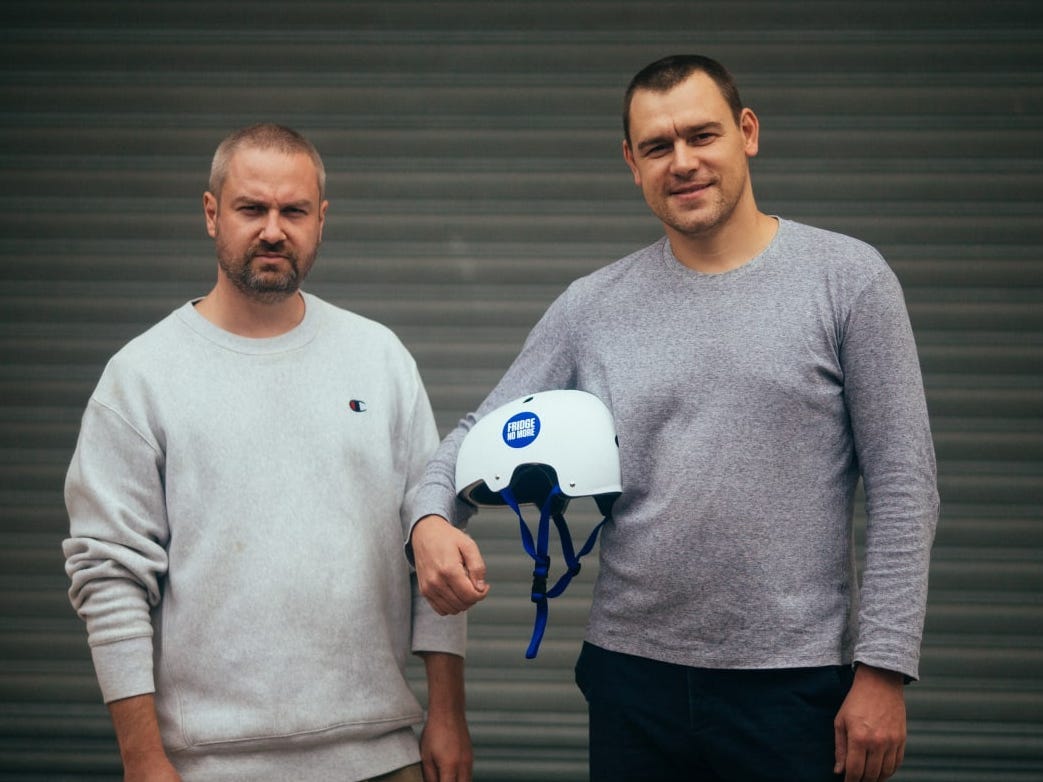
Pavel Danilov and Anton Gladkoborodov founded the company in 2020, launching in Williamsburg that autumn. The idea preceded the pandemic; the timing supplied an unusually receptive audience. People were cooking at home and avoiding shops. By March 2021, the service covered Brooklyn neighborhoods including Park Slope and Gowanus. Danilov told FOX 5 it was handling about 1,000 orders a week.
The name contained the larger ambition. If food could arrive when you wanted it, a weekly expedition to fill the refrigerator would become less necessary. The customer was someone with a small, immediate problem: a missing ingredient, an empty breakfast shelf, groceries needed without interrupting the evening. Fridge No More offered an escape from planning.
“When people want to eat, they don’t want to wait,” Danilov said at launch. Whether those people would buy enough food to support the waiting couriers was a different question.
02Fifteen minutes was a real-estate decision
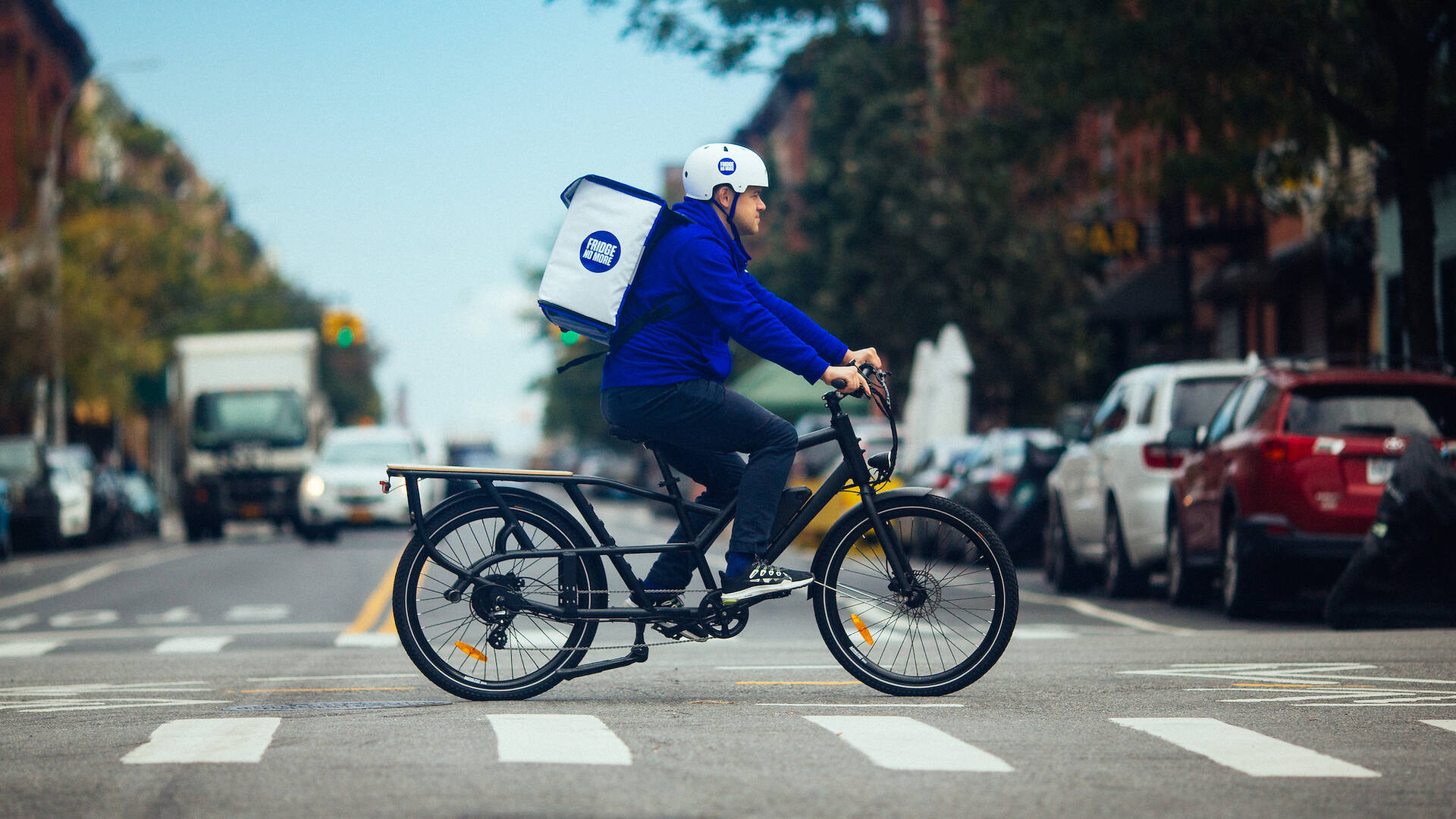
The mechanism was wonderfully unromantic. Fridge No More stocked groceries in small, fully managed warehouses called cloud stores. Each served roughly a one-mile radius. Electric bikes and scooters covered the last stretch. The clouds had shelves and refrigerators; distance did much of the work.
This was a retailer carrying its own stock. Customers chose groceries in an iOS or Android app; workers picked the order from the company’s inventory. Its proprietary inventory and order software used store-specific demand to adjust what was stocked. The expertise lay in fitting purchasing, picking and delivery into a small patch of city.
A smaller assortment helped. Time Out counted about 800 items at launch and noted just two brands of whole milk, with expansion planned. Less choice meant less hunting through shelves. It also meant that a shopper with particular preferences might still need another store. Convenience depended on having the right item before anyone pressed Buy.
The company’s employee couriers were another operational choice. A promise measured in minutes benefits from knowing who is available nearby. That arrangement offered more control over staffing than a pool of independent contractors, while keeping the responsibility for organizing the work inside the business.
DELIVERY PROMISE
03The customer’s zero was the company’s bill
What did it cost? The advertised proposition was supermarket prices, free delivery, no minimum and no subscription. Customers paid for their groceries and could tip. The company sought its income from selling goods. It could not rely on a delivery fee to pay for an uneconomical trip.
That combination distinguished it from a scheduled grocery shop or a service that asks you to assemble a larger basket. It competed with the impulse to visit a neighborhood store as much as with other apps. Yet speed itself was becoming crowded territory: Gorillas, Jokr, Buyk, Gopuff and Getir were also chasing New York customers.
Eater’s account of switching between apps exposed the awkwardness. Different services had different parts of the writer’s preferred shopping list. Minutes saved on delivery could disappear into browsing. An identical speed claim gave shoppers little reason to remain loyal when another app had the missing product.
For the operator, every accepted order still required work. Rent, refrigeration, purchasing, picking, packing and courier time existed even when the checkout screen showed zero for delivery. More orders could spread some costs. They could also create more expensive trips. Volume alone cannot tell you which effect wins.
Distance did much of the work.THE OPERATING IDEA
Groceries still had to cover the work.
Conceptual cost map, not a breakdown of company accounts.04The rescue needed a signature
In March 2021, Fridge No More announced a $15.4 million Series A led by Insight Partners, with Altair Capital participating. The money was intended for engineering, operations and more cloud stores across New York and the East Coast. Its historical LinkedIn description eventually listed 29 New York stores and one in Boston.
Expansion created a visible network, but it did not remove grocery work. Former employees later described produce-quality training and the difficulty of keeping food standards consistent. Operations manager Alejandro Viera also recalled break-ins and stolen bikes.
The first decisive failure in the shutdown sequence was financing. Bloomberg reported that Fridge No More sought to offload warehouses to DoorDash after failing to secure money from investors. DoorDash toured stores in February 2022. Those discussions offered a possible exit from the immediate cash problem.
Then the transaction failed. The service permanently closed on March 10. “This decision was sudden and unforeseeable,” Danilov wrote to employees in an email reported by CNN Business. The potential buyer had walked away; the proposed rescue could no longer sustain the company. This was a forced stop, rather than a leisurely change of strategy.
The aftermath is documented beyond the closed app. On April 12, Fridge No More assigned its assets to FNM (ABC), LLC for the benefit of creditors. The Delaware petition said the business could not pay its debts and that other options had proved unviable.
05Copy the radius. Count the work.
There is something useful to borrow here. Define a small area you can serve reliably. Put the inventory close to actual demand. Make the assortment answer to local purchases. These are practical retail choices, and a modest business can examine them without adopting a fifteen-minute stopwatch.
The harder lesson is to price the whole promise. As an operating inference, a retailer should examine whether the margin on an order covers its picking and delivery before assuming another neighborhood will improve matters. Sparse demand, long travel, small baskets and high premises costs make this particular offer harder to support. Freshness adds another constraint: speed cannot repair poor stock.
Fridge No More is closed, so readers cannot order from it today. Its brief life remains useful because the customer benefit was so legible. It removed the inconvenience of one missing item. Behind that small relief stood a complete grocery business, whose bills arrived with rather less patience than its name suggested.
Follow the paper trail
Links and coverage.