The revealing object in JetBlue’s story is a television screen. A passenger buys transportation, but spends the flight staring at the seat ahead. Put something entertaining there, add a snack and a little breathing room, and an ordinary journey feels different. JetBlue understood that the experience of flying contains hundreds of small judgments. The ticket gets you aboard. The details determine what you remember.
- JetBlue sells competitive fares with comforts passengers can actually notice.
- Its service reputation has repeatedly collided with the difficulty of running an airline.
- Premium seats and partnerships are central to its next attempt to make the economics work.
David Neeleman’s airline began passenger service on February 11, 2000, from New York’s JFK to Fort Lauderdale. It called its mission “bringing humanity back to air travel.” Consider the ambition packed into that modest word, humanity. The airline was asking people to expect something better from a purchase they often approached with resignation.
A television, then a bed
Today, JetBlue carries leisure travelers, people visiting family and business passengers across the Americas and to Europe. Its competitive territory sits between the stripped-down fare and the sprawling network airline. Delta, American and United offer extensive networks; low-fare rivals compete aggressively on price. JetBlue asks passengers to value the ride itself alongside the destination.
The basic proposition remains tangible: complimentary snacks, seatback entertainment and free Fly-Fi, with coverage and availability varying. Travelers can book a flight, redeem TrueBlue points or package a trip through JetBlue Vacations. The useful question is whether its schedule serves your journey and its complete price suits your budget. A pleasant cabin cannot move an airport closer to home.
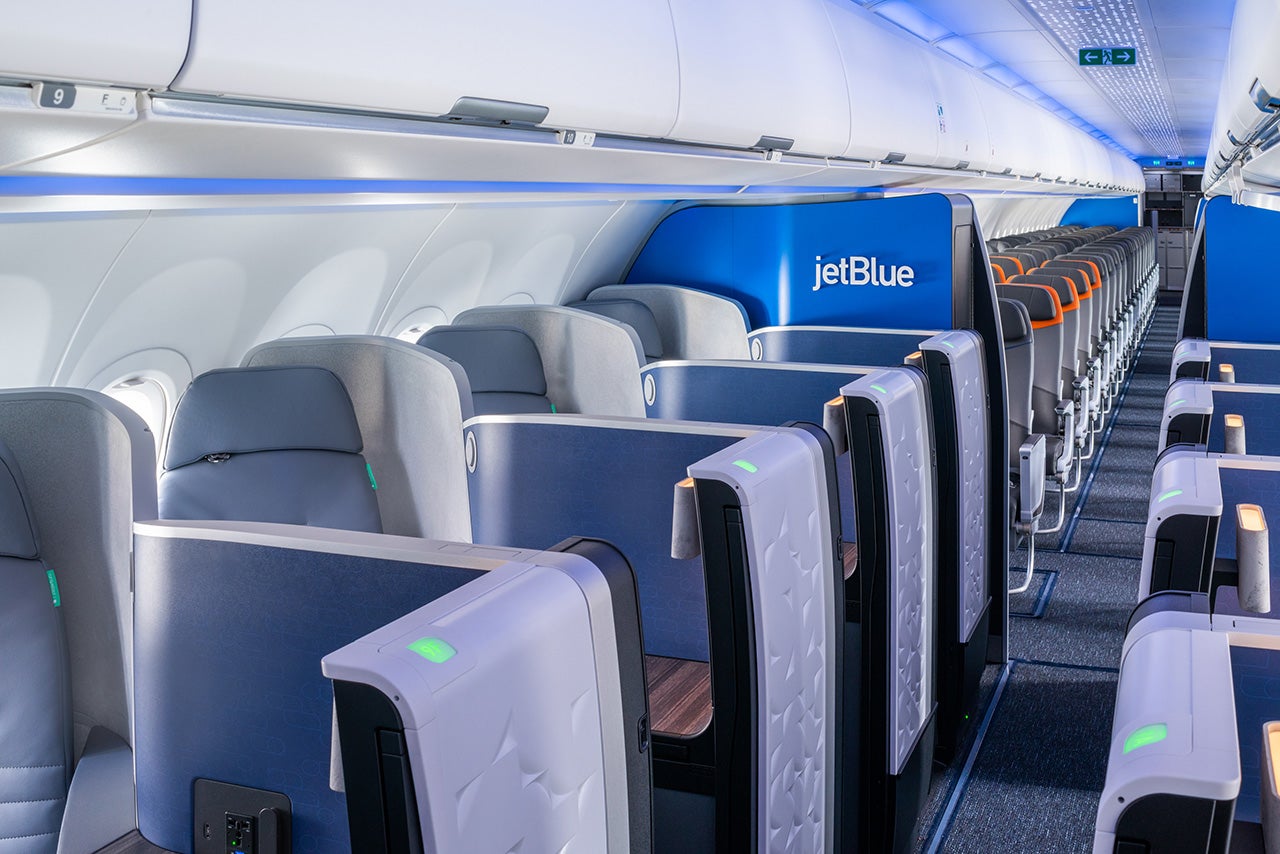
In 2014, JetBlue introduced Mint, its lie-flat premium service. The original announcement offered a brief $499 one-way promotion for the first JFK-Los Angeles flights, with subsequent introductory pricing starting at $599. Those were historical launch offers, not a promise about today’s fares. The strategic shift was more enduring: an airline associated with accessible travel could also court passengers buying sleep.
Mint now operates on transatlantic flights and selected other routes. Configurations differ, but the newer suites show how closely JetBlue studies the hours inside the cabin. Tuft & Needle helped develop the cushions and sleep experience. The expertise here is partly airline operations and partly hospitality: making a confined, standardized space feel considered.
The day the promise froze
Then there is the other object in this story: a plane that cannot leave. During the February 2007 ice storm at JFK, passengers were stranded aboard aircraft for hours. A Stanford case study records 1,195 canceled flights across six days and more than $41 million in disruption costs. The cheerful service proposition had encountered a problem that snacks could not solve.
What failed first was the operating infrastructure behind the promise. The storm exposed weaknesses in handling irregular operations. The Stanford account also describes renewed disruption in 2008, suggesting the initial fixes had been insufficient. Staff goodwill was valuable; it could not substitute for the systems and coordination needed to recover a schedule.
A pleasant cabin cannot move an airport closer to home.
On February 20, 2007, JetBlue announced a Customer Bill of Rights with communication and compensation commitments, applied retroactively to the storm. That was a concrete change: service would have published consequences when it fell short. The commitments did not erase the breakdown. They made part of the promise measurable.
JetBlue’s stated values are safety, caring, integrity, passion and fun. It calls employees crewmembers. These choices explain the culture it wants to build. The storm explains why a service culture also needs less photogenic investments: contingency plans, reliable information and the ability to stop a disruption from spreading.
Buying scale proved expensive
Years later, JetBlue pursued another solution to airline economics: buying Spirit. In March 2024, the companies abandoned the merger because required closing conditions, including legal and regulatory approvals, were unlikely to be satisfied by the deadline. JetBlue agreed to pay Spirit $69 million. Its 2024 Spirit-related charge totaled $532 million, including previously committed payments and other costs.
The distinction matters. The termination payment was one piece of a larger bill for a transaction that never delivered an acquired airline. JetBlue publicly shifted emphasis toward its own network, more differentiated products and cost savings. Joanna Geraghty, who became CEO in February 2024, faced the work of improving the existing business.
$368m operating loss. Revenue alone does not tell you whether the flight pays.
JetForward, the turnaround program, emphasizes reliability, East Coast leisure markets, paid products and financial discipline. JetBlue attributed $305 million of incremental earnings before interest and taxes to it in 2025. That is management’s estimate of improvement from the initiatives, rather than company profit. JetBlue still recorded a $602 million net loss that year.
The next seat up front
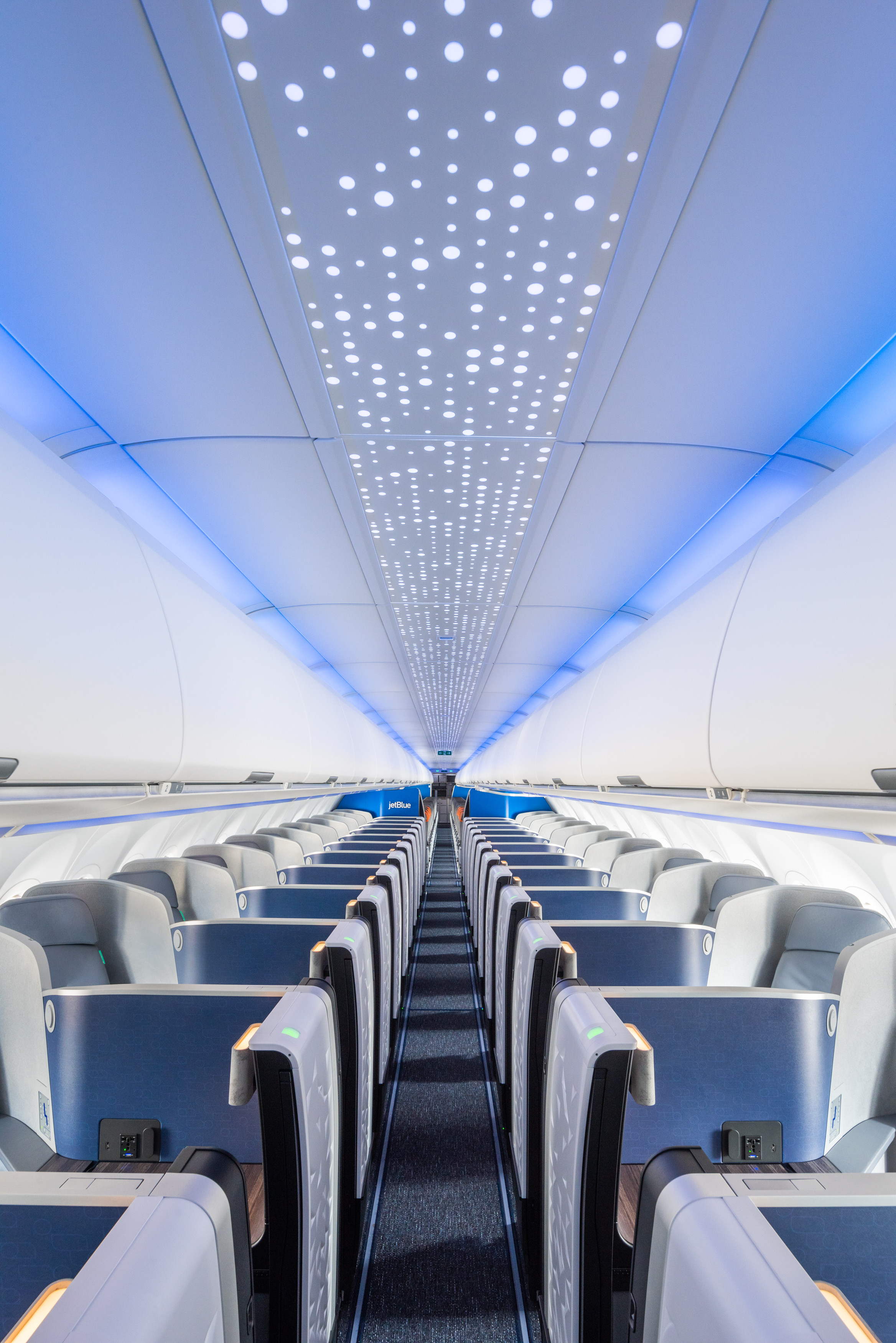
The premium push is becoming more explicit. BlueFirst went on sale October 15, 2026, with its first flight scheduled for December 8 between Boston and Fort Lauderdale. This is a separate domestic first-class product, complementing Mint. Its two-by-two cabin, added space and seatback ordering extend the effort to offer customers more reasons to spend.
Blue Sky, meanwhile, takes another route to reach. JetBlue and United introduced reciprocal loyalty earning and redemption, then began cross-channel flight sales in February 2026. Their announcement distinguished those sales from a future ability to combine both airlines on one itinerary. For customers, the immediate attraction is more booking and rewards options.
The lesson another business can borrow is specific: choose an irritation customers encounter repeatedly, improve it visibly, and fund the machinery that keeps the improvement dependable. The limits are equally concrete. Higher fuel prices, grounded aircraft or demand too weak to support premium fares can overwhelm a nicer product. JetBlue’s second-quarter 2026 revenue rose 14.5%, yet it still lost $247 million. Customers can like the seat. The seat still has to earn its keep.