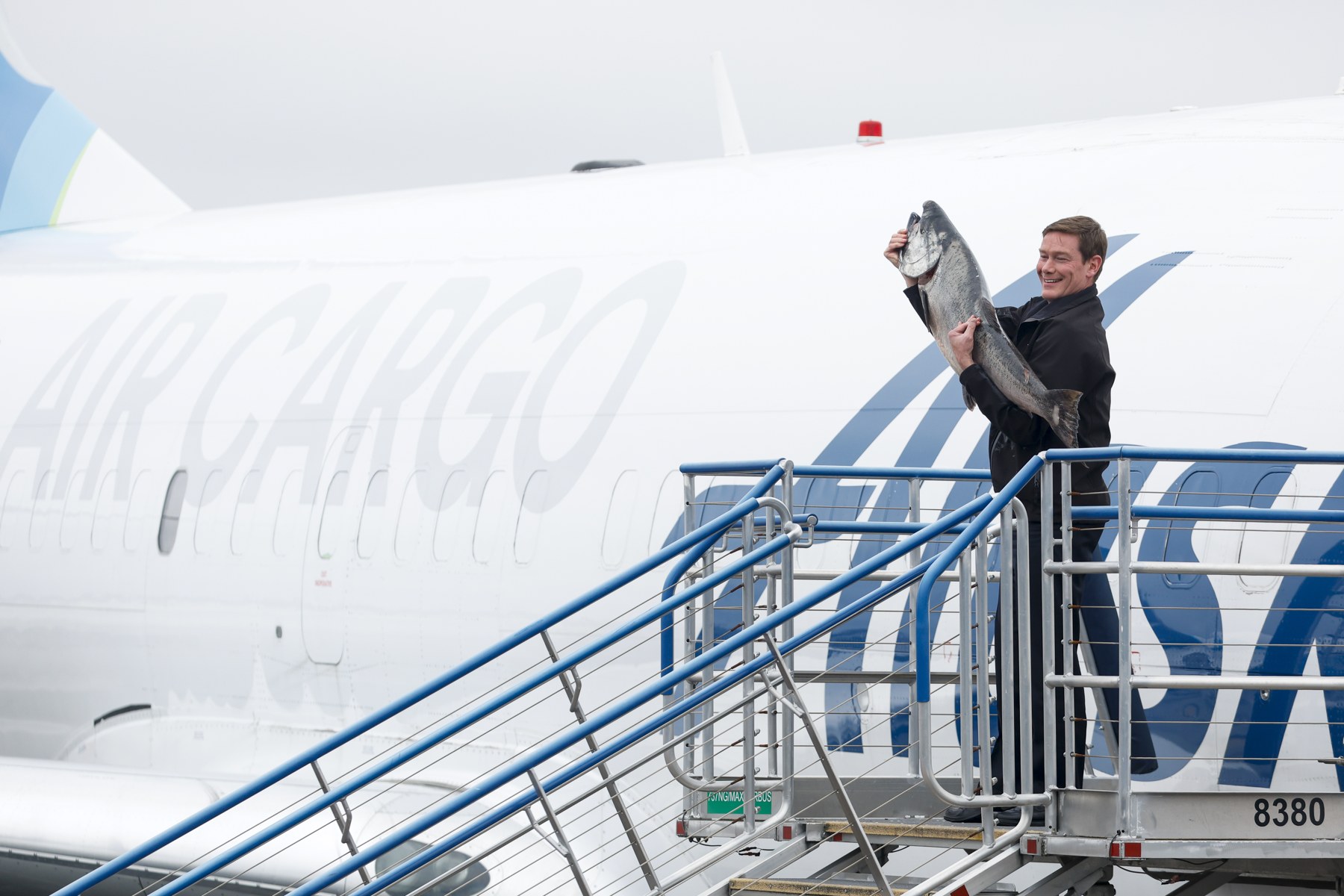
On May 17, 2022, Captain Kevin Yarbrough held up a 30-pound Chinook salmon at Seattle-Tacoma International Airport. Alaska Air Cargo had delivered nearly 17,200 pounds of Copper River salmon that day. The ceremonial fish made a fine photograph. The less photogenic achievement was keeping thousands of pounds of perishable freight moving, cold and quickly, from Alaska to dinner tables elsewhere.
There is a useful way to understand Alaska Airlines in that fish. Its business began where a missing transportation link could determine whether something reached a market at all. Today, the same company is trying to turn a network associated with the American West into a global travel business. The distances have changed. The question of what a connection is worth has survived.
- A Western passenger network with a working cargo backbone.
- Hawaiian adds aircraft and routes for a global expansion.
- Shared systems must turn the deal into easier journeys.
Before the holiday, there was the lifeline
The company traces its beginnings to Linious “Mac” McGee, who launched McGee Airways in 1932 with a three-passenger aircraft operating out of Anchorage. Consolidation eventually produced the Alaska Airlines name in 1944. This was aviation serving a landscape that could not depend on roads. Moving supplies was part of the proposition from the beginning.
Cargo still explains something a passenger-only account would miss. In Cordova, which has no road connection to the rest of Alaska, fresh fish can reach buyers by air. Alaska’s seafood handlers undergo recurring quality training; temperature and speed matter together. The expertise is practical: a reliable route creates value for the person shipping something as well as the person occupying a seat.
For travelers, the offering is familiar: scheduled flights, paid cabin upgrades, lounges and rewards. Its customers include business travelers, vacationers, families visiting relatives and residents who depend on air service. Its distinction has been the concentration of its Western network, strengthened by regional flying and international partners. A frequent departure near home can matter more than a distant dot on a competitor’s map.
The $1.9 billion shortcut across the ocean
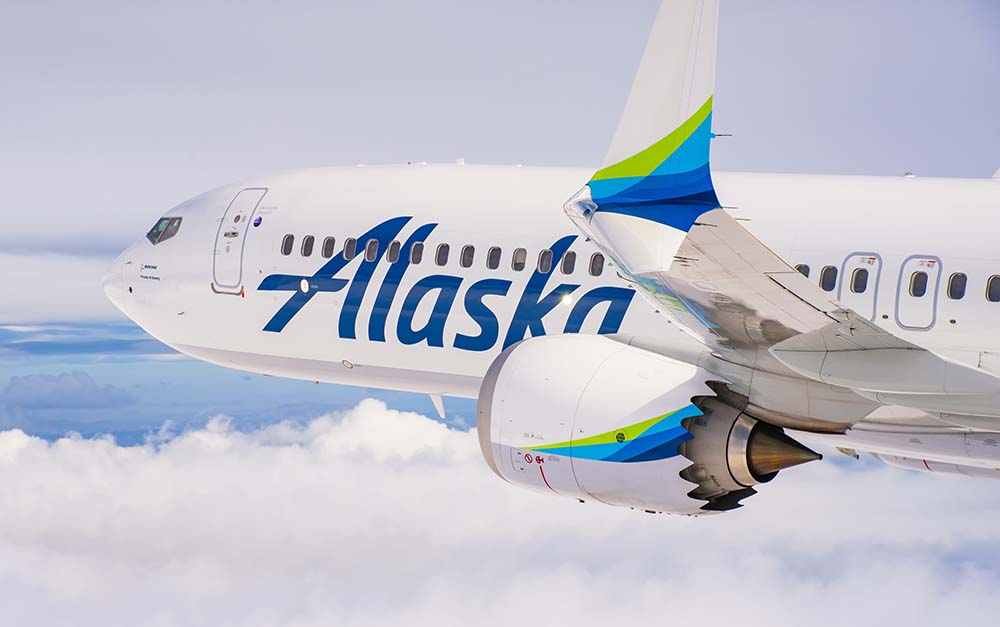
Alaska has expanded by buying networks before. Parent company Alaska Air Group completed its Virgin America acquisition in December 2016, deepening its California presence. Membership in oneworld followed in March 2021, giving loyal customers more places to earn and redeem rewards without requiring Alaska to fly every route itself.
Hawaiian changed the possibilities again. The transaction announced in December 2023 carried a value of approximately $1.9 billion, including $900 million in net debt. It closed in September 2024. Hawaiian brought an established Pacific network and widebody aircraft. Alaska gained the ingredients for long-haul flying rather than having to assemble them all from scratch.
The important choice was to retain both airline brands while bringing operations together. A Hawaiian identity has value in Hawaiʻi; an Alaska identity has value in its home markets. Erasing either would discard something the buyer wanted. That makes the acquisition an experiment in combining expensive machinery while preserving different relationships with customers.
The aircraft made new routes possible. The integration made them easier to buy. On April 22, 2026, Hawaiian moved onto Alaska’s Sabre passenger service system. A combined app lets travelers manage journeys across both brands, including changes and cancellations. For a passenger, the merger becomes tangible when one itinerary stops behaving like two separate administrative chores.
The seat is only part of the sale
Airlines sell access to places, but they also sell reasons to keep buying from the same company. Atmos Rewards, introduced in August 2025, brought Alaska and Hawaiian under a common loyalty identity. Airline partners extend its usefulness beyond the company’s own aircraft. Co-branded Bank of America cards connect travel benefits to everyday spending.
That matters because a rewards balance can influence a purchase months before someone packs a suitcase. Cabin upgrades and lounge access offer other ways to earn more from a journey. The business model combines passenger fares with ancillary purchases, loyalty partnerships and cargo. Alaska Air Group reported $14.239 billion in 2025 operating revenue; that figure belongs to the consolidated parent, including Hawaiian and Horizon, rather than Alaska Airlines alone.
Against Delta, United and American, Alaska is trying to offer a broader international proposition while retaining its Western customer base. Against Southwest, it offers a different mix of assigned cabins, alliance connections and loyalty benefits. The sensible customer comparison remains specific: departure time, total fare, connection risk and usable rewards. An impressive network elsewhere cannot rescue an awkward itinerary from your airport.
What four missing bolts can teach a company
Expansion carries an uncomfortable dependency: someone else builds the aircraft. On January 5, 2024, a door plug separated from Alaska Flight 1282 shortly after departure from Portland. The NTSB found that four securing bolts were missing and attributed the accident to failures in Boeing’s training, guidance and oversight, with ineffective FAA oversight contributing. Eight people sustained minor injuries.
Alaska grounded its 65 Boeing 737-9 MAX aircraft. Its leadership later said Boeing’s $162 million cash payment covered the first-quarter profit impact of the grounding. That payment describes a financial consequence, not the full human cost. The company also expanded factory oversight, adding three maintenance and inspection specialists at Boeing’s Renton operation.
Here the useful lesson is concrete. Supplier assurances need direct observation, qualified inspectors and a route for uncomfortable information to travel upward. Alaska’s published values begin with “Own safety.” The accident forced a change in how it checked work outside its own walls. That is a practice other businesses can copy without buying an airplane.
“Own safety.”
ALASKA AIR GROUP’S FIRST PUBLISHED VALUE
A bigger map still needs a margin
The next chapter is already encountering the arithmetic of aviation. In October 2026, Air Group reported a third-quarter net loss of $147 million despite $4.3 billion in revenue. It also announced Seattle service to Osaka and Papeete for spring 2027. More destinations and immediate profitability are separate achievements.
The strategy depends on filling long-haul aircraft at fares that cover fuel, crews, maintenance and the cost of integration. It becomes harder when fuel jumps, premium demand softens or connecting journeys fail to work smoothly. The early cargo business offers a useful standard for judging the new one: a connection earns its place when it reliably delivers something people will pay for. Even when that something is a salmon.