Ben Minicucci had a system for getting airplanes out on time, and the system had a color for failure. Red. A late task turned the timeline red. A poor result turned the scorecard red. People received grades. At Seattle, where Alaska Airlines needed an operational overhaul, the engineer had made performance legible. He would eventually have to reckon with something the colors did not explain: what it felt like to work beneath them.
It is an unusually revealing complication in a chief executive’s story. Minicucci can point to a career of promotions, an airline integration and an expanding international network. Yet one of his most useful observations concerns a problem he helped create. A tool built to improve the operation could make employees afraid to exercise judgment. The executive who wanted clearer feedback had some feedback of his own to absorb.
An F for the departure board
In 2007, Minicucci took charge of Seattle operations. He had joined Alaska three years earlier in maintenance, and he had been watching the ramp with an engineer’s impatience. When leadership called for someone to fix the station, he volunteered. A proposal followed over the weekend. The assignment followed on Monday. It was a brisk recruitment process for a job unlikely to win its holder much immediate affection.
His approach drew on control systems engineering: identify inputs, track outputs, use feedback to correct the process. Timelines gave the work a sequence; scorecards showed where the sequence broke down. There was resistance. There was also improvement, and the Seattle assignment helped establish his credentials for broader operational leadership. The appeal of the method is easy to understand. An aircraft departure requires different groups to finish interdependent jobs. Good intentions cannot load the last suitcase.
Then came the discovery that success had its own unintended consequences. People wanted green scorecards so badly that the measurement itself could dominate their decisions. Looking back, Minicucci put the problem plainly: “I created fear.” His subsequent leadership project included giving employees room to respond to a passenger’s circumstances, even when an exception complicated a tidy process.
“I created fear.”
Ben Minicucci, reflecting on his operational scorecards
A different kind of family business
Before Seattle, there was Montreal, where Minicucci grew up in an Italian household. His parents had emigrated from Italy in the 1950s. Education mattered deeply to them. His father had worked with his hands and wanted his son to have different opportunities. In that family history, an engineering degree represented something more substantial than a useful line on a résumé.
At 17, uncertain about his direction, Minicucci entered the military and attended the Royal Military College of Canada. He earned bachelor’s and master’s degrees in mechanical engineering. His service included responsibility for aircraft maintenance crews on a transport squadron. He was learning that technical responsibility arrives attached to responsibility for other people. Airplanes have manuals; leading a crew requires additional reading.
He spent 14 years in the Canadian Armed Forces before moving into civilian aviation. Seven years at Air Canada followed, including responsibility for heavy maintenance. Alaska hired him in 2004 as staff vice president of maintenance. His route into the airline’s leadership began among the people who kept its aircraft working. Commercial strategy would come later. First came the machinery, the crews and the practical consequences of getting the work wrong.
Maintenance
Turn timeline
Virgin America CEO
March 31
Sixty rooms, nine thousand people
A baggage carousel supplies a less grand, and rather more familiar, scene from his education. After joining Alaska, Minicucci found himself waiting with other passengers as the luggage took its time. He listened to their complaints. The experience stayed with him. The passenger journey, inconveniently for the departure board, continues after the aircraft has arrived.
By 2019, Alaska’s baggage guarantee had become one example of a broader service philosophy. Another was Minicucci’s attendance at all 60 workshops the airline held for 9,000 frontline employees. Staff were encouraged to make sensible exceptions, such as responding flexibly to a bag just over the weight limit or an emergency requiring a ticket change. The operating manual was acquiring a little breathing room.
“Our values are about people,” he said. The workshops gave that statement an audience capable of putting it into practice. A speech from headquarters can sound very different at a busy gate. Spending time in those rooms meant confronting the gap between the company’s aspirations and the decisions employees actually faced.
This work overlapped with the integration of Virgin America, which Alaska acquired in December 2016. Minicucci became Virgin America’s CEO and oversaw the combination of operations, processes and work groups. The airlines obtained a single operating certificate in January 2018. An acquisition announcement takes a day. Combining the daily habits of two airlines occupies considerably more of the calendar.
The view from the chief executive’s chair
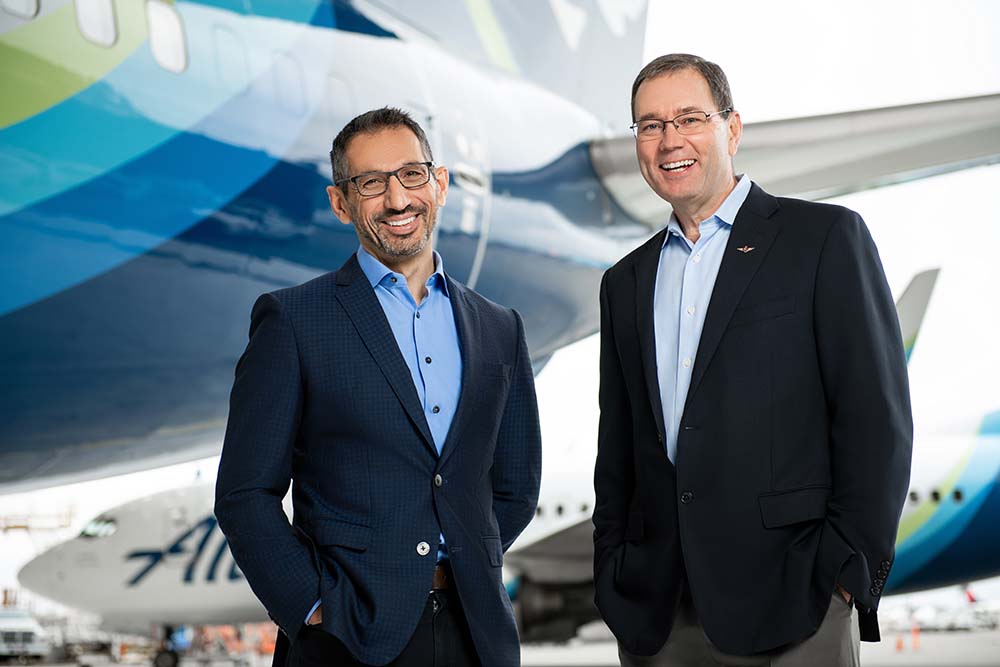
Minicucci succeeded Brad Tilden on March 31, 2021. Alaska joined the oneworld alliance the same day. The timing gave his first day a particularly literal international dimension: customers could connect their Alaska loyalty benefits with a wider network of partner airlines. A company associated with the West Coast was making a larger promise about where its passengers could go.
Tilden’s influence extended beyond the handover. Minicucci has credited their long working relationship with shaping his understanding of Alaska’s culture and the economics of a cyclical business. He had learned to consider costs, growth and employees together. It is a less photogenic education than taking delivery of an aircraft, but an airline needs someone paying attention after the ribbon has been put away.
The job would also require a very public confrontation with a supplier. After a door plug separated from an Alaska Boeing 737 Max 9 in January 2024, Minicucci demanded improvements in Boeing’s quality programs. “I am angry,” he said. His maintenance background gave that moment a particular resonance. The integrity of an aircraft was a subject he had worked with long before becoming the person answering questions on television.
In a later conversation with Michael Gervais, he returned to the importance of recognizing and taking responsibility for a problem. His phrasing was economical: “See it, own it and change it.” Applied to his own evolution, the sequence asks something awkward of an accomplished operator. The process under inspection may be the one you designed.
The map gets bigger. So does the test.
Alaska completed its acquisition of Hawaiian Airlines in September 2024. Minicucci now faced another integration, with a different promise: the Alaska and Hawaiian brands would both remain. Honolulu became the combined group’s second-largest hub. The challenge included preserving a local identity while joining the systems that make a larger airline function.
The December 2024 Alaska Accelerate plan translated the combination into commercial ambitions: a Seattle international gateway, more premium seating and a target of $1 billion in incremental profit. By September 2026, the company said it had captured roughly two-thirds of that target. It also reported completing a single loyalty program, operating certificate and passenger service system. Work on joint collective bargaining agreements remained underway.
Tokyo · Seoul · Rome · London · Reykjavík
Paris · Athens · Osaka · Papeete
A company ambition, with routes still to come.
There is more than one kind of distance in that plan. Long-haul routes need suitable aircraft, connections and a reason for passengers to choose the airline again. Atmos Rewards joined the Alaska and Hawaiian loyalty programs. New cabins and lounges aim to make the broader network more attractive. These investments give Minicucci more ways to compete and more moving parts to coordinate.
The financial test remains immediate. On October 20, 2026, Alaska reported a third-quarter GAAP net loss of $147 million. Minicucci said the company was dissatisfied with the quarter’s result and pointed to a substantial fuel headwind. The result belongs beside the expansion announcements. More destinations create possibilities; they do not remove the arithmetic of running an airline.
The same day brought plans for Seattle flights to Osaka and Papeete in 2027, subject to government approval. Paris and Athens had already been announced for that spring. The longer-term target is at least 15 intercontinental destinations from Seattle by 2030. The distinction between routes already flying and routes still promised matters. A map makes both look deceptively similar.
Rome, with an engineer’s eye
For Minicucci, Italy provides a personal counterpoint to the corporate map. After earning his engineering degree, he surprised his grandparents with a visit. Locals were startled to hear a young Canadian speaking their village dialect. He had learned it at home in Montreal. In 2026, after Alaska’s inaugural Seattle-to-Rome flight, he returned to Italy with his family.
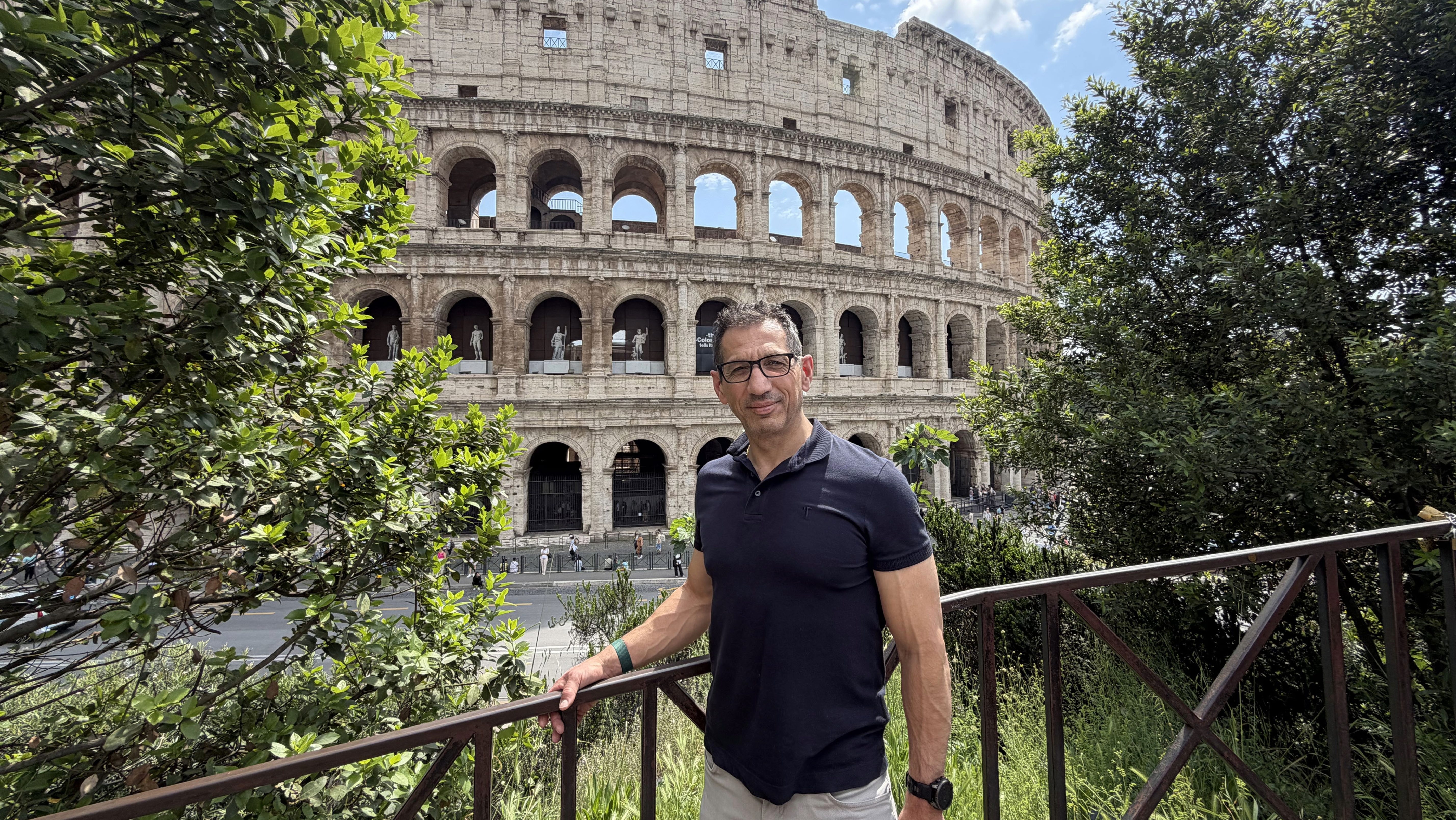
His travel advice has the pleasures of an actual traveler’s list: walk, make time for gelato, look beyond the busiest streets for a meal. He favors vanilla. At the Colosseum, he finds himself considering how the building has lasted. The engineering degree apparently remains in use, even when the office is an ocean away.
There are other welcome punctures in the executive image. He enjoys cycling trips with friends and has professed a liking for silly films, including Talladega Nights and Wedding Crashers. The person responsible for an elaborate flight network can still appreciate an evening in which very little proceeds according to plan.
His career now contains both the scorecard and the criticism of it. That is the interesting part. The engineer who made Seattle’s operation more measurable also learned to ask what his measurements were doing to people. As Alaska travels farther, he carries a question that first became visible close to home: how much judgment can a well-designed system leave in the hands of the people who make it work?