At Microsoft, Robert Wahbe’s marketing organization produced materials to help salespeople sell. Then came the awkward discovery: the intended users either had not heard of the materials or were not using them. The work had been done. The handoff had failed. In his account of Highspot’s origins, this was the experience that made the problem visible.
- The job: put approved content, practice and guidance within a seller’s reach.
- The wager: connect preparation to what happens in the next deal.
- The new chapter: Highspot joined Seismic in August 2026.
It is a pleasingly unglamorous beginning for a software company. Before the AI agents and the billion-dollar financing valuation, there was a familiar office embarrassment: someone had made something useful, and someone else could not make use of it. Anyone who has searched a shared drive five minutes before a meeting knows the feeling.
01 The slide was only the beginning
Wahbe founded Highspot in 2012 with Oliver Sharp and David Wortendyke. The three had worked together at Microsoft; Wahbe and Sharp knew each other from graduate school at Berkeley. Their first office was a small blue rental house in Seattle. Wortendyke remembered trips to Ikea to furnish it. Enterprise software, assembled beside the flat-pack furniture.

The product eventually grew beyond finding files. Highspot combines content management, sales playbooks, training, coaching, buyer engagement and analytics. Its territory is the space between a company deciding how to sell and a salesperson conducting the conversation. A CRM records the opportunity. Highspot supplies material and guidance for working it.
A seller can find an approved presentation, consult a playbook, rehearse an objection and share a curated digital sales room with a buyer. Marketing can see which assets get used. Managers can connect coaching with observed skills. The value proposition depends on those activities belonging to the same workflow.
Then feed what happened back into what sellers do next.
02 What changed at McKesson
McKesson offers a useful example because its starting problem was organizational. Different business units operated in silos. The company lacked a shared content environment connected to its CRM with visibility into how sellers consumed and shared materials. Creating another folder would have left much of that problem intact.
Its Highspot rollout combined shared resources, training and measurement. In Highspot’s published customer story, McKesson reported 79% recurring platform usage and a 34% decrease in deals lost. Amanda Steiner, its director of sales enablement and training, described the operational logic succinctly:
“You can’t manage what you don’t measure.”
Amanda Steiner / McKesson
These are customer-reported results in a vendor case study. They describe an implementation, rather than isolate the software’s causal effect. Other changes could influence deal outcomes. Still, the practical detail matters: the intervention included a common system and a way to inspect behavior. Buying access alone was never the whole job.
Reported by McKesson after adopting Highspot. A customer result, not a forecast for your team.
That distinction travels across industries. Highspot’s customers include healthcare organizations, technology companies and manufacturers. SailPoint’s published story reports 40% higher rep productivity and 34% shorter new-hire ramp time after consolidating content, training and coaching. The recurring theme is the coordination work around the platform.
Fastly made the feedback mechanism explicit. Its enablement team embedded surveys in learning paths and consulted a Sales Readiness Council. That is a useful detail for anyone copying the approach: ask sellers whether the training helps, alongside measuring whether they finish it. Course completion tells you that someone reached the end; their feedback can help explain what should change.
03 The library learns to answer back
Highspot’s more recent products make the original ambition larger. AI Role Play simulates customer conversations and provides feedback. Deal Agent uses deal context to identify risks and recommend follow-up. GTM Agent, introduced in May 2026, helps marketing and enablement teams examine gaps in their programs. Nexus is the company’s underlying AI and analytics engine.
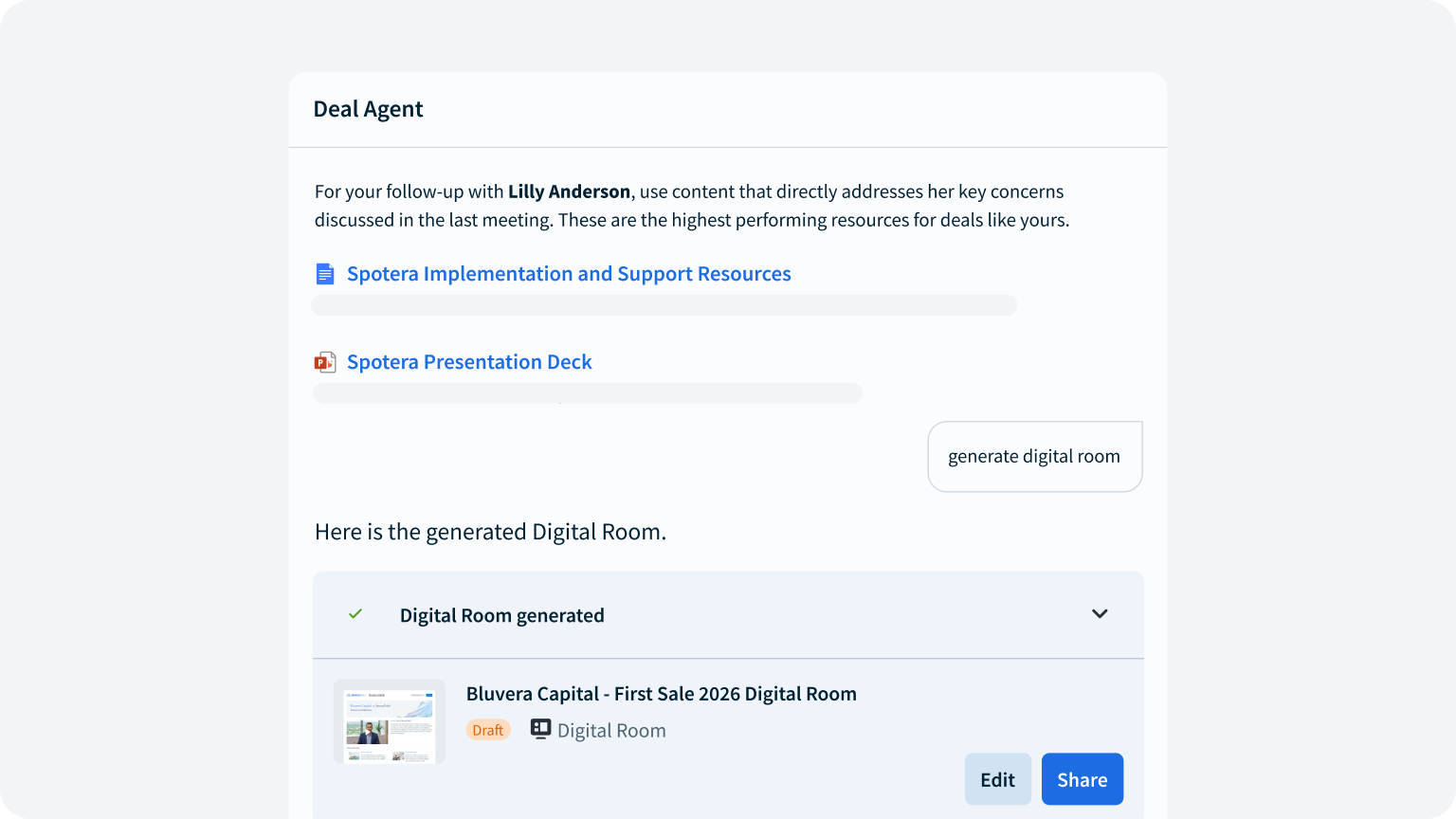
The company also connects with Salesforce, Microsoft tools, Slack and other workplace software. That is a consequential design choice: guidance has a better chance of being used when it appears where the seller already works. Highspot’s expertise sits at this junction of governed content, learning and sales workflow.
Against separate repositories, learning systems and coaching tools, its argument is consolidation and shared context. Buyers should test that argument on their own content and sales process. If nobody owns approvals, updates or manager follow-through, connecting the tools will leave the underlying responsibilities unresolved.
04 The price of getting organized
Highspot sells business software subscriptions through negotiated offers. Its AWS Marketplace listing shows plans starting at $66 per user per month, alongside a $50,000 minimum for a 12-month contract. Those are listing terms, not a universal quote. Capabilities, licenses and implementation scope belong in the purchasing conversation.
The company’s own economics have had sharp turns. A $248 million Series F in January 2022 brought announced total funding to $648 million and valued Highspot at $3.5 billion. In 2023, GeekWire reported workforce cuts of 10% in February and 15% in June. Wahbe linked the June reduction to accelerating profitability while investing in areas including generative AI.
The sequence complicates an easy growth story. A valuable customer problem can support substantial investment and still require a painful adjustment in spending. Highspot’s stated principles include careful investment, candid feedback and attention to detail. The layoffs show how consequential those choices can become.
05 The rival becomes the next chapter
Seismic, long a direct competitor, completed its merger with Highspot on August 18, 2026. The combined company operates as Seismic under CEO Rob Tarkoff. Highspot’s customer guidance says existing logins, workflows and support continue. Its platform now sits inside a larger business rather than an independent rival.
The lesson readers can copy is smaller than a merger: choose one sales motion, name an owner for its materials, retire stale versions, pair guidance with practice and inspect actual use. A team with a tiny library may need little software to do this. A sprawling organization may need considerably more.
Highspot’s enduring question remains the one Wahbe encountered at Microsoft: did the useful thing reach the person who needed it? Every new feature has to earn its place in that answer.