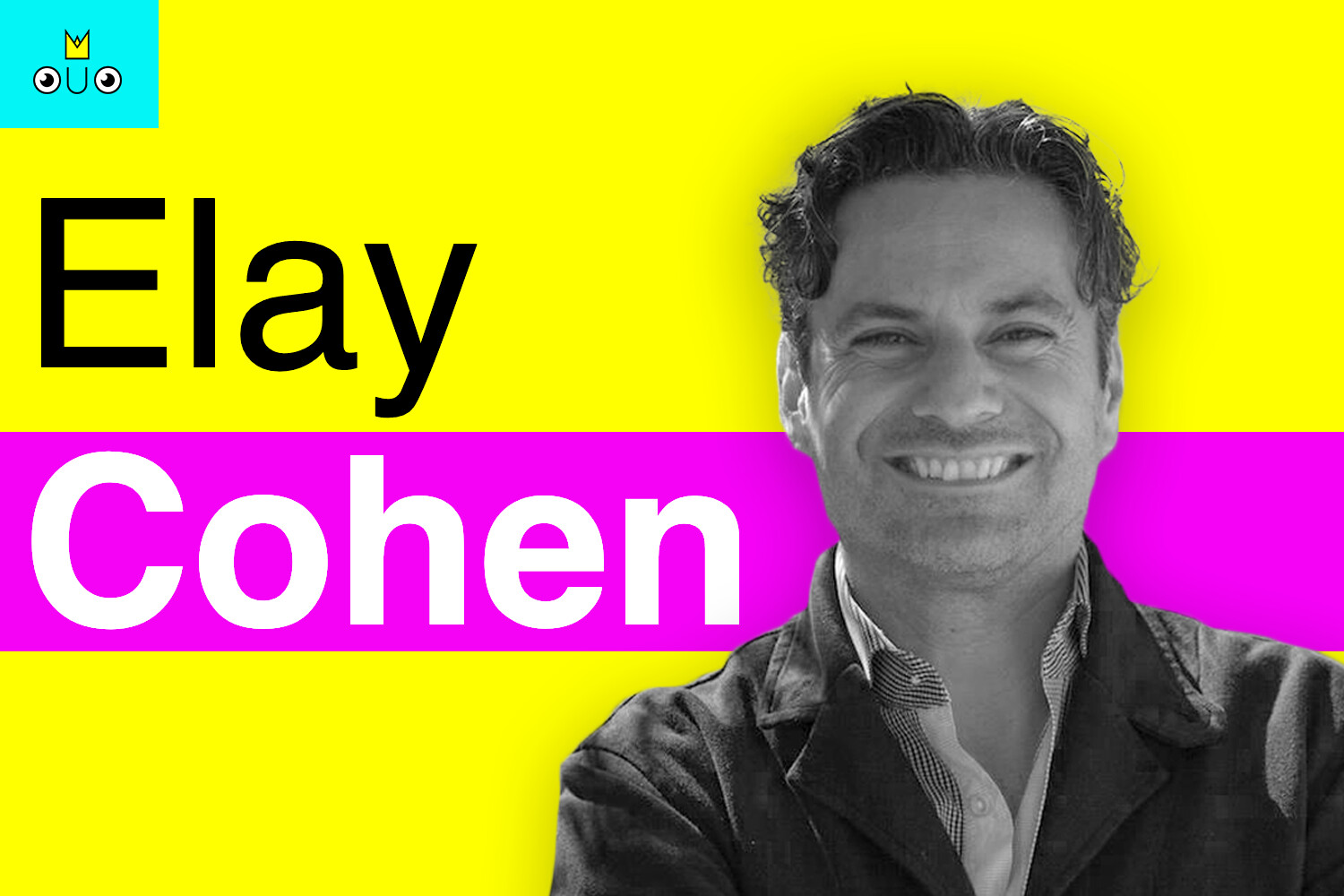
One of Elay Cohen’s first sales offices had a dashboard, but not the kind with charts. It was the dashboard of a car in Toronto. Cohen was selling first-aid supplies door to door, and his manager would sit with him before and after the calls. They planned the day, rehearsed the pitch, practiced objections, compared what worked, and tried again. Cohen later gave this ritual a pleasingly literal name: windshield coaching.
The phrase contains nearly everything he has spent his career building. Good coaching happens near the work. It is specific enough to use on the next call. A manager participates rather than merely prescribes. Practice is not punishment for a weak performer but the ordinary maintenance of a professional skill.
Cohen’s route from that parked car to San Francisco ran through banking, motivation services, product work, Oracle, and eventually Salesforce. He arrived at Salesforce in 2005, when the company was growing quickly enough to make every internal process feel temporary. Its story had to travel across a swelling global sales force. New people arrived in large cohorts. The company needed sellers who could explain the same idea without sounding as though they had swallowed the same script.
A kickoff has one job too many
There is a useful moment from Cohen’s Salesforce years. He and his team prepared an elaborate agenda for a coming sales kickoff: themes, speakers, workshops, training, and breakouts. They took it to Marc Benioff expecting refinement. They got a reframing.
Benioff argued that the gathering should be understood in three parts: before, during, and after. Train people before they arrive. Use the scarce time together to motivate, connect, celebrate, and align. Certify the learning after everyone leaves. It was an operator’s answer to a calendar problem. A room full of colleagues is expensive and rare. Do in that room what cannot be done alone.
“I want you to use the time when we’re together to motivate, inspire and get people pumped up.”Cohen recalling Marc Benioff’s kickoff guidance
Cohen would go on to lead sales productivity and enablement, ultimately as a senior vice president. He has described a 120-person organization onboarding 50 to 100 people every two weeks. The work covered messaging, sales plays, onboarding, coaching, and certification. Salesforce recognized him as its 2011 Executive of the Year. More important to the later company was the contradiction he could now see from close range: Salesforce could afford a formidable enablement machine, yet even that machine strained under travel, repetition, and growth.
His promotion into enablement had grown out of product storytelling. Cohen has recalled being recognized at an all-company meeting after a product launch, then being moved into a role that barely had a settled name. The new assignment was to help salespeople become conversationally competent around a common message, wherever they worked. Soon he was in Benioff’s office with sales and marketing leaders, learning that a corporate narrative becomes valuable only when thousands of people can carry it into unscripted conversations.
Scale sharpened the lesson. Every new cohort needed context, not merely a slide deck. Managers needed enough command of the material to coach it. Experienced sellers held useful stories that the next intake should not have to rediscover. Cohen’s enablement group became a kind of translation layer between executive intention and daily sales behavior. The work was part teaching, part publishing, part organizational diplomacy.
By the back end of his Salesforce tenure, Cohen was asking whether the system could carry more of the load. Could a company preserve the message, the rehearsal, the peer examples, and the managerial cadence without moving armies of employees through hotel ballrooms? In 2013, he left and co-founded SalesHood with Arthur Do.
The small courage of pressing record
SalesHood’s early product thesis was social and practical. Sellers could record pitches. Teammates could review them. Managers could make good performance visible. Knowledge that usually hid in private conversations could circulate.
In 2015, the platform logged more than 10,000 recorded pitches and 200,000 peer reviews. Cohen drew a management lesson from the pattern: teams participated more readily when their managers recorded the pitch first. The assignment gained a human precedent. The manager had accepted the same awkward little risk being requested of everyone else.
“Sales managers who lead by example have better sales results than those who do not.”Elay Cohen, “Sales Managers, Lead By Example”
This is Cohen at his most characteristic. A lofty subject such as leadership gets translated into an observable act. Did the manager record the pitch? Did the team review it? Did practice happen before the customer conversation? Inspiration matters, but a checkbox with good manners is still useful.
His first book, SalesHood: How Winning Sales Managers Inspire Sales Teams to Succeed, appeared in 2014. Enablement Mastery followed in 2019, organized around aligning people, processes, and priorities. Both books treat enablement less as a department that produces materials and more as the connective tissue among strategy, managers, and the people speaking with customers.
The titles also reveal his chosen unit of change. Cohen writes about the first-line manager because this is where a company’s grand strategy meets a Tuesday afternoon. The manager can celebrate a win, notice a weak discovery question, invite a strong seller to share a technique, and make the weekly meeting worth attending. None of those acts requires a theatrical transformation. Together they determine whether knowledge moves or stalls.
People, processes, priorities.
Cohen’s favorite operating triangle is deliberately plain. Alignment means getting the people doing the work, the method they follow, and the company’s urgent goals to point in the same direction.
AI enters the rehearsal room
The newest version of Cohen’s thesis uses AI, although its emotional center still belongs to that Toronto windshield. SalesHood now applies AI to role plays, call recaps, content recommendations, coaching, and digital sales rooms. A seller can practice an elevator pitch or pricing objection without waiting for a manager’s calendar to clear. A small enablement team can offer repetition across a large organization.
Cohen does not present practice as a one-time initiation for new hires. The message changes, the product changes, the market changes, and the seller must keep moving. SalesHood calls this “everboarding,” a slightly ungainly word for a sensible idea: readiness has no graduation ceremony.
In July 2026, the company announced native support for 19 languages across its platform, including AI coaching and assessments. Cohen’s explanation was concise: “Global revenue teams don't struggle with access to training, they struggle with relevance.” Central standards can travel, but the experience still has to sound local enough to be believed.
The dashboard learns to listen
For much of sales history, the instrument panel has watched the seller. Calls, emails, meetings, opportunities. Cohen’s more recent work turns toward the person on the other side of the process. In 2026, SalesHood analyzed nearly $1 billion in influenced pipeline, 50,000 digital sales rooms, 500,000 sales assets, and 275,000 buyer contacts.
The revealing activity belonged to buyers. High-performing rooms averaged 16 repeat visits. Multi-threaded opportunities, those with more people from the buying group involved, generated seven times higher engagement. Mutual action plans were associated with roughly twice the engagement. The materials buyers chose were particularly instructive.
What buyers opened · engagement rate
Buyers were less interested in another glossy success story than in the awkward documents that help a committee make a decision: price, implementation, business case, risk. They were doing organizational work. A seller’s job was not merely to deliver a message but to help that work move through a group.
This gives Cohen’s career a neat circularity. At Salesforce, he focused on getting a vast selling organization to speak with coherence. At SalesHood, he is now studying whether a buying organization responds with motion. The old system asked, “Did the seller perform the play?” The newer one also asks, “Did anyone in the audience lean forward?”
A rehearsal before the consequence
Cohen’s public work has a persistent optimism about ordinary managerial behavior. Weekly meetings can distribute good ideas. Peer review can make excellence less lonely. A manager can turn a “deal roast” into a useful coaching conversation. Gratitude belongs inside a sales culture, not on a poster outside it.
Technology makes those behaviors easier to schedule and easier to measure. It does not make them automatic. Somebody still has to choose the useful message, demonstrate the standard, offer a candid note, and care whether the next attempt improves. AI may play the skeptical buyer at midnight. Human judgment decides what the rehearsal was for.
That is why the windshield remains a durable metaphor for Cohen’s project. It is transparent, close to the road, and useless if nobody looks through it. The goal is not more training content. The goal is to see the next conversation coming and arrive prepared.