For about two years, Eric Mayville had a company to build after work. Wondersauce lived in the hours left over from the working day, in projects done with friends, in money earned and put aside. When the business formally began in December 2011, the founders had already spent a considerable amount of time behaving like founders. The opening day had a long apprenticeship.
There is something pleasingly unromantic about the savings. The leap into business is usually illustrated with a cliff. Mayville’s version includes a cushion. He and his collaborators kept their jobs, did the additional work and accumulated enough room to start. The preparation belongs beside the ambition. A person can want responsibility very badly and still prefer to pay the rent.
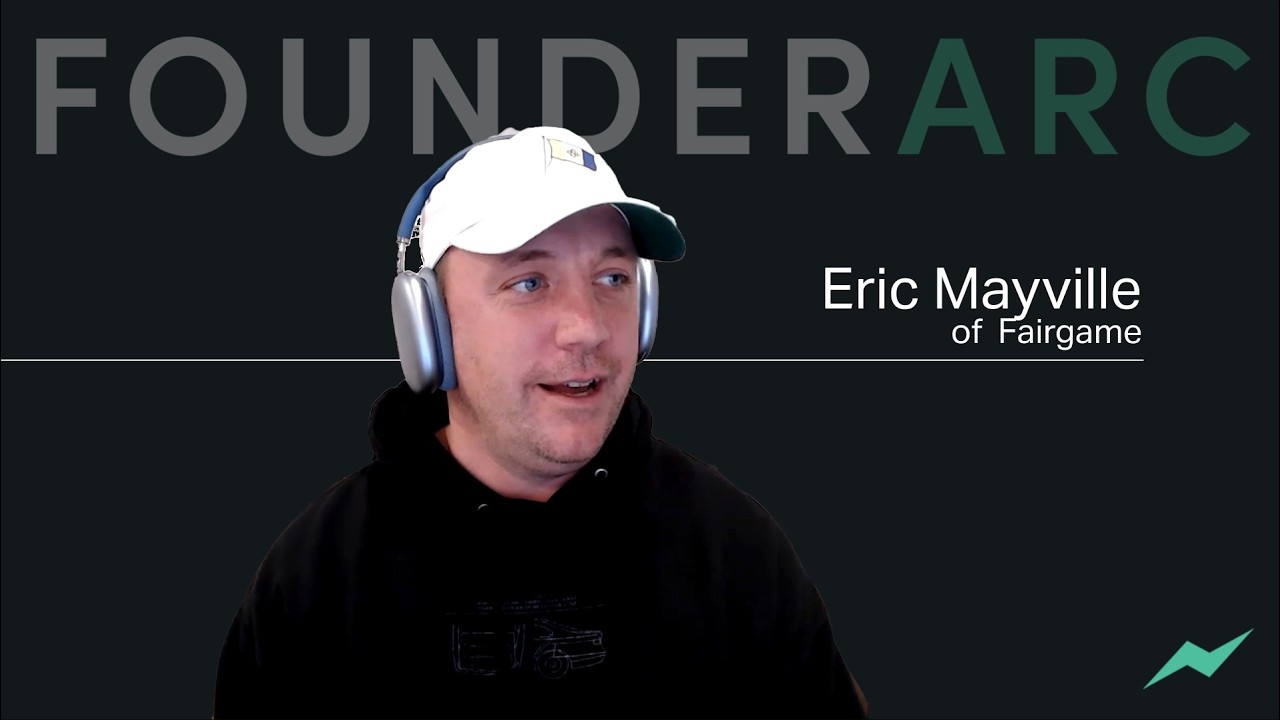
Wondersauce would be acquired by Project Worldwide in 2016. Mayville would later co-found Fairgame with professional golfer Adam Scott and HODINKEE founder Ben Clymer. But the two years before the agency opened offer a useful introduction to him: a designer interested in what people do, and an entrepreneur willing to spend time learning how to make a business out of it.
A company before it had a first day
Mayville’s early New York career coincided with an internet that was changing the agency brief. A website could be a publication, a shop, a product or several of those things at once. At Code and Theory, he saw people receive substantial responsibility while still young. He also watched the people running the business and began to imagine doing that work himself.
His father had worked for himself. Starting something therefore seemed like an available choice. Mayville’s difficulty was getting the responsibility he wanted at that stage of his career. Building a company offered a way to create it. The side projects made the choice more concrete, letting the future partners work together before the formal commitment arrived.
John Sampogna and Seth Klassen were part of Wondersauce’s founding group; Brett Waszkelewicz became a partner and creative leader. The agency brought design, technology, content and strategy into the same business. That combination was a practical response to clients whose needs did not stop neatly at a designer’s desk or a developer’s keyboard. A shop required both, and then somebody had to persuade customers to visit.
Of nights and weekends before Wondersauce’s first official day.
Ohio, with a return address
Mayville grew up in Ohio and earned a degree in visual communication from Ohio University in 2007. His working experience crossed motion design, front-end development, visual design, strategy and user experience, with stops including MTV, Razorfish and Code and Theory. It was a broad preparation for a business that would need to make different disciplines cooperate.
New York became home, but Ohio remained part of the company’s geography. In 2015, Wondersauce was opening a second office in Columbus. Mayville, a Westerville native, saw a place to recruit people, work near universities and participate in a creative community. HOMAGE, the Ohio apparel company, was its first Columbus client. Expansion could also be a return journey.
The agency’s work covered publishing, brand experiences and ecommerce. Mayville wanted the business to speak clearly to clients and build things that would remain useful. He understood that making something simple could take considerable effort. It is an inconvenient principle for anyone charging by the complexity of a presentation, and a sensible one for the person who eventually has to use the result.
“Simple is one of the hardest things to do.”
Eric Mayville, 2015
The education that arrived with payroll
The growing client list included Google, Nike, GQ, Bombas and The Players’ Tribune. Making work for recognizable names was one part of the education. Running the organization responsible for that work supplied another. Hiring, selling, managing clients and giving colleagues responsibility all became part of Mayville’s job. A design background did not exempt him from the rest of the business.
In a fourth-anniversary essay, Mayville and Sampogna argued for working with friends and investing in employees. Their account allowed room for discipline alongside the fun. They wanted people to gain control over their work, and they warned that a founder’s title brought obligations that still had to be earned. The tone was informal. The expectation of follow-through was quite serious.
The acquisition arrived in October 2016. Project Worldwide added Wondersauce to its agency portfolio, with the financial terms undisclosed. The announcement described an 80-person company and named Mayville and Sampogna co-CEOs. Klassen and Waszkelewicz would be co-chief creative officers. Wondersauce kept its name, while Project’s infrastructure offered support for further expansion.
During Mayville’s tenure, the agency grew beyond 115 people, with locations in New York, Columbus, Los Angeles, London and Costa Rica. Those are two different snapshots of a growing organization. The later footprint also helps explain why his recollections give so much space to operating a company. Once there are offices and teams to support, making the work includes making it possible for other people to work.
- 2011Build the agencyWondersauce opens
- 2016Join a networkProject Worldwide acquisition
- 2021Start a conversationFairgame podcast launches
- 2024Help run the eventFairgame Pro arrives
His public thinking about commerce was similarly concerned with how people behaved. Writing about social shopping in 2017, Mayville argued for connecting the content in a customer’s feed to an intuitive buying experience and continuing the relationship after purchase. Later that year, discussing Amazon’s one-click checkout, he pointed to the friction involved in buying even a familiar item such as socks. The details were ordinary enough to be overlooked. For the customer who had to enter information again, they were the experience. That attention to the steps between interest and participation would have another application in golf.
A clubhouse you could hear first
Fairgame gave that experience a different setting. Scott brought the perspective of a Masters champion. Clymer had built HODINKEE around watches and the people who care about them. Mayville brought the experience of building digital businesses for clients. Andrew Haynes, the company’s creative director, helped give the venture its visual character. Golf supplied the shared interest.
The first public invitation was a podcast. In April 2021, Fairgame launched a series following Scott’s preparations for the Masters, produced through Cadence13 and ThreeFourTwo Productions. Mayville was an executive producer as well as a voice in the conversations. Listeners could spend time with the people behind the venture before being asked to enter its software.
That sequence suited a company concerned with the social experience of golf. The opening episode followed the preparation of a professional player, but the broader project made room for people whose connection to the game took other forms. Later conversations included photographers, designers, golfers and founders. A shared interest could sustain rather more conversation than the final number on a scorecard.
By 2023, Fairgame’s Open Rounds feature let users list a round for others to join or join somebody else’s. The product also supported different games and scorekeeping. These choices addressed the social arrangements around a round: who will play, how they will compete and how they will stay connected. The software had to accommodate the golfers’ preferences, including the ones that differed from their friends’.
Somebody has to organize the game
A round between friends and a tournament ask different things of the person doing the arranging. Fairgame’s next move brought that person more directly into the business. In March 2024, the company introduced Fairgame Pro, a tournament management platform connected to its consumer app. Registration and administrative work became part of the product brief alongside the experience of playing.
Mayville described time spent interviewing golf professionals, event organizers, league managers and golfers planning trips. The need for design and automation emerged from those conversations. His launch announcement also made room for people who preferred a traditional scorecard. Even in a software company, the piece of paper deserved a hearing. The point was to help an event work for the people attending it.
The expansion has a familiar shape in Mayville’s career. At Wondersauce, a publishing or commerce project required understanding what happened around a screen. At Fairgame, the same attention extends to the organizer who needs players registered and information in the right place. The attractive part of an experience depends on a considerable amount of administrative competence. Somebody gets to design that part, too.

The next round
In 2025, Mayville described Fairgame Pro’s work with Random Golf Club, Bunker Club and the PGA Met Section. The strategy paired existing groups of golfers with software to help their leaders run events. It gave the company a concrete route into communities already gathering around the game, with practical work to do once the golfers arrived.
Golf also appears outside his commercial projects. Mayville has supported the Caddie Scholarship Fund, representing Sleepy Hollow Country Club’s caddies in their pursuit of college degrees. He serves on Ohio University’s Scripps College advisory council. Cooking, photography and ATV riding sit among his other interests. The biography has room for things that cannot be reduced to the next product launch.
He is also building Spyhold, a physical accessories business, alongside Fairgame. Looking back on Wondersauce as its acquisition approached a tenth anniversary, he returned to the experience of learning to build an organization. The lesson travels beyond agencies. Friends can start something together; sustaining it requires a company capable of delivering on what they imagined.
That is what makes the nights and weekends worth remembering. They show the work before the title, before the offices and before the acquisition announcement. Mayville wanted the chance to build a company. He began by doing the work in the hours he had. Years later, with a different team and a different brief, there are still people to understand and details to get right before the next game can begin.
Keep the conversation going
- Eric Mayville’s website
- Twitter / X
- Wondersauce
- Fairgame
- The founders’ podcast conversation
- Mayville in conversation with Blaine Bertsch - YouTube
- Wondersauce’s fourth-anniversary essay
- The 2016 acquisition
- Fairgame Pro’s 2024 introduction
- Inside Fairgame’s social approach to golf