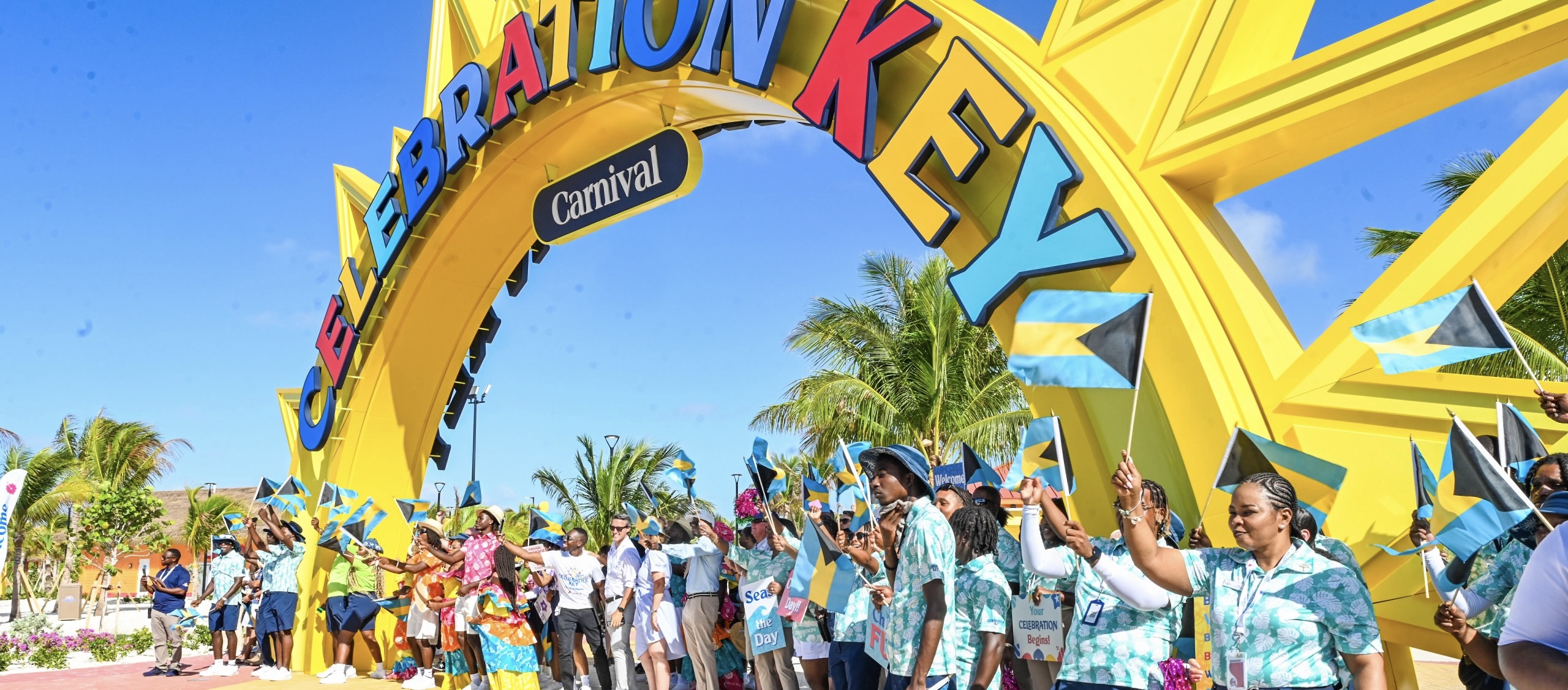
On July 19, 2025, Carnival Vista arrived at Grand Bahama with an unusual promise. The destination waiting beyond the gangway had been built for passengers like these. There were freshwater lagoons, waterslides, places to eat and a towering Suncastle. Shaquille O’Neal helped inaugurate the basketball courts. The price of arranging this particular day at the beach: $600 million.
Celebration Key makes a useful introduction to Carnival Corporation. A ship takes people somewhere. A company that develops the somewhere gets another chance to shape their holiday, earn their spending and persuade them to return.
- Eight cruise brands serve different tastes, from family fun to expedition luxury.
- Tickets bring guests aboard. Extras and destinations extend the business.
- Owning more of the holiday brings control, expense and responsibility.
A beach with a business plan
By its first anniversary, Celebration Key had welcomed 2.4 million visitors, Carnival reported. The destination supported approximately 1,000 year-round jobs, with more than 80% of food and retail operators locally owned. The visitor total measures activity; it does not establish that the investment has paid for itself.
The commercial logic is easy to see. An operator can design a port day around its passengers, coordinate arrivals and give people reasons to spend ashore. Local businesses gain access to a concentrated audience. Carnival gains a destination it can put into the sales pitch before anyone packs a suitcase.
One parent, eight personalities
Start with the distinction that trips people up: Carnival Corporation owns Carnival Cruise Line. It also owns AIDA, Costa, Cunard, Holland America Line, P&O Cruises, Princess and Seabourn. A British holidaymaker, a German family and a couple seeking an expedition may enter through different brands.
Cunard sells ocean travel with ceremony and transatlantic heritage. Carnival Cruise Line emphasizes playful, multigenerational holidays. Seabourn offers intimate luxury and expeditions. Princess and Holland America bring premium cruising and Alaska expertise. The parent also operates Alaska and Yukon lodges, railcars and motorcoaches, extending an itinerary inland.
Royal Caribbean Group, Norwegian Cruise Line Holdings and MSC compete for cruise customers. Hotels and resorts compete for the same vacation budget. Carnival’s range gives it several routes into that decision. It cannot promise every traveler will enjoy every ship; choosing the right brand is part of the product.
The dollar that came with debt
The company’s history supplies an excellent warning about attractive prices. Ted Arison founded Carnival Cruise Line in 1972 with a converted ocean liner, Mardi Gras. In 1974, he bought the business for $1 and assumed $5 million in debt. Remembering only the dollar rather spoils the lesson.
A 1987 share offering raised approximately $400 million. Acquisitions followed, including Holland America in 1989 and the 2003 combination with P&O Princess. Carnival built a portfolio of established identities rather than asking one name to satisfy every taste.
That approach has limits. In March 2025, it absorbed P&O Cruises Australia into Carnival Cruise Line. Management had cited the South Pacific’s smaller population and higher operating and regulatory costs. Distinct branding had become harder to justify against the economics of running it.
The cabin is the beginning
The annual accounts make the holiday’s economics visible. Fiscal 2025 revenue was $26.622 billion, with 13.6 million passengers carried. About 65% of revenue came from passenger tickets; the remaining 35% came from onboard and other sales.
Beverages, excursions, retail, casinos and other services add spending opportunities after the booking. Travel advisors and direct channels bring customers in. For travelers, the practical move is to compare the whole trip: fare, transport to port, drinks, connectivity and excursions. A low starting price leaves plenty of decisions outstanding.
The less visible expertise sits between maritime operations and hotel service. Carnival trains deck and technical officers at its CSMART academy in the Netherlands. Shipbuilders including Fincantieri supply vessels that must work as transportation, accommodation and entertainment venues at once. A poor handoff between those functions quickly becomes a passenger’s problem.
Technology can remove smaller irritations. By May 2024, Carnival had installed Starlink across its global fleet. Connectivity helps guests stay in touch, although having equipment aboard does not make every internet package free or identical. The useful promise of a cruise is simpler planning: accommodation, meals, activities and movement between destinations arranged together. Executing that promise requires many separate systems to agree.
When the ships stopped
In 2020, the pandemic interrupted the assumption on which this machinery depends: passengers being able to board. Carnival Cruise Line initially announced a 30-day pause, then repeatedly extended it. Ships still required care. An expensive fleet could no longer perform its revenue-producing job.
The recovery therefore involved a balance-sheet problem alongside a sales problem. By the third quarter of 2026, Carnival reported $8.435 billion in quarterly revenue and approximately $1.920 billion in attributable net income. Weinstein described intentionally measured capacity growth
. Selling existing capacity more effectively matters when adding capacity requires years of construction and substantial capital.
“Intentionally measured capacity growth.”Josh Weinstein · September 2026 results

What the holiday leaves behind
Control brings obligations. Princess’s pollution case resulted in a $40 million penalty and a 2017 conviction. In 2019, Princess and its parent faced a further $20 million penalty for probation violations. Princess received another $1 million fine in 2022. These were documented failures of environmental practice and oversight.
Current programs deserve examination against that record. In an October 2026 update, Carnival reported food-waste reductions exceeding 47% against 2019. Its Less Left Over program connects purchasing, preparation, portions and waste measurement. Donations reached 20 ports. Reducing surplus before it becomes waste is a useful operating habit far beyond cruising.
There is a useful distinction here between a program and an outcome. Donation counts show meals delivered; food-waste figures show progress against a baseline. Neither erases an earlier conviction or establishes that every environmental problem has been solved. A passenger, employee or investor can welcome a specific improvement while continuing to ask how performance is measured and who checks it.
Borrow the method. Price the risk.
The transferable idea is to examine the handoffs in a customer’s experience. Carnival sells the cabin, operates the journey and increasingly shapes the day ashore. Another business can look for the awkward interval its customers must otherwise organize themselves.
But owning that interval makes sense only with enough demand and capital to support it. A cruise destination depends on ship visits, workable local relationships and weather; it remains exposed to travel disruption. Travelers seeking unscheduled wandering may prefer a different port day. The beach can be carefully arranged. The appetite for it still has to be earned.