Before there were gondolas, there was a convention hall. In 1990, Sands opened an exhibition center beside its Las Vegas hotel. The Venetian arrived nine years later. That sequence is a useful way into Las Vegas Sands: the meeting came before the spectacle. A trade show supplies something a hotel needs badly - a reason for people to turn up on a particular day.
- Fill the calendar: combine business travel with leisure demand.
- Keep the itinerary close: sell rooms, meals, shopping, entertainment and gaming.
- Follow the customer: reinvest as expectations change, even when that means rebuilding.
A business built for Tuesday
Sheldon Adelson came to hotels through COMDEX, the computer trade show. He understood the organizer’s problem: bring a crowd together, then find somewhere for everybody to sleep, eat and meet. A convention was also an answer to the hotel operator’s problem. Business travelers could help occupy rooms during the week; vacationers could arrive for the weekend. The calendar became part of the product.
Sands packaged those activities into what it calls a convention-based integrated resort. The customer buys a room or a meeting venue, but gains access to a much larger collection of services. An event organizer can coordinate accommodation, exhibition space and dinners in one destination. A leisure visitor can stitch together a stay without repeatedly arranging transport. Convenience is one of the things the architecture sells.
The casino pays the bills
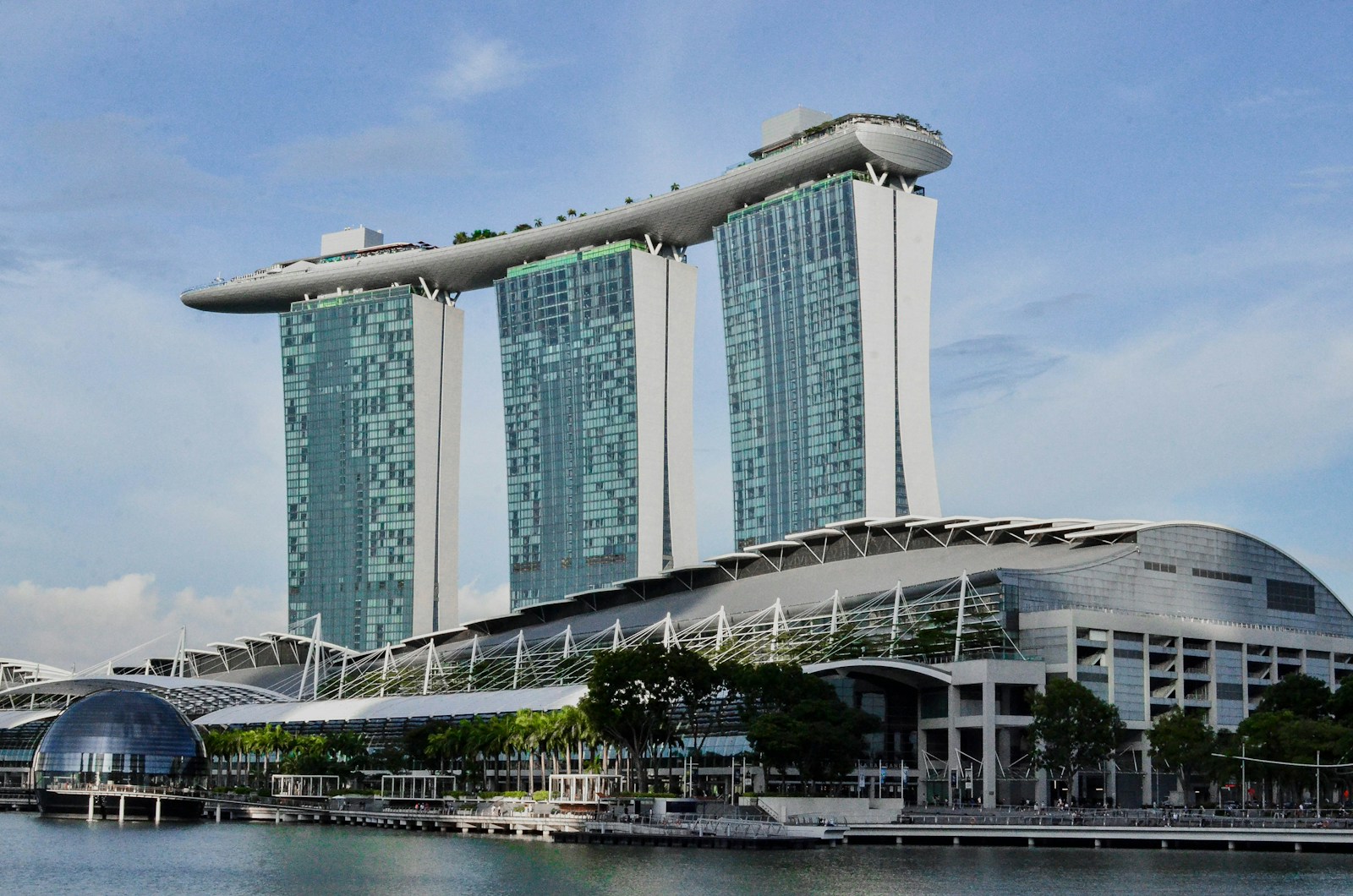
Today the operating portfolio sits in Macao and Singapore. Five Macao resorts include The Venetian, The Londoner, The Parisian, The Plaza and Four Seasons, and Sands Macao. Singapore contributes Marina Bay Sands. Across the portfolio, Sands reports more than 12,700 rooms and suites, around three million square feet of meeting space and five malls. Those figures describe the breadth of the invitation.
The income statement describes its center of gravity. In 2025, casino revenue was $9.789 billion out of $13.017 billion in total net revenue: about 75%. Rooms contributed $1.422 billion; malls, $801 million. Restaurants and other activities supplied the balance. The meeting room matters even though conventions are grouped into a comparatively small revenue line. An activity can help attract customers without collecting most of their spending.
This places Sands among destination resort operators rather than hotel franchisors. Its expertise includes financing and developing large properties, running gaming operations and coordinating hospitality at scale. Wynn, Galaxy, MGM, Melco and SJM compete in Macao; Resorts World Sentosa is the Singapore alternative. Competitors also bundle attractions. Sands’ particular emphasis is the size and integration of its convention business.
That coordination is useful to several buyers at once. Companies can book an event destination; exhibitors gain access to its audience; visitors can choose restaurants, shows or shops around the event. Retail tenants pay for a place in that flow. Sands earns directly from some transactions and through leasing in others. Financing the buildings is a different transaction again: the company raised public equity in 2004 and also uses debt and operating cash. It carries the cost of the physical destination while selling many individual pieces of the visit.
The name stayed. The capital moved.
In February 2022, Sands completed the approximately $6.25 billion sale of its Las Vegas resort operations to Apollo and VICI affiliates. The transaction included The Venetian, Palazzo and Venetian Expo. Headquarters remained in Las Vegas. The operating resorts were now in Asia. Management described the proceeds as support for reinvestment and development, making the company’s name a better guide to its origins than its resort map.
Another change happened inside the portfolio. Sands Cotai Central had been designed for mass-market customers. As Patrick Dumont explained in a 2026 company town hall, guests wanted higher-end hospitality. The response was a $2.2 billion transformation into The Londoner Macao. That is a concrete answer to what changed management’s mind: customer expectations had moved beyond the original offer.
“Our intellectual property is in the design of our buildings and the offerings or aesthetic we provide.”
Patrick Dumont · company town hall, April 2026
An $8 billion next chapter
Dumont became chairman and CEO in March 2026. His agenda includes the new Singapore development, which broke ground in July 2025. Its estimated $8 billion cost includes financing and land premiums. Plans call for 570 suites, approximately 200,000 square feet of meeting space and a 15,000-seat arena. Safdie Architects, responsible for the existing Marina Bay Sands, is designing the project.
These are plans, not bookable inventory. A June 2026 filing anticipated a January 2031 opening, with a construction timetable extending beyond the contractual deadline and therefore requiring government approval. The potential benefit is another set of reasons to travel. The exposure is years of spending before those reasons can produce revenue. A hotel tower comes with a balance sheet. A concert venue adds another operating rhythm: crowds arrive for a performance rather than a conference or a holiday. The proposed combination extends the same logic into entertainment, but its commercial results will depend on execution and demand after opening.
When the visitors vanished
The model’s weakness became painfully visible in 2020. Second-quarter revenue fell 97.1% to $98 million, and the company recorded a $985 million net loss. Hotels, restaurants, shops and casinos looked like separate revenue streams. During travel restrictions and closures, they shared a dependency: visitors who could physically arrive. The buildings could not diversify that away.
Even with visitors back, performance varies. The October 21, 2026 release reported quarterly revenue of $3.216 billion, down from $3.331 billion a year earlier. Marina Bay Sands hotel occupancy reached 95.8%, yet its casino revenue declined. A busy hotel and a strong casino result do not automatically travel together.
Copy the calendar
The useful lesson for a smaller business is to look for customers whose schedules complement one another, then connect services that make their visit easier. That is an inference from Sands’ model, not a guarantee. It requires sufficient demand and the ability to deliver the bundle well. Sands emphasizes service training, supports communities through Sands Cares and addresses environmental operations through Sands ECO360. At this scale, the experience depends on people and maintenance as much as a memorable roof.
A business owner can study that connection without building a casino. Find the empty Tuesday. Understand who has a reason to come. Make the rest of the trip easier.