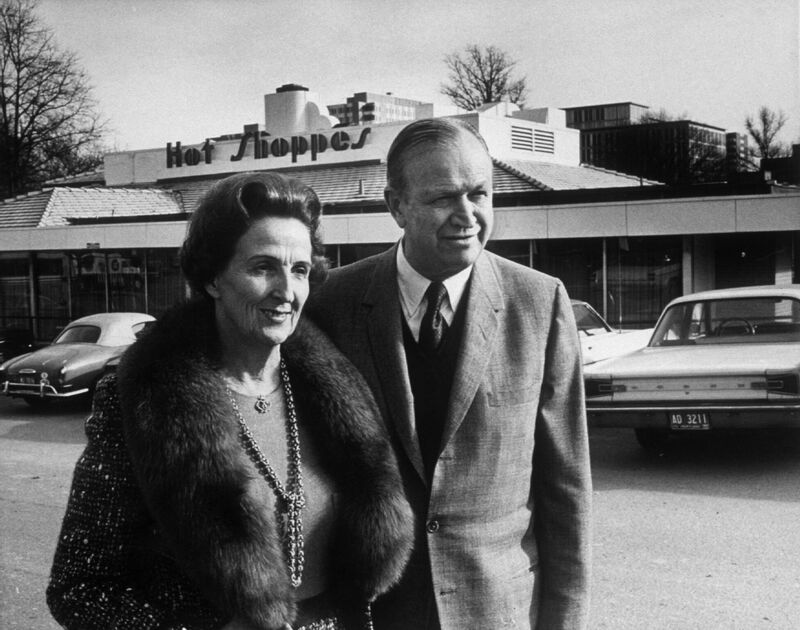
In 1927, the Marriott business had nine seats and sold root beer. J. Willard and Alice Marriott had opened an A&W stand in Washington, D.C., with partner Hugh Colton. The hotel rooms came thirty years later. In between were restaurants, customers and a practical education in getting people to come back. The origin is amusing. The more revealing part of the story is what Marriott eventually learned to leave to someone else.
- Two customers: travelers book the rooms; property owners buy into the system.
- A reason to return: Bonvoy connects different brands and different trips.
- The catch: a shared promise depends on thousands of local operations.
Nine stools, then a different kind of scale
Alice’s early jobs included bookkeeping, cooking and interior design. That is a useful corrective to the romantic founder portrait: somebody still has to reconcile the money and decide what the room looks like. The first hotel, Twin Bridges, opened in 1957 with 370 rooms. Marriott had moved from feeding travelers to accommodating them.
Expansion introduced a less charming problem. Building hotels and selling them to investors worked until buyers stopped taking the properties off Marriott’s hands. Research into its early-1990s debt crisis describes hotels that could not be sold and debt that still needed servicing. The first broken assumption was that the next buyer would arrive.
In 1993, the company split. Host Marriott took the property-owning role; Marriott International carried the management business. Bondholders challenged the restructuring. It was a contested response to financial pressure, with real consequences for creditors. But the distinction it sharpened would prove durable: owning a building and organizing a hotel business require different kinds of capital.
The company on the sign and the company on the deed
Today, Marriott predominantly manages, franchises and licenses. A third-party owner can supply the property investment. Marriott supplies a brand, distribution and operating systems. At a franchised hotel, the owner or its operator runs the property under the brand agreement. At a managed hotel, Marriott takes on operations under contract. Its expertise spans revenue management, standards, development, reservations and the recurring business of filling rooms.
Owners pay franchise or management fees. Contract terms determine the details.
That gives Marriott two customers. Travelers want a good night’s sleep, an appropriate location and a sensible price. Owners want demand and a return on their investment. A reservation network is valuable only if it delivers something worth more than its cost. A familiar sign can help sell a room; it cannot make an unsuitable property a good investment.
The accounting makes the arrangement visible. Marriott reported $26.186 billion in 2025 revenue, including $19.204 billion in cost reimbursements. Those reimbursements cover services and expenses incurred for owners and other counterparties. Treating the entire revenue figure as payment for Marriott’s brand would badly misread the business.
One account, many kinds of trip
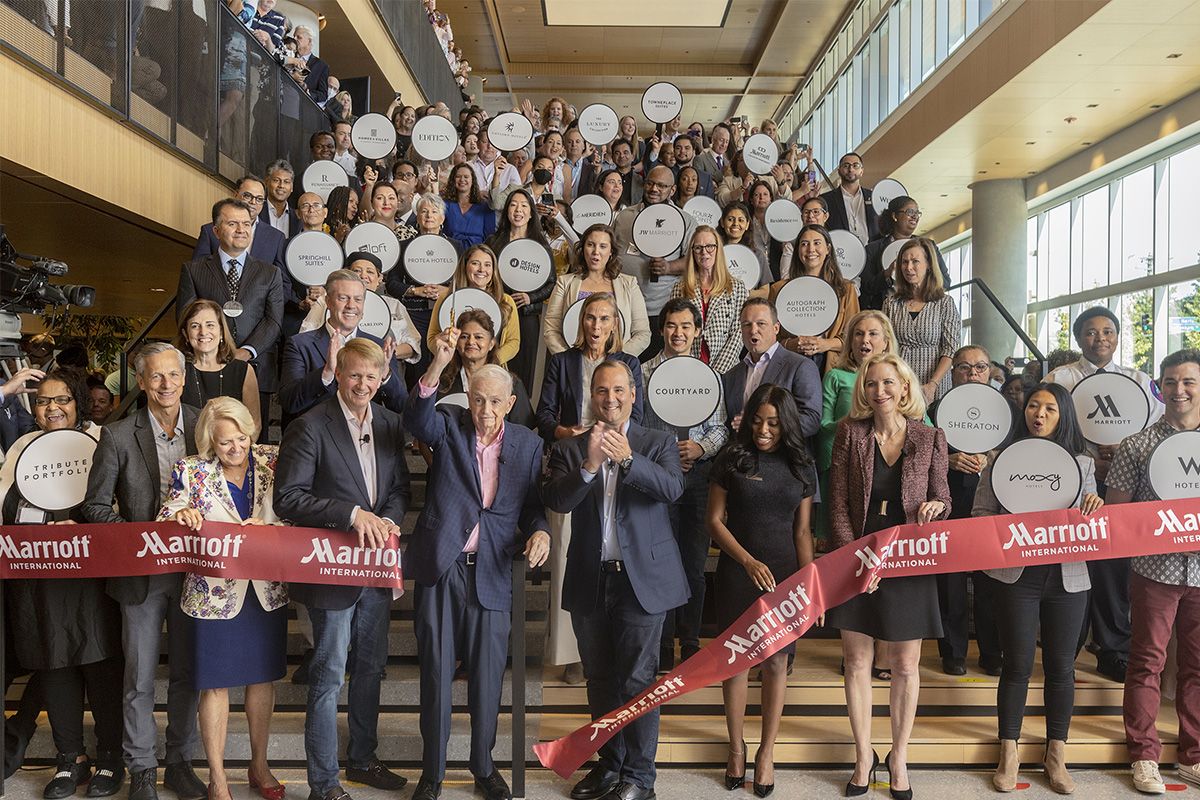
Bonvoy connects the portfolio. A business traveler can stay at Courtyard, a family can choose Residence Inn for a longer visit, and a holidaymaker can book St. Regis. The product changes with the trip. The account can remain. For meeting planners and corporate travel buyers, the breadth also means more destinations and price points within one commercial relationship.
Hilton, Hyatt, IHG and Accor offer competing versions of that proposition. Marriott’s case rests on the reach and variety of its own network. By June 2026, it reported more than 10,000 properties and over 295 million Bonvoy members. Membership is an enrollment count, not a measure of active travelers. Still, it gives an owner a concrete reason to consider joining.
“Take care of the associates and they will take care of the customers”From Marriott’s published founder philosophy
The employee principle matters because the booking system cannot make the welcome happen. Marriott states five values, beginning with putting people first. Every stay ultimately requires staff to turn that idea into clean rooms, answered questions and resolved problems. The wider the network becomes, the more often that small test must be passed.
The cost of putting it together
Acquisition accelerates that work and complicates it. The amended 2016 Starwood agreement valued the transaction at approximately $13.6 billion. Marriott gained brands including Sheraton, Westin and St. Regis. Its 2018 shareholder letter subsequently acknowledged loyalty-statement errors and unexpectedly heavy service calls after combining programs. The reservation is an everyday transaction. Behind it, integration can be formidable.
Security failures carried a separate bill. In 2024, Marriott agreed to a $52 million multistate settlement over a guest-reservation database breach. A parallel FTC action required security improvements. Marriott made no admission of liability. The lesson for any company collecting customer histories is plain: the relationship includes responsibility for the records.
The 2025 citizenM purchase offers a more focused example of the strategy: $355 million for the brand and related intellectual property, with potential additional earn-outs up to $110 million. Marriott could expand what it offered travelers without buying the hotel buildings themselves.
Licensing can achieve another kind of expansion. MGM Collection brings participating MGM Resorts destinations into Marriott’s booking channels and loyalty arrangements without Marriott acquiring MGM. Guests get more places to use the relationship; Marriott gets a broader offer. The details matter, though: qualifying bookings and benefits follow specific rules. A partnership announcement is an invitation to read those rules before checking in.
What to borrow, what to check
For another business, the useful move is to identify a shared service that independent operators will repeatedly pay for. Then prove its value. Marriott’s approach depends on owners who can finance, maintain and operate properties that keep the brand credible. Weak demand or underinvestment can spoil the arithmetic.
There is a limit to how much standardization a traveler wants, too. The portfolio has to make different brands feel meaningfully different while preserving enough reliability to justify the common account. That is an operating challenge for the company, and a useful question for the guest: what, exactly, does this particular name promise?
For travelers, compare the total cash price with the points price, check cancellation terms and read the benefits for the particular brand. Bonvoy can connect a work week to a future holiday. It earns its place when the actual stay justifies the choice. Somewhere between the first nine stools and the next reservation, that remains the test.