Consider the problem of the guest who never gambles. She books a room, buys dinner, sees a show and leaves. For a casino operator, she might once have seemed peripheral. For MGM Resorts International, recognizing her value became a product decision. In February 2022, its renamed loyalty program gave non-gaming customers access to a rewards currency redeemable across the resort experience. The table in the restaurant deserved attention alongside the table on the casino floor.
- Sell several parts of a trip, from the room to the evening out.
- Connect the purchases through rewards and partners such as Marriott.
- Keep the machinery reliable: shared systems can multiply disruption, too.
A weekend with several tills
MGM runs hotels, casinos, restaurants, entertainment venues and meeting spaces. Bellagio, ARIA, MGM Grand and The Cosmopolitan belong to its portfolio. Its customers include vacationers, gamblers, concertgoers and the person organizing a conference who needs bedrooms, meeting rooms and dinner to work together. The product is partly coordination. An itinerary assembled from one operator’s offerings can remove several small planning headaches.
The company took shape through acquisitions. Kirk Kerkorian founded the present corporate entity in 1986; MGM acquired Mirage Resorts in 2000 and Mandalay Resort Group in 2005. The MGM Resorts International name arrived in 2010. The movie studio is a separate company. The shared initials can confuse people, but the resort business has plenty of its own productions to manage.
Operating this mixture calls for an unusual combination of skills: hotel service, restaurant operations, event scheduling and regulated gaming. The practical challenge is making them agree on the same evening. A conference schedule changes when people eat; a show changes when they leave dinner. Selling several services together creates more opportunities to serve a guest, and more handoffs to get right.
Against Caesars, MGM competes for resort guests and repeat casino visits. Against Wynn, the contest includes luxury stays and dining. In digital betting, the competitive set changes again. MGM’s particular advantage is the breadth of activities it can connect across a substantial Las Vegas footprint, regional U.S. properties and Macau operations.

The dinner guest gets a vote
The 2022 rewards redesign makes the strategy unusually visible. MGM’s investor presentation described simpler rules grounded in member research and resort-fee waivers addressing a member complaint. That is evidence of what informed the change. A diner or hotel guest could now earn MGM Rewards Points without a gambling session. Recognizing more kinds of spending gave more kinds of visitors a reason to come back.
Marriott supplied another connection. In March 2024, MGM Collection with Marriott Bonvoy launched with 16 destinations bookable through Marriott’s website and app. MGM could reach travelers inside a booking and loyalty system they already used. Marriott could offer destinations whose appeal extended beyond the bed. For customers, the useful move is to compare eligible booking channels and benefits before paying; the terms determine what actually carries across.
- 01Book
- 02Stay + spend
- 03Earn
- 04Return
Buy the business. Rent the building.
Owning the experience does not require owning every building. In May 2022, MGM paid $1.625 billion for The Cosmopolitan’s operations, before working capital adjustments. It entered a 30-year lease with initial annual base rent of $200 million. Separate owners held the real estate. This distinction matters: MGM bought an operating business and accepted an ongoing obligation to its landlords.
The arrangement releases capital from property ownership, but rent still comes due when demand weakens. MGM earns from gaming, rooms, food, drinks and other services; each has its own costs. BetMGM, its North American venture with Entain, is owned 50/50. Its revenue must not simply be piled onto MGM’s consolidated sales. Nor should it be confused with the separately reported international MGM Digital segment.
Revenue by reported segment, rounded
Rounded segment figures do not sum to the consolidated total. BetMGM is an equity-method joint venture.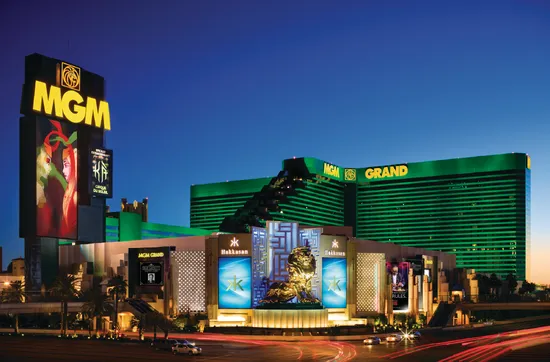
The invisible machinery
In September 2023, criminal actors gained unauthorized access to some U.S. systems. MGM shut down certain systems to protect data. Reservations and other guest services were disrupted. The company initially estimated roughly $100 million of negative impact on adjusted property EBITDAR, an earnings measure, plus less than $10 million in one-time expenses. The network connecting conveniences could also connect inconveniences. For a guest, an interrupted reservation is a very physical problem.
Electricity offers a quieter version of the same operational question. MGM paid a separation fee exceeding $80 million to change its utility arrangements in 2016. Its 100-megawatt solar array began operating in 2021. The original fact sheet said its 323,000 panels could supply up to 90% of the Las Vegas portfolio’s daytime power needs under suitable conditions. That is a daytime capability, not a claim that every resort runs on sunshine around the clock.
“ENTERTAIN THE HUMAN RACE”
MGM’s stated mission
The next check-in is years away
The next expansion requires patience. MGM and partners including ORIX broke ground in Osaka in April 2025. In July 2026, MGM still targeted a 2030 opening. Building an integrated resort means coordinating government approvals, construction and local partners long before the first room can produce revenue. The company’s experience operating resorts is relevant; it cannot eliminate development risk.
The recent numbers resist a tidy victory speech. Consolidated revenue reached $17.5 billion in 2025, while Las Vegas Strip revenue fell 4%. In the second quarter of 2026, group revenue was about $4.5 billion, up 1%, while adjusted EBITDA declined. September brought another turn: People Incorporated withdrew its takeover proposal, leaving MGM to continue as a standalone company.
For a traveler, the same logic suggests a practical approach. Start with the reason for the trip, then price the room, meals and entertainment together. A meeting organizer can assess the facilities alongside accommodation. A showgoer can choose dinner nearby. Rewards may improve the package, but a benefit is valuable only when it matches something the visitor intended to use.
The useful lesson for another business owner is specific: look for valuable customers your existing categories overlook, then connect purchases they already want to make. That can work without a casino or a skyline. It needs complementary offerings, credible benefits and dependable delivery. If customers see only extra fees, if systems fail, or if rent outruns demand, a connected experience becomes an expensive collection of promises. The dinner guest still gets to decide whether to return.