Sixteen years to the starting line
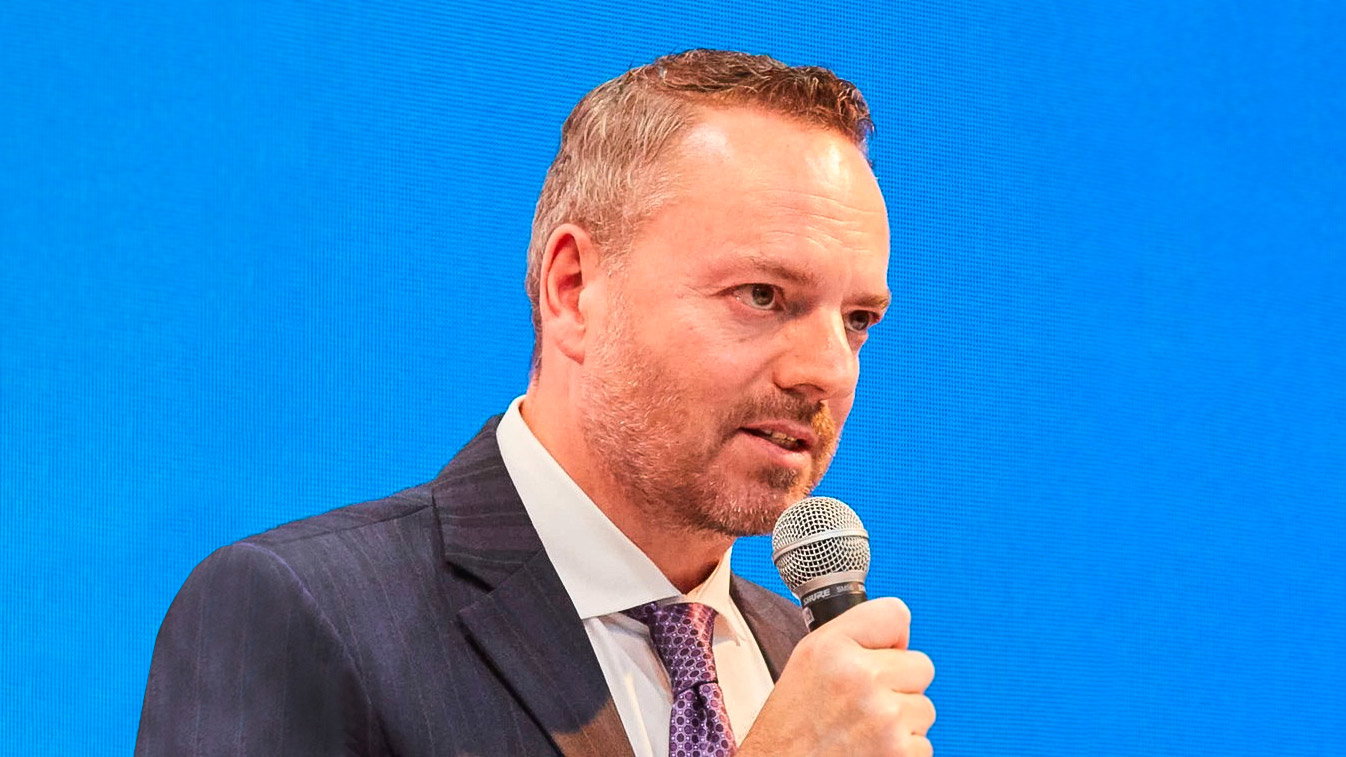
In October 2025, Ed Bowers offered a roomful of casino executives an unusual measure of progress: sixteen years. He had been going to Japan since 2009. MGM Osaka had finally broken ground that April. The planned opening was still five years away. For a business devoted to keeping its guests entertained, the development process required an impressive tolerance for waiting.
“That’s 16 years later and we’ll open in 2030.” Bowers delivered the arithmetic at G2E in Las Vegas. He described the interval as typical for a development costing several billion dollars. There was no promise of a shortcut. His account made the years themselves part of the job description.
2009 → 2030
First Japan visits to the resort’s planned debut.
By the planned opening, twenty-one years will separate those early visits from the arrival of paying guests. That stretch gives his story its peculiar shape. The event that might look like a beginning to everyone watching the construction site came well into his own involvement. A groundbreaking can be a milestone in a very old working relationship.
Bowers is president of global development at MGM Resorts International, with responsibility for domestic and international development. He also leads MGM Resorts Japan. In May 2026, he was reappointed representative director and president of MGM Osaka, the venture developing the resort with ORIX and other investors. His career runs between Las Vegas and the places where MGM hopes to build next. Osaka has demanded a particularly long chapter.
Spanish, then spreadsheets
The degree came first, and it supplies a pleasing surprise. Bowers graduated from Durham University in 1988 with first-class honours in Spanish. There is a certain pleasure in finding a languages graduate in a business conversation usually conducted in square metres, capital commitments and construction schedules. His subsequent training took him into accountancy.
He joined Arthur Andersen’s audit practice in Cambridge in 1988 and qualified as a chartered accountant in England in 1991. In 1994 he transferred to the firm’s Las Vegas office. Five years later, he became a senior manager. The geographical move brought him into the financial workings of the gaming business well before his name became associated with its expansion abroad.
His work included audits of major gaming companies, strategic development consulting and advice on acquisitions and disposals. Operators, industry associations and businesses considering entry into gaming were among the clients. Those assignments placed him at the junction between the numbers a business reports and the decisions that determine what it might become.
In February 2003 he joined MGM. His development work would span Asia, Europe and the United States. The route from Cambridge audit practice to international resort development is less abrupt when the intervening work is included. Before a company can invite guests through a door, someone must determine whether the enterprise behind it can stand up financially. Bowers had spent years examining that question from the other side of the desk.
A licence before a lobby
The American part of his career provides two useful markers. Under Bowers’s leadership, MGM’s development team won gaming licences for Springfield, Massachusetts, and Prince George’s County, Maryland. MGM National Harbor opened in December 2016; MGM Springfield followed in 2018. These were team achievements, involving the company’s development organisation, rather than solitary acts of executive will.
The sequence matters. A resort’s opening is public and easy to photograph. Securing the right to develop it is a separate undertaking. Bowers’s responsibilities have repeatedly included that earlier stage, when the future hotel remains a proposal and the immediate audience consists of officials, partners and communities.
By 2014, he was leading MGM’s efforts in Japan. In 2017, the company expanded its presence with a new office in Tokyo’s Otemachi business district and additional development resources. It also brought in Jason Hyland, a former senior American diplomat in Japan, as president of MGM Resorts Japan. Bowers continued as representative officer and CEO. The work required a growing organisation before there was a Japanese resort to operate.
At the time, Bowers spoke of creating “a resort that is uniquely Japanese”. The phrase set a demanding brief for an American operator. A recognisable corporate name would have to make room for the particular place hosting it. Even the choice of local partners would become part of the eventual resort’s character.
Osaka becomes a commitment
In March 2019, MGM’s partnership with ORIX became public. The companies were assembling a consortium to pursue development on Yumeshima, the artificial island in Osaka Bay. ORIX brought a substantial Japanese business presence to the venture. MGM brought its resort operations experience. Their proposed project would be built through that partnership.
Bowers was explicit about the local dimension. In May 2019, he discussed bringing more than ten other Kansai companies into the consortium, with MGM and ORIX holding substantial positions and the other companies taking smaller stakes. The proposal linked an international operator to a wider group of businesses in the surrounding region. The corporate structure had a local address as well as a global ambition.
MGM’s focus on Osaka also attracted attention while rivals reconsidered their own plans. A March 2020 industry assessment described Bowers’s approach as low-key and practical. That is an outside description, but it fits the public record’s emphasis on consortium formation, offices and the steady pursuit of approval. These are developments unlikely to produce a standing ovation at a sales conference.
National approval arrived in April 2023. MGM and ORIX were certified to develop Japan’s first integrated resort in Osaka. Nearly nine years had passed since Bowers took charge of MGM’s Japan effort. Approval resolved a defining question about the project’s future while leaving the construction and operating preparations ahead. The reward for completing one long assignment was another long assignment.
- 2009Japan visits begin
- 2014Leads MGM’s Japan effort
- 2023National approval
- 2025Groundbreaking
- 2030Planned opening
What an accountant sees at an Expo
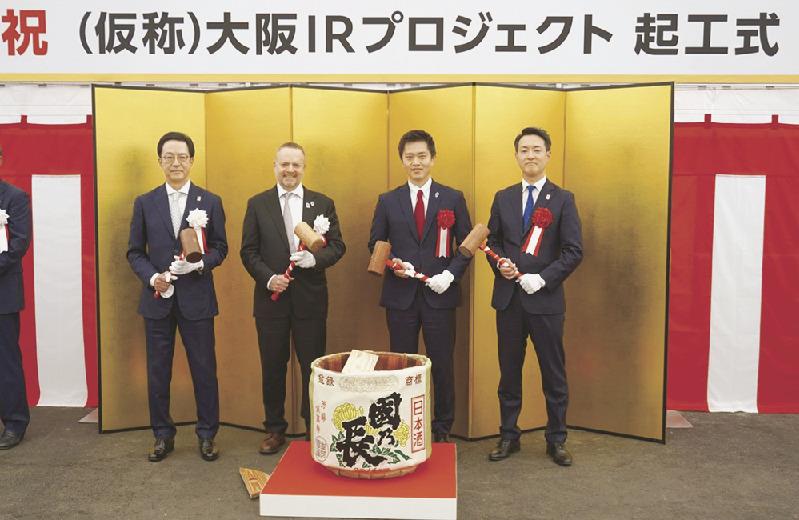
The groundbreaking ceremony took place on April 24, 2025. Bowers joined representatives of the venture and Osaka’s political leadership at Yumeshima. The ceremonial photograph gives the development a human scale: officials standing together, wooden mallets in hand, a sake barrel in front of them. After years of plans and negotiations, there was at last a construction milestone to celebrate.
The island was also hosting Expo 2025. For Bowers, the neighbouring event supplied practical evidence about the location. At G2E that October, he pointed to the Expo’s ability to bring roughly 250,000 visitors a day to Yumeshima during its busy closing period. It had demonstrated access to the site and made the island familiar to visitors. A crowd could be more informative than a rendering.
He also reported more than 100 cranes at the resort site. Taken together, the observations were characteristically concrete: equipment on the ground, people reaching the island, an opening still ahead. The Expo’s attendance was evidence about the location, rather than a forecast of MGM Osaka’s own daily business. That distinction is essential when a project’s future is discussed in such large numbers.
The planned resort includes around 2,500 hotel rooms and substantial meetings and exhibition facilities, alongside entertainment, dining and casino operations. An integrated resort brings several businesses into the same development. For the executive charged with advancing it, each component adds another set of preparations. The guest may experience a single stay. The organisation must prepare many different services to make that stay work.
The next construction material is people
By 2026, the preparations extended visibly into training. In a public account of the MGM Osaka Hospitality Learning Program, Bowers described welcoming around 70 students from 17 universities and educational institutions. Over two days, they explored careers in hotels, tourism, hospitality and meetings and events, worked together on projects and presented their ideas.
He was particularly encouraged by their interest in what the resort could contribute to Osaka and the Kansai region. His account lingered on students meeting one another, exchanging perspectives and gaining confidence. It offered a different view of a development executive’s audience: people young enough to begin their working lives as the project approaches completion.
“The future of MGM Osaka will ultimately be shaped by people.”
Ed Bowers · on the 2026 hospitality learning programme
Beside the construction figures, his sentence identifies an aspiration he has expressed publicly: encouraging a generation to consider hospitality careers and, potentially, a place in the organisation being built.
A further step followed in October 2026, when MGM Osaka announced a partnership with Japan Casino School. Bowers attended the announcement alongside Osaka University of Commerce president Ichiro Tanioka. The jointly developed MGM Osaka Certified Course is scheduled to begin in April 2027, covering dealing skills, operations, gaming protection, hospitality and foreign languages. The course offers specialist preparation; it does not guarantee a job at the resort.
~70students
17institutions
2days
MGM Osaka Hospitality Learning Program, 2026.
A separate specialist course is planned for April 2027.
Four years still on the clock
The wider corporate work continues around him. In June 2026, Bowers joined a U.S.-Japan Business Council delegation for a courtesy meeting with Japan’s chief cabinet secretary. That followed his May reappointment at MGM Osaka as the venture moved to a board of directors. The development now has a construction site, a formal governance structure and an expanding programme of operating preparations.
Bowers has also spoken plainly about the difficulties ahead. At G2E Asia in May 2025, he identified staffing after opening and the need to work constructively with Japanese regulators as major challenges. He acknowledged rising construction costs. His public account of the project leaves room for constraints alongside the planned facilities. A hotel room on a drawing still needs people to service it and rules under which the business can operate.
As of October 2026, the opening remains scheduled for 2030. That makes this an unfinished career chapter with a very tangible setting. The years behind Bowers contain audit rooms, licence applications, new offices, partner negotiations and a ceremonial barrel. The years immediately ahead include training people who will eventually welcome guests.
There is something quietly amusing about a hospitality career whose signature project has spent so long preparing to be hospitable. Yet the progression is visible now: from visiting a country, to forming a venture, to winning approval, to breaking ground, to helping students imagine working there. When MGM Osaka opens, the guests will be beginning their visit. Bowers will be well into his third decade of getting ready for it.