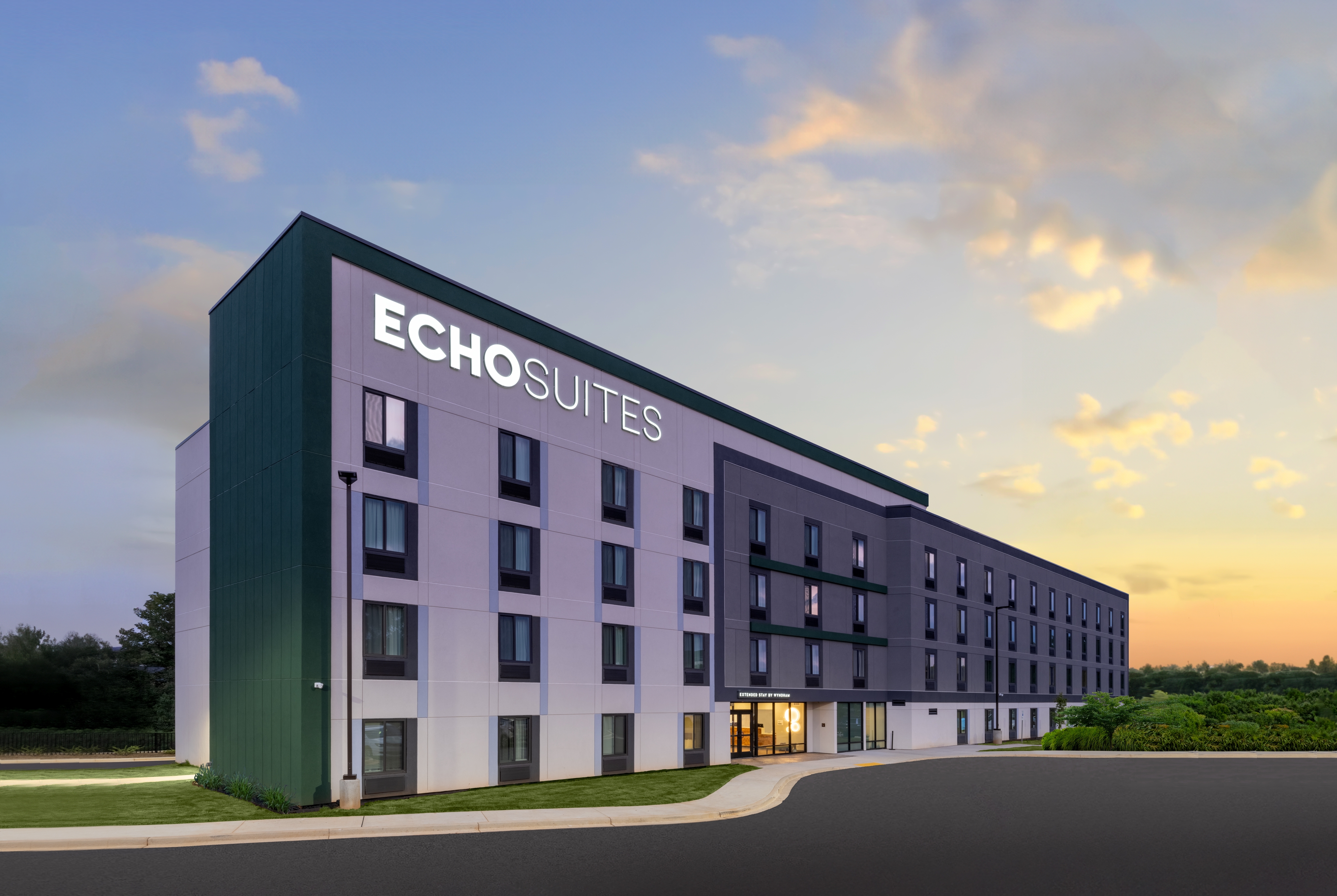
Consider the kitchen. At ECHO Suites in Spartanburg, South Carolina, it sits inside the guest room, an ordinary convenience with an unusually revealing business logic. Someone staying for a construction project needs somewhere to cook. The hotel needs that person to stay. Wyndham Hotels & Resorts needs the independently owned hotel to earn enough room revenue to keep paying for its flag.
The first ECHO Suites opened in July 2024. Its intended guests included construction crews and traveling nurses, people whose work creates an accommodation problem measured in weeks. For them, the room must function as a temporary household as well as a bed. The interesting transaction happens behind their booking: a local owner rents access to a global company’s name, reservations and accumulated knowledge.
- Travelers book rooms; independent owners buy the franchise system.
- Brands, reservations and loyalty are the shared infrastructure.
- Fees follow room revenue. Owners still carry property costs.
01The other customer holds the keys
Wyndham is a hotel franchisor with particular strength in economy and midscale lodging. Super 8, Days Inn, La Quinta, Ramada and the Wyndham brand sit within its portfolio. Travelers can book individual stays, earn loyalty points and find extended-stay accommodation. Owners can affiliate with a brand and purchase the commercial machinery that comes with it.
That second customer explains the economics. Wyndham’s 2025 annual report describes direct franchise agreements generally lasting 10 to 20 years, with royalties around 5% of gross room revenue and another 2–4% for marketing and reservations. Those are recurring charges against revenue, a distinction that matters when an owner’s profit margin is thin.
Picture $100 of room revenue. The described fees imply roughly $7 to $9 for royalties, marketing and reservations before other applicable charges. The owner still carries the property’s operating burden. Wyndham receives fees without having to fund every building. Its reported corporate revenue was $1.429 billion in 2025; that is distinct from all the money guests spent across its hotels.
02A network assembled, then set free
This company arrived on the public market through a separation rather than a startup launch. Its business lineage includes Hospitality Franchise Systems, incorporated in 1990. The present Wyndham Hotels & Resorts became independent of Wyndham Worldwide in May 2018. Geoff Ballotti, already leading the hotel business, became president and CEO of the standalone company.
Just before that separation, Wyndham acquired La Quinta’s franchising and management business for $1.95 billion. The deal brought more than 900 franchised hotels and nearly 89,000 rooms. Financing included a $500 million senior-note offering and a $1.6 billion term loan. This was a deliberate purchase of distribution and upper-midscale reach.
The distinction from Choice Hotels, Marriott, Hilton and IHG is one of emphasis. Wyndham’s center of gravity is everyday travel and select-service lodging, although its brands also reach resorts and higher price points. Someone buying a luxury city stay and someone booking a highway stop may encounter the same corporate parent without shopping for remotely the same experience.
A local owner rents access to a global company’s name, reservations and accumulated knowledge.THE FRANCHISE PROPOSITION
03The useful invention is the plumbing
A small hotel can put up a website. Reproducing a reservation network, customer database, pricing tools and loyalty program is a different undertaking. By its fifth anniversary as an independent company in 2023, Wyndham said it had invested more than $275 million in technology. Its partners included Sabre, Oracle, IDeaS, Salesforce and Amperity.
One modest tool makes the point. When a guest cancels, fails to arrive or leaves early, an online travel agency’s commission can need correcting. Wyndham introduced automated reconciliation for Expedia and affiliated bookings in 2023. An owner previously doing that work manually could recover time as well as address billing errors. That is a more concrete service than a promise of digital transformation.
The shared customer pool matters too. Wyndham Rewards reported more than 126 million enrolled members in August 2026. Enrollment is not the same as active use, but it gives owners a substantial audience to compete for. For travelers, the program connects otherwise separate brands and offers free-night redemptions starting at 7,500 points, subject to program terms.
04An empty room still hurts
Franchising shifts capital requirements; it cannot manufacture demand. During 2020, Wyndham’s revenue fell to $1.3 billion from $2.053 billion in 2019. Travel restrictions and hotel closures exposed the dependency under the fees: guests must arrive. The company also removed 18,500 rooms it described as non-compliant and brand-detracting. A bigger network is less useful if its weakest properties damage trust.
The pressure came from another direction in 2023, when Choice proposed acquiring Wyndham. Wyndham’s board rejected the offer, citing valuation, the stock component and regulatory and execution risks, including possible franchisee departures. Choice ended its pursuit in March 2024. Wyndham’s board maintained its preference for independence; it did not announce a conversion to the bidder’s argument.
The latest operating picture is better, with a qualification worth keeping attached. On October 21, 2026, Wyndham reported third-quarter U.S. revenue per available room up 6% year over year. It also reported system room growth of 4%, excluding insolvent Revo Hospitality Group rooms. The exclusion matters: a franchise network remains exposed to the financial health of the businesses carrying its brands.
05Back to that kitchen
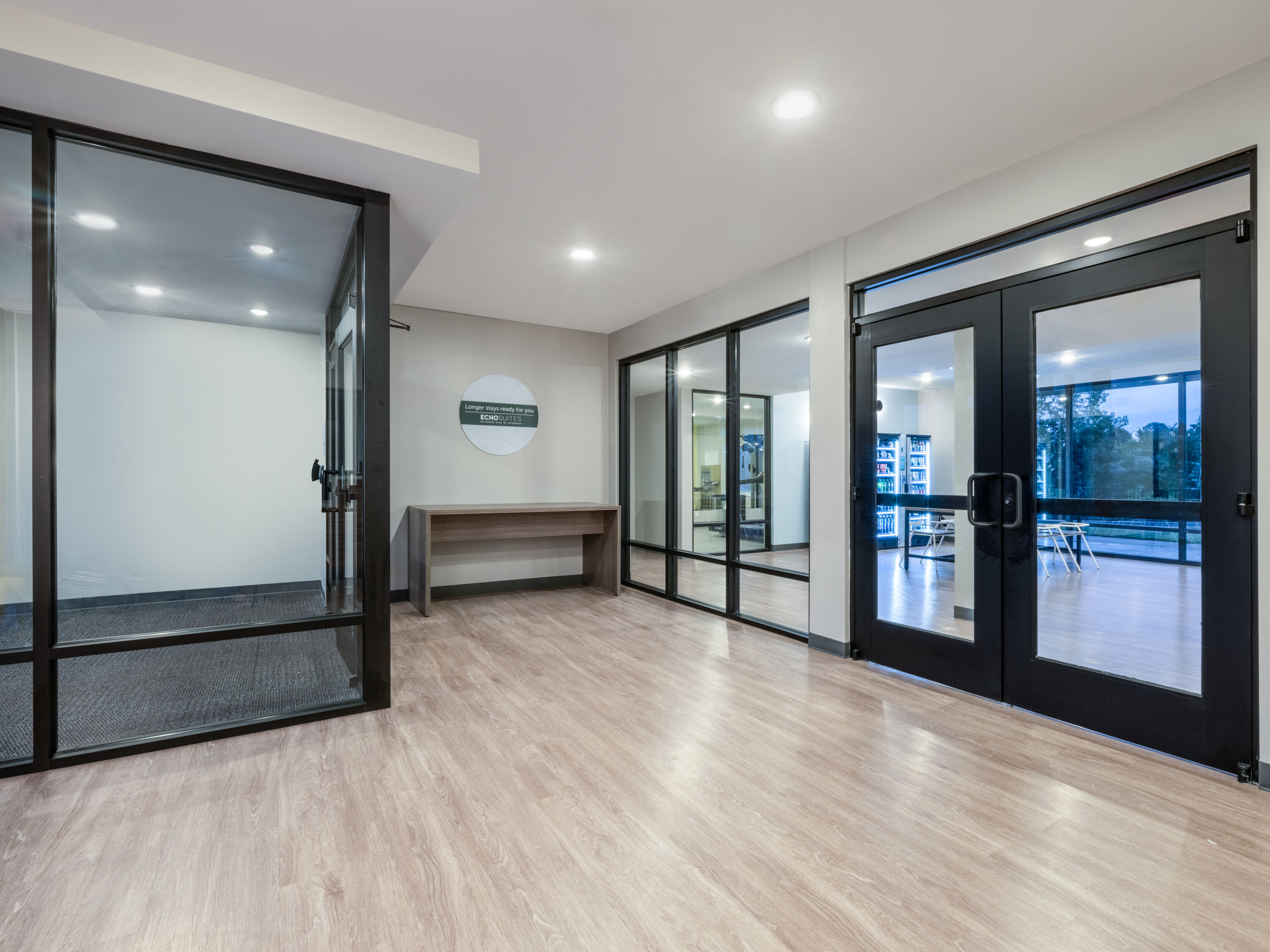
ECHO makes the owner-and-guest relationship visible in the floor plan. The original prototype specified 124 rooms, kitchens, guest laundry and approximately 79% revenue-generating square footage in a roughly 50,000-square-foot building. Public spaces were designed to limit labor requirements. The guest gets practical independence; the owner gets a building organized around longer stays.
That design also makes the limits easy to see. A kitchen does little for a location without enough long-stay demand. Construction costs, borrowing costs and staffing still belong in the owner’s arithmetic. A brand fee earns its place only when the resulting demand and support justify the bill. For guests, property-level reviews and amenities remain essential because a shared name does not make every hotel identical.
06Copy the shared chore
There is a useful business lesson here even for people who will never own a hotel. Find the expensive chore that thousands of small operators repeat, then make it cheaper or easier to share. Wyndham combines that idea with recognizable brands and repeat-customer incentives. Its stated mission is to “make hotel travel possible for all.” The practical test arrives every night: does the traveler want the room, and does the owner still want the system?