The first trophy in Chris Nassetta’s hospitality career was a toilet plunger, spray-painted gold. He had spent a summer in a Washington hotel’s engineering department, doing enough bathroom duty for his colleagues to settle on an appropriate farewell gift. His father had encouraged him to take the job. The souvenir suggests that the department had an excellent sense of occasion.
Years later, running Hilton, Nassetta went back to maintenance work through an executive immersion program. His colleagues at the Capital Hilton gave him another golden plunger. A person can travel a considerable professional distance and still receive remarkably consistent feedback.
The recurring object supplies a useful introduction to a chief executive whose career has involved several kinds of repair. Some concerned buildings. Others concerned balance sheets, corporate structures, or the habits of people who had stopped working particularly well together. The common problem was practical: something familiar could work better, provided someone was willing to take it apart.
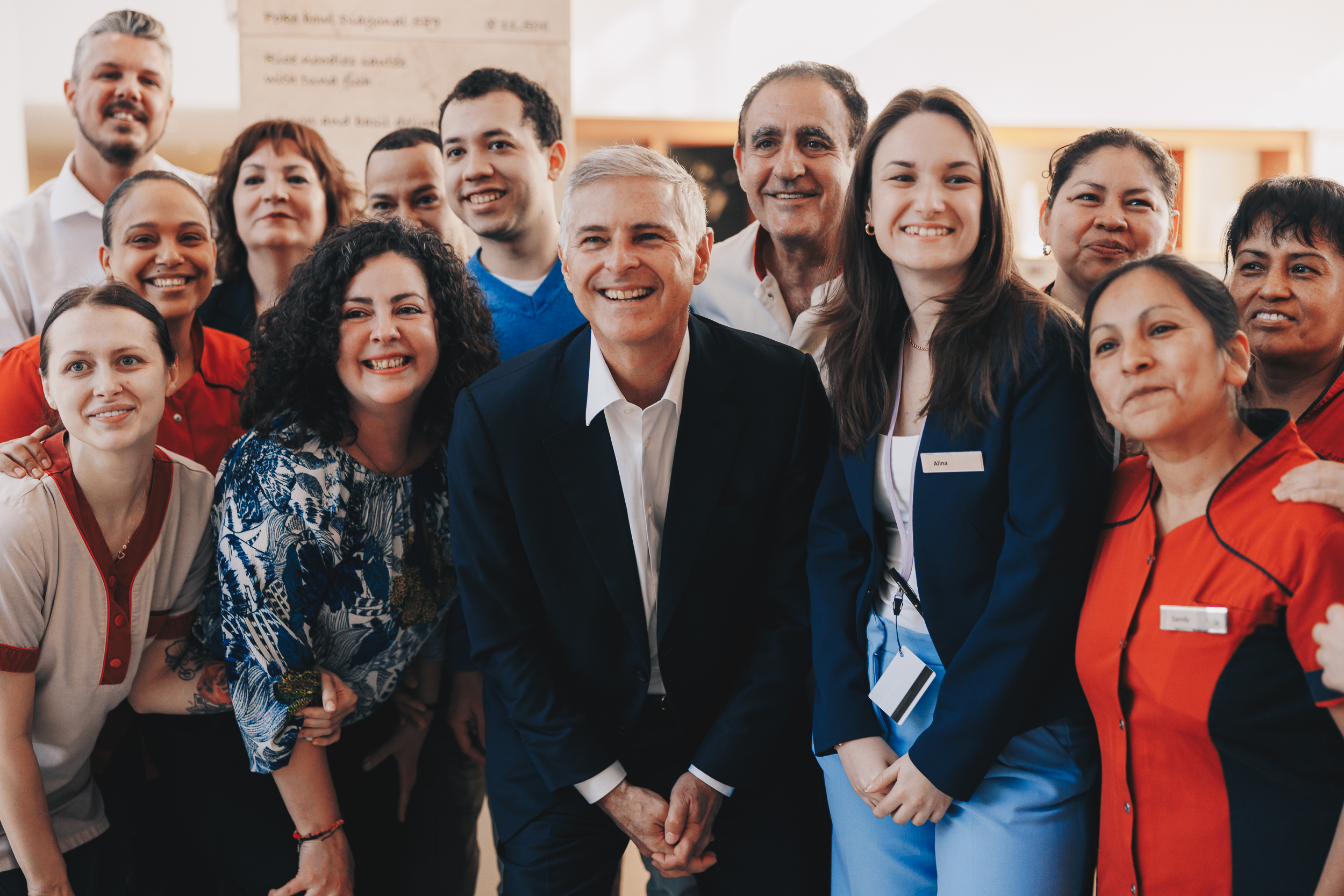
A finance graduate meets the building business
Nassetta grew up in Arlington, Virginia, attended Yorktown High School, and graduated from the University of Virginia’s McIntire School of Commerce in 1984. Finance was his degree. Commercial real estate became his working education. He joined The Oliver Carr Company and, over seven years, rose to chief development officer.
That progression matters because the person who eventually ran Hilton arrived with an owner’s understanding of hotels. Behind the welcome desk sits a business involving development, investment and the long commitment represented by a building. A guest buys a night. Somebody else has financed many years of mornings.
In 1991, Nassetta co-founded Bailey Capital Corporation, a real estate investment and advisory firm. He joined Host Hotels & Resorts in 1995, became chief operating officer in 1997, and president and chief executive in 2000. By the time Hilton came calling, he had already run a public hotel ownership company.
Bailey Capital
of Host
as CEO
two spin-offs
The offer that required a family meeting
Blackstone acquired Hilton in 2007 in a transaction valued at $26 billion. Jonathan Gray wanted Nassetta to run it. The two had worked together before; this was a recruitment built on an existing relationship, with an unusually large assignment attached.
Nassetta had reasons to hesitate. He liked his work at Host. He and his wife, Paige, were raising six daughters near family in Northern Virginia. Hilton’s headquarters was in Beverly Hills. Taking the job meant moving an entire household across the country, with all the negotiations that a corporate announcement can conveniently omit.
Paige, his high school prom date, helped him see the attraction of a fresh problem to solve. He accepted, and the family moved west. In retrospect, he described the experience of leaving their familiar support network as something that brought them closer together. At the time, it was a substantial personal commitment to a business whose next chapter was far from secure.
The financial crisis arrived soon afterward. Blackstone wrote down its Hilton investment, supplied additional capital and restructured debt. The eventual result would be a $14 billion realized profit when it finished exiting in 2018. The neatness of that final number conceals a much less comfortable stretch of ownership.
A change of address, with consequences
In 2009, Nassetta moved Hilton’s headquarters to McLean, Virginia. Cost, access and the local talent pool helped make the case. He also wanted a cultural reset. A different location could help dislodge arrangements that had become difficult to change in place.
The decision is easy to admire from a distance, particularly with later results available. Up close, it meant asking people whether they would move or leave. Only a minority of the Beverly Hills headquarters staff relocated. Calling that a transformation does little to describe the choices facing each household.
Nassetta has acknowledged the pain of the decision while continuing to defend it. The episode complicates the genial image of hospitality leadership. Being welcoming and making a difficult organizational choice can occupy the same working day. Colleagues who do not continue into the next chapter still helped write the previous one.
Nor was returning to Virginia a simple family victory lap. The Nassettas had settled into California. Another move required another adjustment. The CEO could explain the business case, but the dinner table had its own stakeholders. Corporate relocation acquired a second meaning when it arrived at home.
“When I left, they gave me a golden plunger.”
Chris Nassetta, on his Capital Hilton maintenance stint
Making headquarters spend time downstairs
One answer to the distance between corporate decisions and hotel work was immersion: executives spending time in operational roles. Housekeeping, dishwashing and maintenance have a useful way of making abstract discussions concrete. A room has to be ready. A problem needs fixing. The next guest is not waiting for the quarterly presentation.
Nassetta’s own maintenance turn gave the program a memorable example. The second plunger was funny because his title had changed so much while the work remained recognizable. It also connected the executive to an experience he remembered warmly: being treated as part of a hotel team when he was young.
Hilton’s employee initiatives extended to the places guests seldom see, including renovated staff spaces, as well as travel benefits and development opportunities. Those choices give culture a physical form. A company can say that people matter; the room where they take their break offers another version of the message.
Nassetta also went backward in time to understand what the company should become. He reread Conrad Hilton’s biography and explored archival notes. A founding purpose was useful only if it could become something employees recognized in their work. History had to leave the display cabinet and make itself useful.
Hilton received the No. 1 World’s Best Workplace ranking from Fortune and Great Place to Work in 2023 and 2025. Recognition offers one way of assessing that effort; it also makes the next year’s experience a fresh test. The company keeps hiring, people change managers, and new hotels open. An award belongs to a particular moment. The working conditions behind it have to be renewed by decisions that are often too ordinary to become news.
The hotel without the deed
Hilton returned to public markets in December 2013. Another structural change followed in January 2017, when it completed the spin-offs of Park Hotels & Resorts and Hilton Grand Vacations. The transaction produced three independent public companies, separating the property and timeshare businesses from the Hilton that Nassetta continued to lead.
The distinction is important for understanding his job. Managing and franchising hotels allows a company to grow its brands and operating network without owning every building bearing its names. The traveler sees a familiar sign. Behind it are relationships among the brand, the owner, the operator and the people delivering the stay.
Nassetta’s earlier experience at Host gave him familiarity with the owner’s side of that relationship. At Hilton, he had to make the wider network attractive to owners and useful to guests. Growth depends on both groups continuing to find value in the arrangement.
2013 IPO figures and June 30, 2026 figures. Property count measures network size, not hotel ownership.
The expansion makes the cultural question harder. A growing network increases the number of places where the company’s promise must hold. Shared systems can carry a reservation across borders. The final welcome still happens in a particular lobby, between particular people.
Still waking up as the underdog
Asked what he looks for in a potential hire, Nassetta names humility. He credits his mother with discouraging complacency and his father with teaching the value of relationships. His description of himself in 2026 was characteristically restless: “I wake up every day the underdog.”
He talks about cultural work as repetition, something that needs attention long after the initial announcement. There is little glamour in that account of leadership. Even a successful reset leaves a company full of new people, new decisions and opportunities to drift back into comfortable habits.
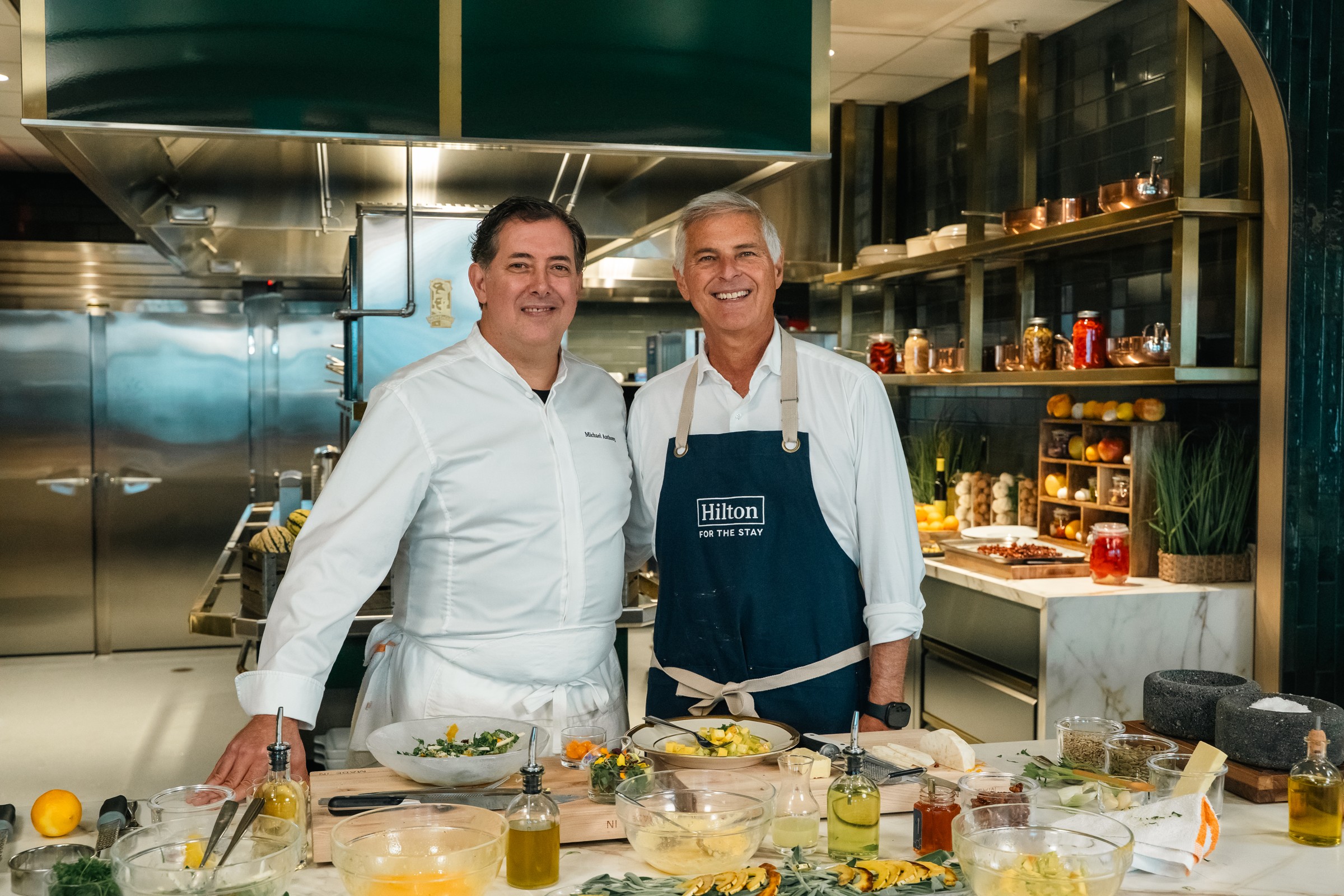
A different public appearance this October offered a lighter view of the same interest in practical work. In Hilton’s headquarters test kitchen, Nassetta joined chef Michael Anthony to prepare Waldorf salad. The episode connected the hotel’s culinary history with a contemporary version of a familiar dish. The chief executive had exchanged the maintenance assignment for an apron.
It is a fitting setting for someone whose career has repeatedly returned to an existing thing and asked how it might work now. A recipe, like a company, can carry its history without requiring every detail to remain fixed forever.
The next arrival
The latest corporate development came on October 20, 2026: Hilton announced plans to move its stock listing to Nasdaq, with trading expected to begin there on November 5 under the same HLT symbol. The announcement followed years of changes to the business behind that ticker.
Meanwhile, the company’s September travel research pointed toward guests wanting more flexible trips, with technology assisting the journey and human advice retaining its appeal. For Nassetta, the continuing assignment is to connect that expanding digital system to the experience someone actually has upon arrival.
The golden plunger remains an unusually apt career souvenir. It commemorates work that becomes noticeable when something goes wrong, and the colleagues who made the work enjoyable. Across the distance between a summer maintenance job and Hilton’s executive office, those are still recognizable concerns. The next guest will have a reservation, a set of expectations, and very little interest in how impressive the strategy looked on paper.