In 1957, Jay Pritzker bought a motel beside Los Angeles International Airport. The name over the door was Hyatt House. It was an ordinary enough starting point: travelers needed somewhere to sleep near the planes. His brother Donald helped turn the purchase into a hotel business. Nearly seven decades later, Hyatt would buy another hospitality company, then sell its buildings. The interesting part was what it kept.
- Hyatt serves travelers and the people who own hotels.
- Property sales release capital; management contracts preserve fees.
- Loyalty links work trips, longer stays and holidays.
That transaction makes a useful introduction to modern Hyatt. A guest sees a room, a restaurant, perhaps a pool. An investor sees several businesses sharing an address: the property owner, the hotel operator, the brand and the booking relationship. Hyatt has spent years rearranging its position among them. The towels still need washing. The question is who owns the laundry room.
The company had already learned that architecture could change what people expected from a stay. In 1967, Hyatt Regency Atlanta opened with John Portman's dramatic atrium. The lobby became something to look at, rather than merely walk through. Hyatt's history describes a 22-story space that attracted imitators. An airport bed had become an experience worth remembering.
Two customers. One room.
Today, Hyatt serves holidaymakers, business travelers, meeting planners and families needing somewhere comfortable for a longer stay. It also serves hotel owners. Those owners want guests, dependable operations and a recognizable reason to charge for their rooms. Hyatt supplies brands, distribution, revenue management and, under management agreements, hotel operating expertise. Under franchise agreements, another operator runs the property using Hyatt's brand and systems.
The distinctions inside its portfolio matter. Park Hyatt offers luxury stays. Andaz and Thompson emphasize design and local character. Hyatt Regency handles business trips, gatherings and vacations. Hyatt House and Hyatt Studios address longer stays; Hyatt Ziva and Hyatt Zilara sell all-inclusive holidays for different audiences. This is a collection of answers to different travel problems, held together by one commercial network.
Marriott, Hilton, IHG and Accor compete for much of the same spending. Selling property while retaining fees is familiar hotel-industry practice. Hyatt's particular bet combines luxury, lifestyle hotels and all-inclusive resorts with a growing everyday-stay business. Its smaller footprint creates a practical trade-off: travelers must check whether a participating hotel actually exists where they need to go.
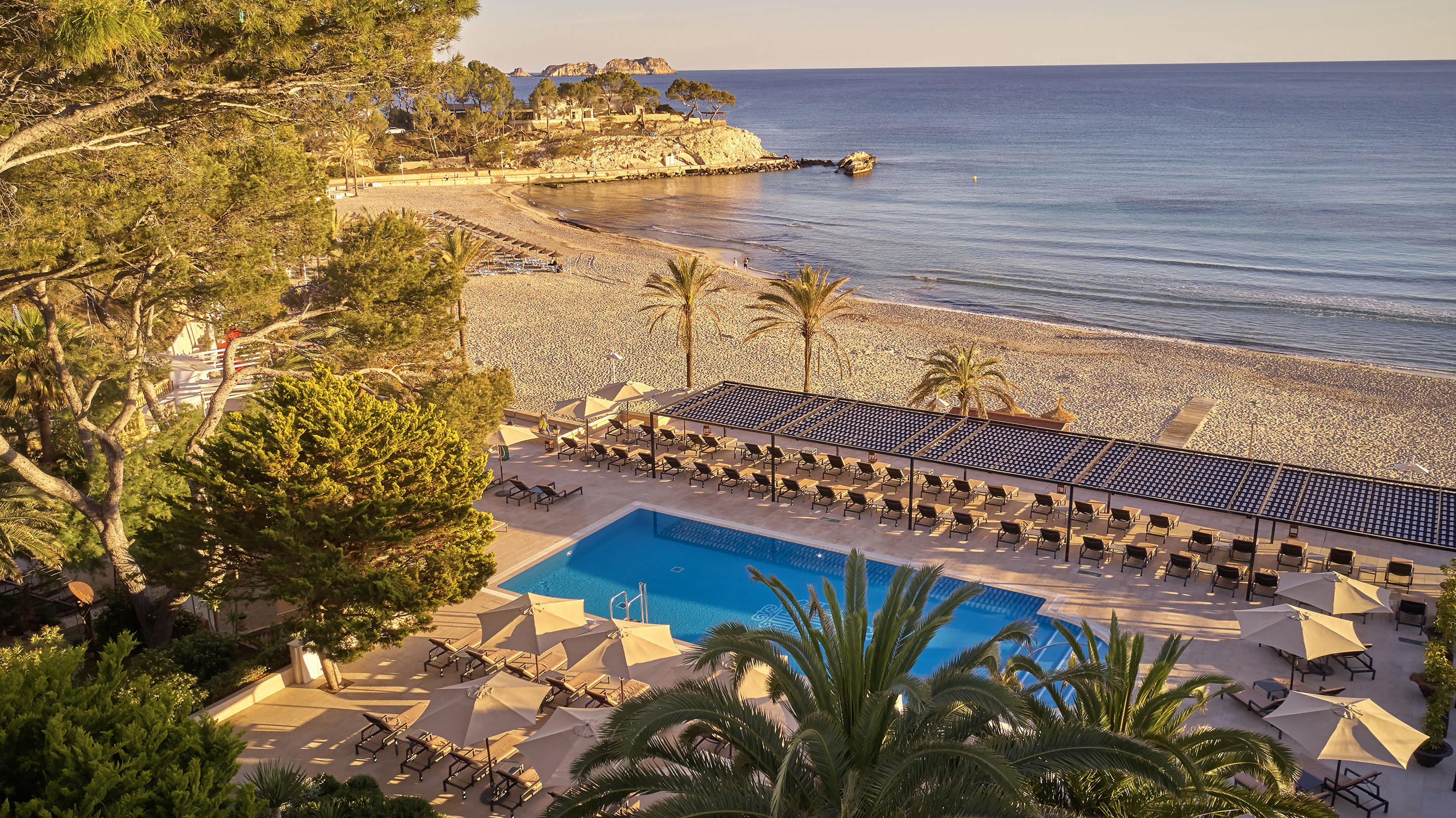
Buy the holiday. Sell the concrete.
The move into leisure became expensive and deliberate. In November 2021, Hyatt completed its $2.7 billion acquisition of Apple Leisure Group. The purchase added resort-management brands, vacation distribution and a paid vacation-club business. By year-end it had brought 99 resorts and roughly 32,000 rooms into Hyatt. Hyatt was buying more occasions on which the same traveler might choose its network.
Playa Hotels & Resorts supplied a particularly clear demonstration in 2025. Hyatt acquired the business in June. By December, it had completed the disposal of Playa's entire owned real estate portfolio for about $2 billion across two sales. Alongside the Tortuga transaction came 50-year management agreements for 13 properties. Hyatt retained $200 million of preferred equity, so the financial exposure did not simply vanish.
When the sale agreement was announced, Hyatt estimated the net purchase price of Playa's management business at approximately $555 million after gross asset-sale proceeds. That figure is management's transaction framing, rather than a promise of profit. The logic is easier to grasp: recover capital tied up in property, keep contracts that can produce fees, and let a real estate partner own the buildings.
- 01Acquire the businessPlaya acquisition completed, June 2025.
- 02$2 billionApproximate real estate proceeds.
- 0350 yearsManagement agreements for 13 properties.
The return visit is the product
A brand portfolio needs a reason for people to move between its parts. World of Hyatt provides one. The free loyalty program lets members earn and redeem points at participating properties and access benefits under its rules. Hyatt reported 69 million members in September 2026. That is an enrollment count, not a count of people staying tonight, but it gives owners a sizable audience to pursue.
For the traveler, the useful behavior is simple: compare the specific hotel, total price and benefits before booking. The app supports reservations and, at participating hotels, digital check-in and room keys. Availability varies. Chase's expanded collaboration adds another way for eligible cardmembers to earn rewards. A kitchen during a work assignment and a resort on holiday can become parts of the same rewards habit.
“to care for people so they can be their best”
Hyatt’s stated purpose
An empty room still costs money
There is a hard limit to this arrangement. In 2020, pandemic disruption pushed Hyatt's comparable system-wide revenue per available room down 65.4%. The company recorded a $703 million net loss. Business and group demand weakened; empty rooms could not be stored for sale next year. The customer journey broke before any branding exercise could repair it. Fee income also depends on hotels doing business.
Later results show the unevenness. In the second quarter of 2026, comparable hotel RevPAR rose 5.9%, while all-inclusive Net Package RevPAR fell 1.2%. These measure different revenue baskets and should not be treated as identical. Hyatt pointed to softer resort demand, security concerns in Mexico and reduced flight capacity. It also reported continuing effects from Hurricane Melissa. Owning fewer buildings leaves plenty of exposure to what happens around them.
Hyatt describes its purpose as “to care for people so they can be their best.” Its RiseHY initiative connects young people facing employment barriers with hospitality careers. The operating implication is concrete: a loyalty promise ultimately reaches a front desk, a kitchen or a housekeeping team. A member can collect points across brands; a disappointing interaction happens at one property.
The next saving is four stories tall
Hyatt's October 2026 development announcement offers a revealing change in scale. An updated Hyatt Place prototype cuts the standard room count from 140 to 127 and shifts from six stories of steel and concrete to four stories of wood construction. Hyatt projects roughly 25% lower building costs. Those are design expectations, not a universal saving for every site. Owner feedback, construction costs and financing constraints are shaping the product.
The transferable lesson is to identify what customers come back for, then decide which assets you must own to deliver it. That requires a trusted brand, capable partners and contracts worth keeping. It works poorly when owners cannot finance upkeep, destinations lose visitors or service disappoints. Hyatt began by purchasing a place to sleep. Its current wager is that the next reservation can be worth more than keeping the deed.
Check in, or look closer
Stays, rewards and leadership.