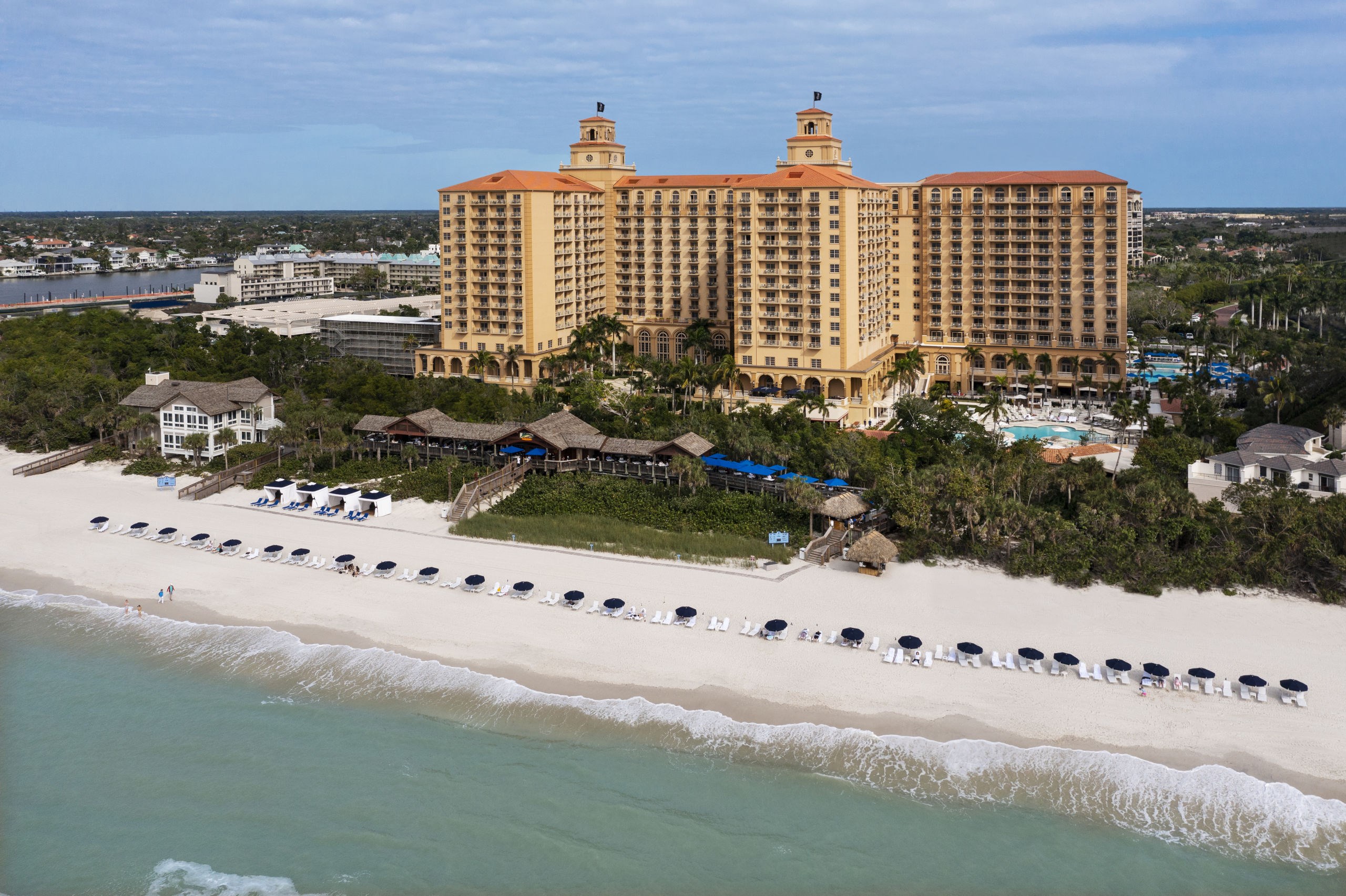
At The Ritz-Carlton, Naples, the champagne bar makes an excellent first impression. The central energy plant deserves a second look. After Hurricane Ian interrupted the resort’s renovation, its owner rebuilt that plant on higher ground. Electrical equipment went up where feasible. Floodproofing improved. The guest sees a Florida vacation. The owner sees a building that must keep earning after the weather turns.
- Host owns hotel real estate; outside managers run the hotels.
- Its income reaches beyond beds into restaurants, meetings and events.
- The hard decisions involve renovation bills, storm exposure and when to sell.
That owner is Host Hotels & Resorts. Its name is easy to miss because it usually belongs on the financial paperwork rather than the entrance. Marriott, Hyatt and Ritz-Carlton supply names travelers recognize. Host supplies capital and owns the property. Once you notice this separation, a hotel becomes a more interesting object: several businesses sharing one address.
The name on the door
The arrangement has a family history. Host and Marriott International emerged from the 1993 separation of Marriott Corporation. One side retained hotel real estate; the other took the management business. Their predecessor’s story reaches back to J. Willard and Alice Marriott’s Washington root beer stand in 1927. The modern distinction is less picturesque, but more useful: ownership and hospitality management require different kinds of judgment.
Host qualified as a real estate investment trust in 1999. It subsequently broadened its brand mix, adopting its current name in 2006 after acquiring a Starwood hotel portfolio. Today, independent managers handle daily hotel operations. Host’s work includes buying properties, examining performance, financing improvements and deciding whether another owner should take over.
For travelers, the practical route remains the hotel’s booking channel. For meeting planners, the offering includes bedrooms, ballrooms and catering. For shareholders, Host packages exposure to hotel real estate in a publicly traded company. Those audiences want different things from the same building, which is precisely what makes the business complicated.
The room is only the beginning
Consider the accounts. In 2025, Host recorded $6.114 billion in revenue. Rooms contributed $3.608 billion; food and beverage brought in $1.803 billion. A hotel’s restaurant is therefore more than a pleasant amenity. Across the portfolio, dining and drinking amount to a substantial business of their own.
Shares calculated from 2025 reported revenue; rounded.
The customer mix adds another layer. Transient travelers accounted for about 61% of 2025 room sales, groups 34%, and contract business 5%. A vacationer buys a room; a conference can bring room nights, breakfasts and banquet spending together. Judging a hotel entirely by its nightly room rate misses how the rest of the property earns its keep.
Host’s September 2026 disclosure counted 70 U.S. properties and five abroad, with approximately 41,300 rooms. Its portfolio ranges from resort destinations to business districts. Compared with lodging REIT peers such as Park or Pebblebrook, Host emphasizes its scale, analytics and investment-grade balance sheet. These are advantages in negotiating, comparing properties and funding work. They cannot make every location equally attractive.
The machinery beneath the marble
Naples gives the abstraction a physical form. The renovation included a 74-room Vanderbilt tower, redesigned public areas and a different suite mix. Hurricane Ian arrived in September 2022, delaying the project. The resort reopened on July 6, 2023, after restoration and expansion. A capital improvement plan had become a recovery operation, too.
Host’s climate disclosure says reconstruction and resilience investments following Ian exceeded $300 million, primarily at Naples, with approximately $200 million received through insurance. That figure describes the disclosed recovery work, rather than the price of the entire resort transformation. Insurance softened the blow; the spending and interruption remained real.
The response was specific. Raise critical machinery. Install efficient replacement equipment. Accelerate planned work while the property is already disrupted. The lesson another owner can borrow is to coordinate repairs with improvements that would otherwise demand another interruption. It requires available money and a credible reason to expect guests back.

There is another way to make the building pay: reduce the cost of keeping it comfortable. Host reports more than 1,000 sustainability projects over 2021-2025, with expected annual utility savings of $30 million. The company also uses green bonds to finance eligible investments. Energy efficiency belongs beside room design in the investment discussion because both can affect what a property leaves after expenses.
The art of handing over the keys
Sometimes the investment decision points toward the exit. In February 2026, Host sold the Four Seasons resorts in Orlando and Jackson Hole for $1.1 billion. It had bought them in 2021 and 2022 for a combined $925 million. Host reported an 11% unlevered internal rate of return, including capital expenditures and transaction costs.
Purchase and sale prices alone are not the investment return. Operating cash flows, capital spending and transaction costs count.
Another number explains the decision: roughly $88 million in estimated capital needs over the following five years. Selling transfers those future obligations along with the scenery. This was a capital allocation choice. Loving a property’s performance does not require owning its next renovation.
A useful idea, with expensive conditions
The harshest test came when travel stopped. Host’s 2020 revenue fell 70.4%. Demand disappeared faster than property costs could follow. Management reconsidered operating requirements with hotel brands. In a 2021 interview, CEO Jim Risoleo described the resulting flexibility:
“The brands are really showing a lot of flexibility as we work through what we need and what we don’t need.”Jim Risoleo / Nareit interview / May 2021
There is a limit to copying Host. Without financing capacity, patient capital and cooperation from managers, renovating through weak demand can exhaust cash. Coastal exposure adds another constraint. Owning the building means carrying risks a booking platform or hotel brand can leave to someone else.
The work continues to change. In October 2026, Host described 33 employees evaluating AI-enabled solutions across departments. Teams worked across nine departments, with guidance from venture capital partner Thayer Investment Partners. It is a small glimpse of the corporate workplace behind the resorts: employees investigating practical business problems together. The technology may improve decisions; the underlying question survives every upgrade. Given the guests, the costs and the next check this building will require, is it still the right place to put the money?