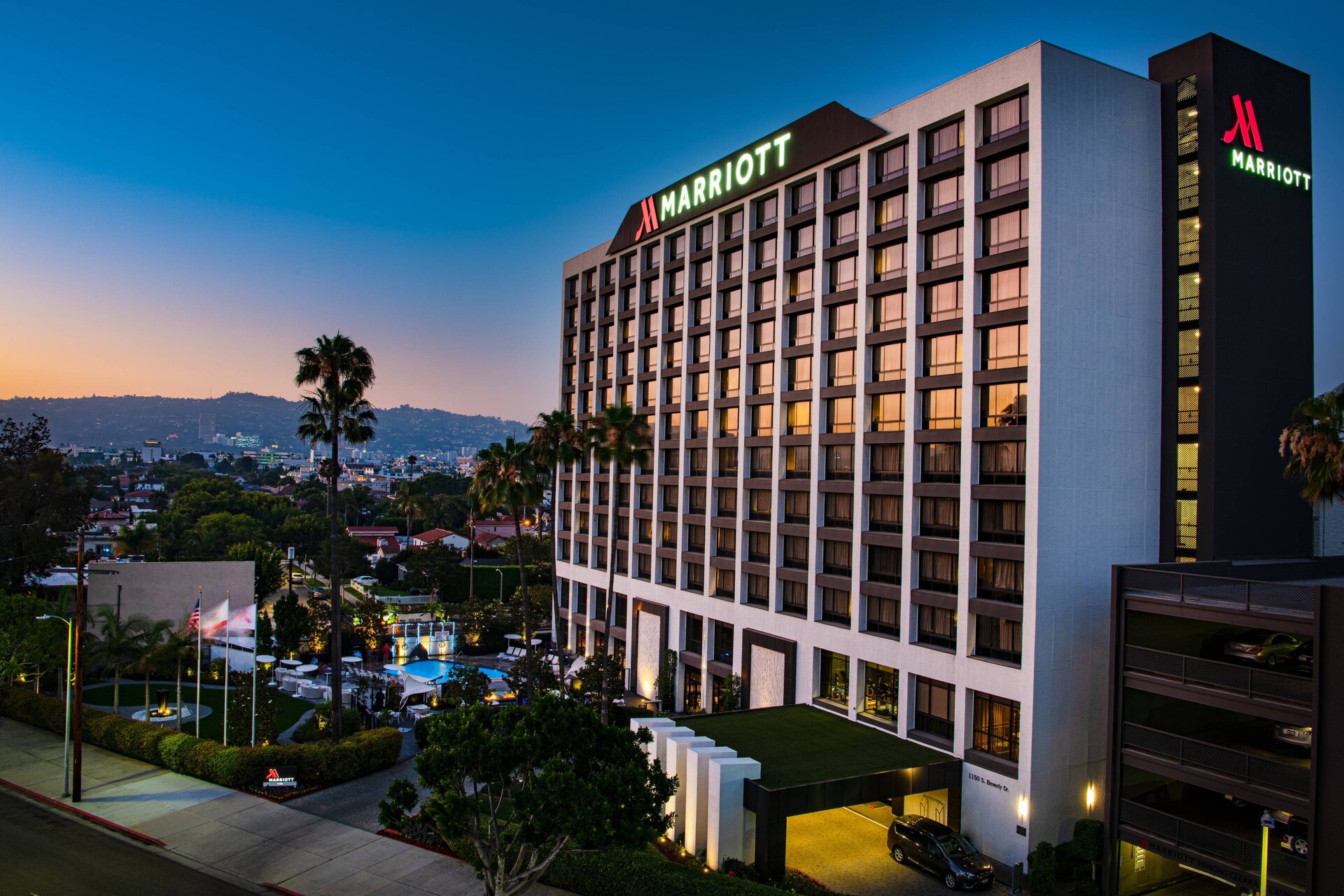
At the Beverly Hills Marriott, the name glowing above the windows tells a guest where to check in. It tells an investor remarkably little. Behind a familiar hotel sign can sit a different owner, an outside management company, a franchise agreement and a mortgage. Ashford Hospitality Trust lives in that less visible part of the building. To understand the Dallas company, start with a question the guest never needs to ask: after everyone gets paid, who keeps the money?
- Ashford owns hotel real estate; the brand above the door is often somebody else's.
- Its turnaround combines operating changes with hotel sales and debt repayment.
- Better hotel results can arrive well before cash reaches shareholders.
The sign isn't the business
Ashford invests predominantly in upper upscale, full-service hotels, alongside select-service properties. Its portfolio directory ranges from airport Courtyards to the Renaissance Nashville and the Ritz-Carlton Atlanta. Business travelers, holidaymakers and meeting planners buy the rooms, meals and gathering spaces. Investors buy exposure to the buildings and their economics through a publicly traded real estate investment trust, or REIT.
This distinction matters. A guest wants a good night's sleep. An owner needs that room to earn enough to cover staffing, upkeep, brand and management costs, and financing. Ashford's work is choosing properties, supervising performance, arranging capital and deciding when to renovate or sell. It offers investors a route into hotel ownership without buying an entire hotel themselves.
Monty Bennett founded Ashford in 2003. The company began operations that August with six hotels. Its early proposition was to pursue opportunities across hotel assets and financing. Today, the interesting distinction from other lodging REITs, including Host Hotels & Resorts and Pebblebrook, lies in its particular portfolio, external advisory structure and complicated financing position. A Marriott flag alone cannot explain those differences.
A room sells by the night. A loan keeps time.
Consider what happened when travel stopped. In the fourth quarter of 2020, Ashford's comparable hotel occupancy was about 33%, according to its subsequent earnings tables. A room left empty on Tuesday cannot be stored and sold twice on Wednesday. The revenue disappears; much of the expense remains. Hotel ownership makes this mismatch unusually easy to see.
The financial aftermath lasted longer than the empty lobbies. In July 2023, Ashford elected against making the paydowns needed to extend three mortgage pools, defaulting on those loans. One pool's properties subsequently went to its lender through a deed in lieu of foreclosure. This was an allocation decision with a hard consequence: keeping every building was no longer the priority.
Stephen Zsigray became president and CEO in June 2024. His background included derivatives trading, corporate finance and cash management. Across the Ashford platforms, he had helped negotiate billions of dollars in mortgage extensions. For a hotel owner working through maturities, knowing how cash moves between entities is a practical operating skill.
- 01Guest spendingRooms, food, meetings
- 02Operating costsStaff, utilities, managers
- 03Property & financing needsUpkeep, reserves, debt service
- 04Potential investor returnsSubject to available cash and obligations
The turnaround starts in the parking lot
In December 2024, Ashford introduced GRO AHT, targeting $50 million in incremental annual run-rate EBITDA improvement. The proposed work was wonderfully unglamorous: audit parking and food prices, rebid vendor contracts, install LED lighting, reduce overtime and contract labor, and cut corporate expenses. The plan also included workforce reductions and changes to paid-time-off policies. Efficiency had a human cost.
There is something useful to copy here: inspect the small revenue streams and recurring contracts before assuming the next acquisition will fix the business. A parking garage does not need another floor to earn more from better pricing. But the measures depend on execution. Raising ancillary charges too far or cutting service too deeply could undermine the guest experience that supports room rates.
Ashford's 2026 proxy credited GRO AHT with $44.6 million of 2025 profit-and-loss improvement against a $25 million annual target. That reported achievement is different from independently proving every saving is permanent, and from reaching the original $50 million run-rate ambition. The distinction keeps a useful operating program from becoming a magic number.
The price of keeping the keys
Debt repayment supplied the other half of the experiment. In February 2025, Ashford repaid its Oaktree corporate financing, including a $30 million exit fee. Getting out of a loan can itself be expensive. Selling hotels also means surrendering their future earnings, even when the immediate proceeds improve liquidity.
Ashford made the trade-off explicit in April 2026. Four completed sales brought $252.5 million in gross proceeds and removed an anticipated $57.6 million in capital spending. Expected renovation bills belong in the sell-or-keep calculation alongside today's hotel earnings. For another property owner, that is the transferable exercise: compare cash after debt service and future investment, rather than celebrating a sale price in isolation.
“We have been required to apply the majority of sale proceeds to retire mortgage debt”Stephen Zsigray, August 2026 results announcement
The second-quarter figures showed the split personality of the recovery. Comparable revenue per available room rose 6.6%, and comparable hotel EBITDA rose 9.6%. Yet preferred dividends remained suspended. The hotels were improving while obligations senior to shareholders continued to absorb cash. EBITDA, which excludes interest and other expenses, cannot settle that argument by itself.
Six months of breathing room
On October 20, 2026, advisor Ashford Inc. agreed to waive approximately $17 million in advisory fees over six months and commit to quarterly purchases of Ashford Trust common stock. The trust also ended its at-the-market equity offering program. These actions addressed liquidity and advisor alignment, two problems a higher room rate alone cannot solve.
The approach still depends on willing hotel buyers, available refinancing and operating gains that survive changing travel demand. Selling into weak prices can consume the value an owner hopes to preserve. Ashford's case leaves a useful question for anyone reading a company's turnaround story: when performance improves, where does the next dollar actually go?