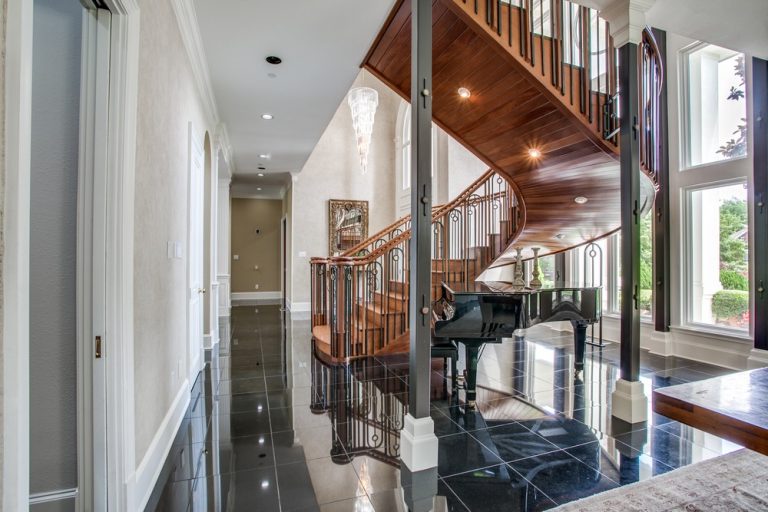
The house came with a dinner reservation, more or less. In September 2021, Arthur Greenstein was listing Emmitt Smith’s Dallas-area home for $2.2 million. The price nodded to the running back’s jersey number. The purchaser would also get dinner with Smith. Greenstein had one small concern about this arrangement: “I'm the one that supposedly has to pay for it,” he joked. Real estate agents are accustomed to picking up expenses. This one had the makings of an unusually interesting receipt.
The invitation made an enormous house easy to talk about. There were plenty of rooms to describe, but a meal with the former owner gave the listing a human scale. Anyone could remember it. For a broker selling a property associated with a public figure, that was a useful distinction. The buyer could acquire a place to live and, briefly, an evening with someone whose name already meant something.
By December, the home had sold. Greenstein had received the eventual buyer’s offer roughly 22 hours after the listing went live; there had been 12 offers altogether. The number 22 had enjoyed a busy assignment. It appeared on Smith’s jersey, informed the asking price, and now featured in the telling of how quickly an offer arrived. Some properties seem determined to write their own copy.
The meal was the memorable part
The home had been offered before, at $2.5 million, without finding a buyer. The 2021 campaign returned at a lower price and added the dinner. Those changes belong together in any account of the sale. A pleasant evening makes a better anecdote than a price adjustment, but the adjustment was part of the transaction, too. A good story should leave room for arithmetic.
Greenstein’s career has involved a considerable amount of that less glamorous work. His public record moves between places people sleep, places they rent while deciding what comes next, and buildings where businesses carry out their operations. The celebrity listing supplies an opening scene. The longer professional story needs leases, tenants, offices, and the patient business of matching a property to a particular use.
Before the dinner, the lease
In July 2014, Briggs Freeman Sotheby’s International Realty acquired Greenstein’s Uptown Locators business and brought him in as director of leasing. Luxury leasing answered a practical difficulty for the brokerage’s clients. Someone could sell a house before finding the next one. A new home might still be under construction. Relocation could arrive with a deadline that the housing search had neglected to respect.
Greenstein’s team offered property tours rather than simply forwarding lists of possibilities. Operating inside the brokerage also expanded access to the Multiple Listing Service for lease properties. The service sat in the awkward interval between one settled address and another. For the person trying to organize a move, an interval can become the most pressing part of the entire undertaking.
There is a useful clue here to the shape of his business. Renting can be a decision in its own right, or the temporary arrangement that allows another decision to happen. A broker who handles that period encounters clients before their affairs have become tidy. The work begins while the timetable is still being negotiated.
Texas team ranking by rental gross commission income at Douglas Elliman’s 2024 Ellie Awards, recognizing 2023 performance.
Arthur Greenstein Group also placed No. 5 by rental transactions.Leasing remained visible in the group’s results a decade later. At Douglas Elliman’s 2024 Ellie Awards, recognizing the previous year’s work, the Arthur Greenstein Group placed second among Texas teams by rental gross commission income and fifth by rental transactions. These are specific brokerage rankings, with a particular year attached. They offer a useful counterweight to the assumption that his professional life revolves around famous homeowners.
The loading door belongs in the picture
Greenstein’s early experience included an industrial real estate internship in Fort Worth and work at Mohr Partners in Dallas. His brokerage biography describes assignments involving portfolio management, business consulting, and project management for corporate tenants, including Toshiba. He also bought and managed an apartment complex. Apartment ownership led into further multifamily work and luxury apartment locating.
He subsequently founded Y + A Real Estate and Asset Management. That sequence matters more than a collection of impressive client descriptions. It places operations and tenancy alongside selling. Someone who has managed an apartment building has encountered the property after the purchase, when it must function as an everyday business. The signature on a contract is one event in a much longer calendar.
A 2022 listing in Seagoville makes the commercial side concrete. At 316 Simonds, Greenstein marketed an industrial property comprising four warehouse buildings, an office building, and 4.18 acres. The description emphasized drive-in doors, power, parking, and fenced outdoor storage. The asking price was $3.5 million; the listing is marked sold. That does not establish the final sale price.
Here, the attractive feature might be the route a vehicle takes through a working day. A magnificent foyer is unlikely to settle the question. The warehouse buyer and the house buyer have different requirements, and a broker moving between them must change the conversation accordingly. Greenstein’s résumé contains both assignments. His work makes more sense when both remain in view.
A homeResidential sales
An in-between addressLuxury leasing
A place to workIndustrial and office property
A room can change the working day
In December 2023, Greenstein argued that executives should think about their premises as part of running a company. Office decisions, he wrote, affect how employees work together and how customers experience a business. He discussed the value of suitable layouts, efficient use of space, and lease terms. The reasoning extended beyond choosing a location with a recognizable address.
His interest was in what follows the move. Rooms influence movement. A layout can make a conversation convenient or cumbersome. Space costs money even when nobody has found much use for it. Greenstein’s argument asked executives to give these everyday effects a place in their decisions. For a professional who has worked with both corporate tenants and homebuyers, the connection is understandable: a building has consequences after the photographs have done their job.
His January 2024 market outlook brought financing into the picture. He described a Dallas market in which slower activity could still contain opportunities, while discussing the changing terms available from private lenders. His optimism belonged to that moment. Reading it now as a dated view, rather than a permanent recommendation, preserves what is useful about it: a broker explaining how he interpreted the conditions around him.
The evening has a closing time, too
One of Greenstein’s more revealing accounts begins at home. In a 2022 essay, he recalled his fifth-grade son questioning his late working hours and joking that he would graduate before his father finished. The exchange prompted Greenstein to reconsider how he allocated time. It was a short interruption with a substantial question tucked inside it.
He used the episode to discuss delegation, including a lumber-industry executive who relied on specialists outside his core business. He also admitted that his own computer mishaps had required outside help. The point was personal as well as professional. Time spent trying to master every task has a cost, even when that cost never appears on an invoice.
That account gives an otherwise expansive career an ordinary limit. Another property can be added to a search. Another call can be returned. An evening is less accommodating. Greenstein’s son supplied a deadline that had nothing to do with financing or possession, and his father considered it serious enough to make it the beginning of a business essay.
Keeping the dates on the map
By August 2024, Greenstein was describing a three-agent Douglas Elliman team working across residential and commercial property. He explained that he had chosen the brokerage for its technology, marketing, and public relations resources. His account of the work also included dealing with city officials, construction questions, financing complications, and the continuing updates clients expected.
Current public brokerage records identify him as broker of record for the Arthur Greenstein business in Dallas. The group’s website offers buying, selling, leasing, and investment services. That present-day description retains the range apparent in the earlier chapters. The name on the operation has changed across the years; the recurring subjects include homes, businesses, and the decisions people make between them.
His market commentary has also allowed for slower conditions. In August 2025, discussing Preston Hollow, he described additional inventory and more room for buyers to negotiate. His phrase for the softness was measured: “Nothing dramatic, just a mild cool-off.” It was a neighborhood observation with a date, rather than a claim that every property was moving in the same direction.
“Nothing dramatic, just a mild cool-off.”
Arthur Greenstein on Preston Hollow, August 2025
The dinner invitation remains the detail most likely to survive a retelling. It should. There is something pleasingly specific about a home purchase that includes the possibility of a conversation across a restaurant table. But Greenstein’s working life also contains the interim lease, the industrial yard, the office plan, and a child asking why the day has run so late.
Each brings the story back to a recognizable question: what does this person need the space, or the time, to do? In the Smith listing, the answer included room to live and a meal to remember. Elsewhere it might involve a loading door or a place to stay until construction ends. Greenstein’s career has given him several different ways to ask.