A lease changes. Somewhere in the real estate department, someone updates the record. Somewhere in accounting, someone needs to know. The distance between those two somewheres is where an ordinary property transaction becomes an administrative sport.
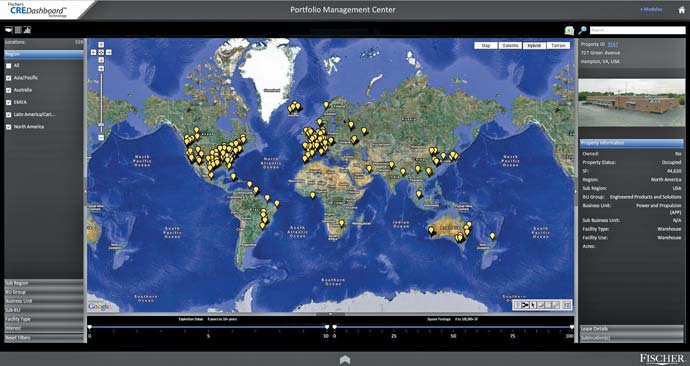
In a published ManagePath demonstration, Fischer’s Eric Williams shows a list of leases with little red flags. A new location lacks an accounting schedule. Other locations have changed. The tool records who made the change, when it happened and what moved: square footage, dates or rent. Accounting can review the flagged items instead of waiting for a separate message about every transaction.
It is a modest scene. No skyline, no ceremonial shovel, no executive admiring a view. Yet it explains a surprising amount about Fischer, the Dallas real estate business acquired by Cresa in October 2025. The firm understood that finding space was only one part of managing it. The information had to travel, too.
- The customer is the occupier: Fischer built its advisory business around tenants and owner-occupiers.
- The software came early: development began in 1986, a year after the firm was founded.
- The work crosses departments: lease records, accounting and projects sit beside transaction advice.
- The next chapter is Cresa: the 2025 acquisition brought the advisers and their proprietary platforms together.
A broker with a second occupation
Cliff and Gail Fischer founded the business in 1985. Cliff’s current Cresa biography identifies AT&T, Citicorp and FedEx among the corporate clients Fischer served. These are organizations whose real estate decisions extend well beyond choosing a pleasant office. A site is part of a network, and a decision about one address can have consequences elsewhere.
The combination Fischer pursued was tenant brokerage alongside software development for corporate real estate executives. That pairing matters. A service team encounters the awkward cases: a record nobody trusts, a date somebody forgot, a project whose details live in several places. A software team can turn a recurring chore into a repeatable process. Put them close together and the customer’s daily work becomes a source of product requirements.

The human expertise was substantial as well. Ted Uzelac joined Fischer in 1996 as chief operating officer before becoming president. His work spans portfolio strategy, complex negotiations and build-to-suit assignments. Fischer’s offer grew around corporate accounts, where the relationship continues across transactions rather than concluding at a single signature.
The aluminum company in the test kitchen
Alcoa was a beta-test customer for Fischer’s technology. A January 2012 account described the industrial company’s then-current real estate holdings as more than 115 million square feet, across over 200 locations in more than 30 countries. Those are historical figures, but they convey the difficulty of the assignment: a portfolio too dispersed to understand by visiting the sites one at a time.
Alcoa’s property team contributed input to the system and its dashboard. The appeal was being able to retrieve a property snapshot and use shared information in strategic planning. This is a useful enterprise software lesson. A demanding customer can help define what a product must do before its maker falls in love with what it could do.
“Our ideas are driven out of the portfolios we manage.”Cliff Fischer · Site Selection · January 2012
The red flag earns its keep
ManagePath’s scope includes property and lease information, documents, financial records and critical dates. Visual Manager is the other proprietary platform associated with Fischer’s portfolio and project management work. Their history includes an actual development team: Jon Hardin began consulting with Fischer in 2009, built the original version of the platform that became Visual Manager, and served as CTO and CIO from 2012.
That is the distinction worth examining when comparing Fischer with an ordinary brokerage engagement. Its software was part of the operating machinery. Hardin managed development and cloud infrastructure teams, and now oversees these platforms at Cresa. The tools have people responsible for building them, as well as advisers responsible for using them.
Illustration of the published ManagePath admin demo. The flag prompts review; it does not replace judgment.
Fischer also published a cash-flow forecasting demonstration. That takes the conversation from what a company occupies to what its projects will require. For a buyer, the useful exercise is to bring a real workflow to a demonstration: an amended lease, an upcoming project, a recurring reporting task. Ask the team to follow it through.
Texas puts a number on the machinery
Enterprise software can sound wonderfully abstract until somebody has to sign the purchase order. A Texas contract report for fiscal 2006 lists an agreement with Fischer Management Solutions for the usage and maintenance of ManagePath: $236,910, with dates running from January 1, 2005, to December 31, 2007. It is a historic contract value, not a price list for today.
The state’s 2011 facilities self-evaluation gives the purchase a purpose. ManagePath served as a statewide leasing portfolio database, storing leases, amendments, notes and project documents. It supported reporting, costs and the progression from an agency’s request for space to a signed agreement. The buyer was purchasing continuity through a process, not merely a tidier filing cabinet.
The database still needs an adult
A 2013 Texas audit supplies the less glamorous companion to that story. The Facilities Commission used ManagePath alongside two other vendor-hosted applications, while relying on manual processes for performance reporting. Configuration limitations and data errors were among the reasons the agency gave for that arrangement.
Auditors also found two ManagePath accounts associated with former employees that still had access. After the auditors raised account issues across the three applications, the commission contacted vendors to remove or modify access. The findings concern the agency’s deployment and controls; they should not be inflated into a verdict on Fischer’s entire product.
The practical lesson is wonderfully unromantic. Decide who checks the data, who reviews the reports and who removes access when an employee leaves. A central system gives those responsibilities somewhere to live. It cannot appoint their owners. If a customer keeps undocumented calculations and neglected accounts around the software, the old administrative problems can remain remarkably comfortable.
More addresses, the same side of the table
Fischer’s choice of buyer reveals what it considered essential. Leaders hired an investment banker and explored a sale, with reported conversations including Mohr Partners and Savills. Maintaining the firm’s commitment to occupier clients was a priority. Cresa offered a larger network while retaining the tenant-focused model.
There is a straightforward commercial logic here. Advising the user of space is a distinct brief from marketing space for its owner. Fischer made that focus central to its positioning. Buyers comparing alternatives should ask how the engagement is organized, whose interests the adviser represents and how the data supports the recommendation.
The business also had a licensing route. In 2017, Blitzn announced that it had licensed ManagePath and VisualManager for exclusive use in retail and retail real estate. The announcement treated retail’s mix of physical and digital space as a distinct problem. It is evidence of a software business that could travel beyond the firm’s own advisory assignments, rather than a claim about that license’s present status.
Cresa announced the acquisition on October 23, 2025, adding 110 professionals and the two platforms. It said it planned to invest in and scale the proprietary systems. The transaction price was undisclosed. The bargain readers can actually inspect is the operating idea: put the people who encounter a problem close to the people who build its tools.
That idea travels well. Give a recurring handoff a shared record. Give the record an owner. Let a difficult customer test the workflow. Then watch whether the next person receives what they need. In Fischer’s case, the revealing moment is still that small red flag: the lease changed, and somebody else has work to do.