The Land Nobody Wanted in 1991 Is Now a 1.8-Gigawatt Bet
Leon Backes started Provident by buying land nobody wanted from failed savings-and-loans. Thirty-plus years and $7.5 billion later, the same patient-money playbook is building a 5,000-acre town and one of Texas's largest data center campuses.
In the early 1990s, the smart money in Texas real estate was running for the exits. Savings-and-loans had collapsed by the hundreds, the federal government's Resolution Trust Corporation was liquidating their carcasses, and land was trading for cents on the dollar because almost nobody wanted to catch a falling knife. Leon Backes did. He left a partnership, hung out his own shingle, and started buying - more than 85 land and other assets scooped up at the bottom of the market. That firm was Provident Realty Advisors, and the strategy it opened with is, more or less, the strategy it still runs today.
Thirty-plus years later, Provident has developed or invested in over $7.5 billion of real estate and manages a portfolio valued around $2.9 billion. It builds apartments, warehouses, extended-stay hotels, retail, self-storage, and entire master-planned communities. And in the biggest reframing of the original bet, it is now one of the more aggressive land holders positioned for the data center build-out sweeping Texas. The through-line from 1991 to 2026 is not a sector. It is a temperament: buy what others are forced to sell, hold it longer than a fund can, and be the one holding the acreage when the crowd finally arrives.
01What Provident actually does
Provident is a privately held real estate investment and development firm, which is a polite way of saying it does the unglamorous middle of the business: acquiring land, getting it entitled, arranging the power and infrastructure, and turning dirt into buildings that produce rent or sell to someone who wants the finished product. The company organizes itself around a handful of asset classes - communities, data centers, hospitality, industrial, and multifamily, plus a grab-bag "other" bucket that holds retail, mixed-use, self-storage, RV parks, logistics and raw land.
The scoreboard, per the company's own tally, is substantial for a firm of roughly 99 people: about 14,000 multifamily units, 15.4 million square feet of industrial, 10,000 master-planned lots, and 5,500 extended-stay hotel keys. What ties those numbers together is that Provident tends to control the land early and self-fund the patient parts of a project, rather than assembling a fund with a clock on it and being forced to sell into a bad market.
Buy what others are forced to sell, hold it longer than a fund can, and own the ground the crowd eventually wants.
The Provident playbook, in one line02The founder who never stopped buying the bottom
Leon Backes is Provident's Chairman, CEO and founder, and his biography reads like the company's operating manual. He entered the business in 1979 as an associate in Coldwell Banker's commercial training program, spent 1983 to 1990 as a partner at Backes and Platt Investments, and then launched Provident in 1991 with a distressed-asset thesis aimed squarely at the wreckage of the savings-and-loan crisis. He was buying large land parcels from the RTC while most of the market wanted nothing to do with Texas dirt.
That instinct - go where the forced sellers are - has been consistent enough to build a career on. Backes was inducted into the North Texas Commercial Association of Realtors Hall of Fame in 2020, and he carries a 95 out of 100 CEO rating on Comparably, in the top 5% for companies his size. None of that is the interesting part. The interesting part is that the same person who bought S&L land in 1991 is now the one deciding whether a given 700 acres becomes homes or server halls.
03Goodland: building a town for 50,000
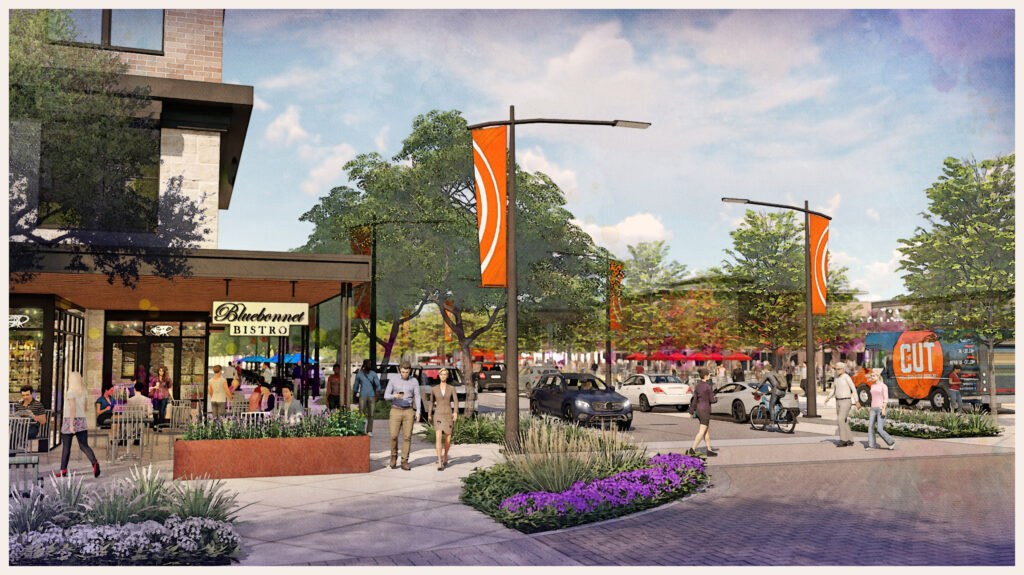
The clearest expression of the strategy right now is Goodland, a 5,000-acre master-planned community south of Mansfield, near the intersection of U.S. 287 and the 360 Tollway. Provident is not building a neighborhood here; it is effectively building a small city, one the local projections put at 50,000 residents and $5 billion in taxable value at full buildout. There is a planned 50-acre town center with civic buildings and a walkable core, and - a detail that tells you the ambition - a water tower branded with the community's own name.
It is already real. More than 700 homes are in place or underway, with builders including David Weekley Homes, Highland Homes and Beazer Homes putting up product inside the plan. In August 2025, the Grand Prairie City Council approved annexing roughly 900 additional acres to accommodate the development - the sort of thing that happens when a project is large enough that the city grows to fit it rather than the other way around.

04From land bank to power bank
Here is where the old strategy meets the newest gold rush. Inside and adjacent to the Goodland footprint, Provident's data center arm has teamed with PowerHouse Data Centers - a division of Virginia-based American Real Estate Partners - to develop a 768-acre hyperscale campus in Grand Prairie. The plan calls for 24 buildings across three phases, ultimately reaching 1.8 gigawatts of power capacity, with the joint venture reporting it has secured the necessary approvals and permits. Phase I is targeted to come online in May 2026.
The elegance of this, from Provident's point of view, is that it did not have to go shopping for scarce, power-adjacent land at 2025 prices. It already controlled the ground. In an AI build-out where the binding constraint is increasingly power and entitled acreage rather than money, a firm that spent decades quietly banking land is holding exactly the asset everyone suddenly needs. Provident describes a broader pipeline of 7-plus gigawatts of data center activity - the same distressed-land muscle memory, pointed at the most in-demand real estate category of the decade.
The AI era's scarce resource isn't capital. It's entitled land next to power - and Provident has been banking that for 30 years.
Why the data center pivot fits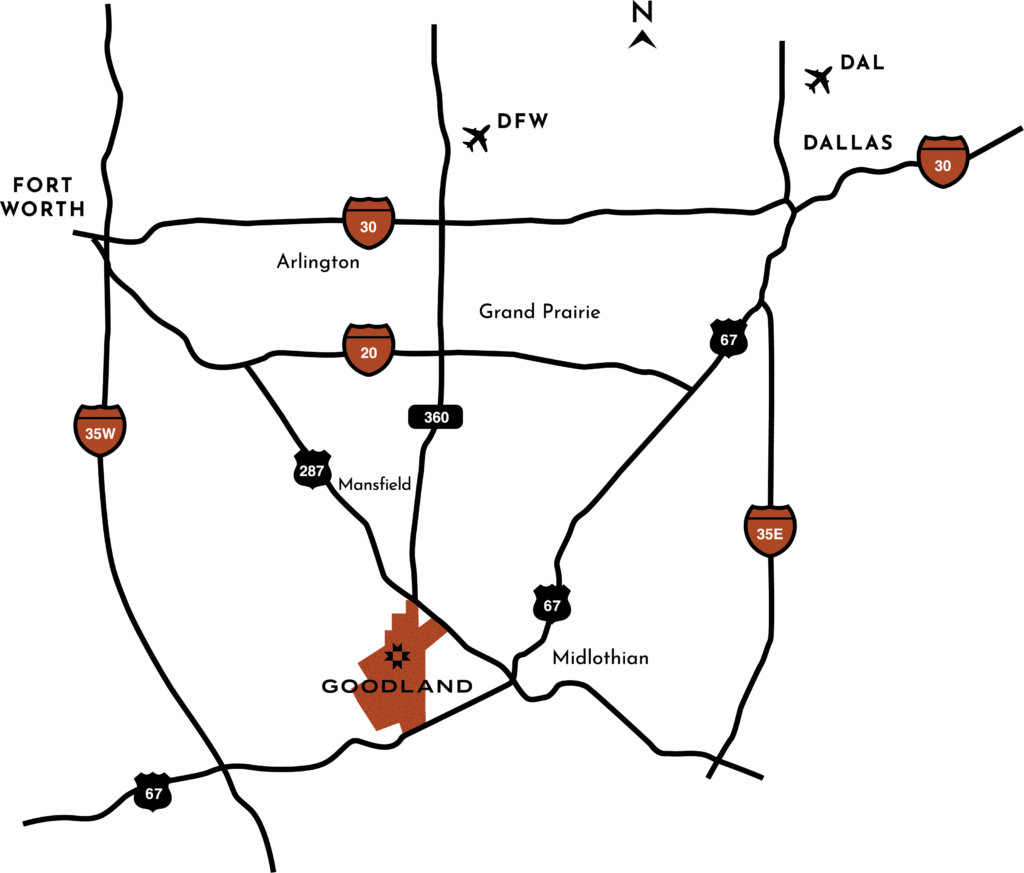
05The business model, and where it can break
Provident makes money the way patient land developers do: buy low, entitle, develop across multiple property types, and harvest value through long holds, sales and joint ventures. The $121 million in debt financing it raised in 2017 is the kind of capital that lubricates that machine rather than defining it. The reported ~$11.9 million revenue figure floating around data providers almost certainly reflects a management entity, not the multi-billion-dollar value of the projects themselves - a reminder that with private developers, the headline revenue number rarely tells the story.
What could go wrong is the flip side of the whole approach. Patience is only an edge if you can afford to be patient; a long enough downturn in interest rates, homebuilding demand, or data center absorption punishes anyone holding large, undeveloped land. Master-planned communities live or die on infrastructure timing and municipal cooperation. And the data center thesis, however well-positioned, is a bet that power availability and hyperscaler demand hold up long enough for 24 buildings to fill. The reader takeaway is not "copy the sector." It is the older, more portable lesson: control the scarce input early, and you get to choose what it becomes later.
06Where it fits in the market
In North Texas, Provident runs in the same lane as large private land holders and developers - names like Hillwood, Crow Holdings, Hunt Realty and Stream Realty - and, on the data center side, increasingly rubs shoulders with specialists such as QTS, Digital Realty and Compass Datacenters. Its differentiator is not a single trophy asset but the willingness to be diversified and early: apartments and warehouses to generate cash, master-planned communities to convert raw acreage into value over years, and now data centers to monetize land that was banked long before anyone was drawing gigawatts on a napkin. Its signature mixed-use project, Preston Hollow Village in North Dallas, is a five-phase development valued in the hundreds of millions that drew corporate tenants - proof the firm can execute in-fill, not just greenfield.
07The 47-year arc, in stops
The tidy version of Provident's story is that it got lucky twice - once with the S&L crash and once with the AI boom. The less tidy, more accurate version is that it made the same move both times. In 1991 the scarce thing was cheap land and the patience to hold it. In 2026 the scarce thing is entitled land next to power and the patience to build 24 buildings on it. Provident just kept buying the input everyone else wanted to sell.