Structural & Seismic Engineering · San Jose, CA
PASE.
Peoples Associates Structural Engineers - the people who design the parts of a building you never see and never want to think about.
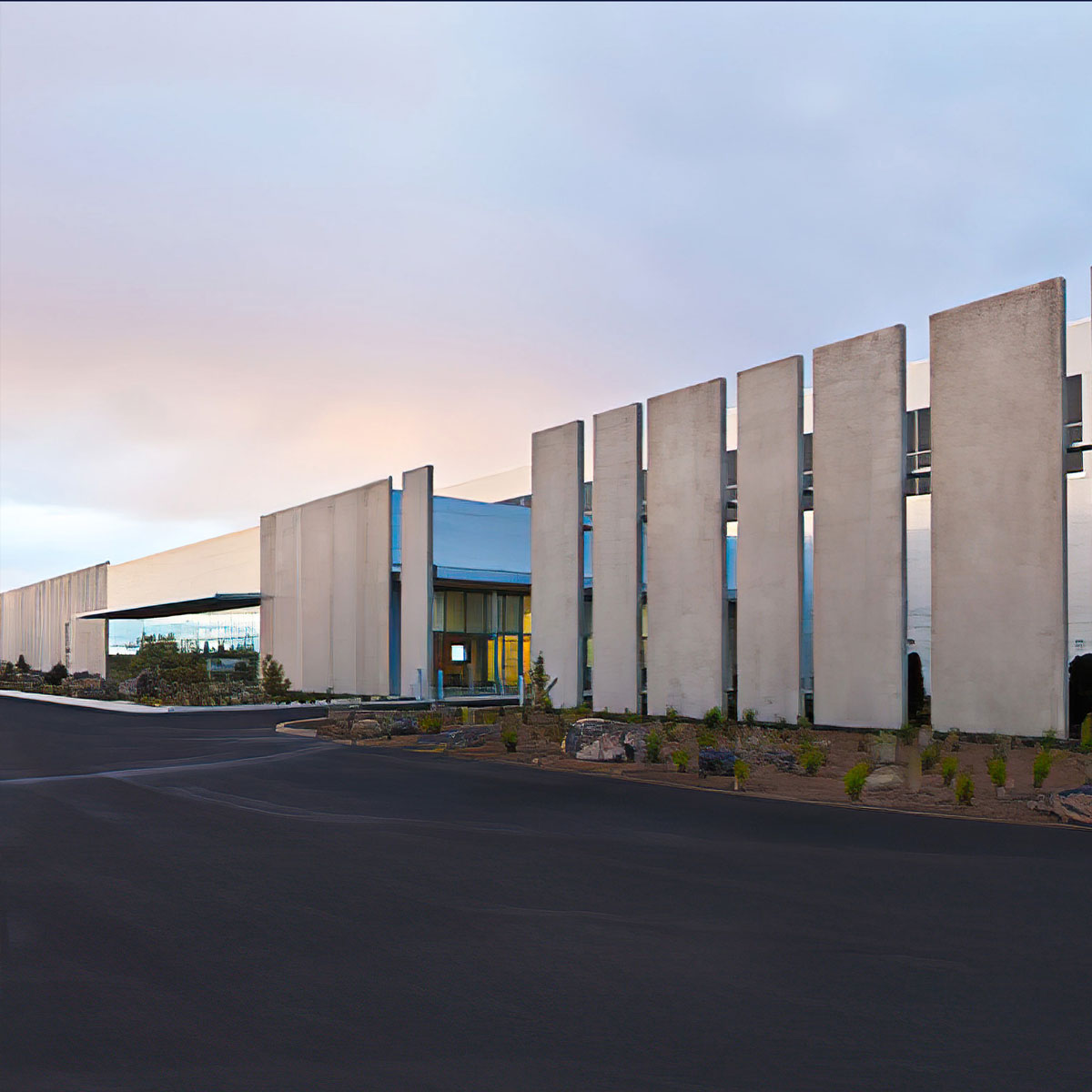
Peoples Associates Structural Engineers - the people who design the parts of a building you never see and never want to think about.
Somewhere in a server hall the size of a small town, a wall of machines hums through the night, holding photos and messages and the small private business of millions of strangers. The building keeps perfectly still. That stillness is not an accident. It is a decision - made years earlier, in steel and concrete, by a structural engineer in San Jose who asked the unfashionable question: what happens when the ground moves?
PASE - Peoples Associates Structural Engineers - has been asking that question since 1990. It is not a household name, and the firm seems comfortable with that. Structural engineers are the stagehands of the built world. When they do their job well, nobody notices. When they do it badly, everybody does. PASE has spent three and a half decades on the right side of that line, designing the bones of data centers, apartment towers, hospitals and bridges across California and beyond.
The work is invisible by design. You walk into a Meta data center, a Crescent Village apartment, a Walgreens distribution hub, and you see the architecture - the glass, the light, the lobby. You do not see the diagonal brace tucked behind a wall, the foundation calibrated for liquefiable soil, the connection detail that decides whether a roof stays up during a magnitude-seven reminder that California sits on a fault line. PASE sees all of it. That is the whole job.
Founded in June 1990 by Don Peoples, the firm began with a deceptively plain ambition: high quality, innovative, cost-effective design. Plenty of firms say that. Fewer build a culture stubborn enough to mean it. What separates PASE is less a signature look - structural engineers do not have signature looks - than a signature habit. The firm talks constantly about collaborating early, before the expensive mistakes get poured into concrete.
It is a quiet sentence, and a radical one. Most engineering gets brought in late, after the architect has dreamed and the budget has hardened, asked to make someone else’s vision stand up. PASE prefers to be in the room first - to catch the liability while it is still a line on a screen and not a crack in a beam. That instinct, more than any single building, is the firm’s real product.
It helps that PASE works in a part of the world that does not let engineers get lazy. California is beautiful, expensive, and sitting on a network of faults that will, eventually, move. Building here means designing for an event that may not arrive for fifty years and may arrive next Tuesday. Seismic design is not a feature you add; it is the constraint you build inside. The firm has spent decades fluent in that constraint - evaluating which old structures will survive a shake and which need strengthening, deciding how a four-story data hall transfers its weight into ground that might briefly behave like liquid.
The economics are unglamorous and unforgiving. A structural engineer’s fee is a sliver of a project’s cost, yet the decisions made in that sliver govern whether the other ninety-odd percent survives. Over-design and you waste a client’s money in needless steel. Under-design and you gamble with lives. PASE’s whole business is living in that narrow band where the structure is safe, efficient, and buildable - and doing it across markets as different as a cryogenic tank and a luxury apartment.
PASE works across markets most people never connect - the cloud, the apartment, the lab, the cryogenic tank - because all of them share one need: a structure that does not flinch.
Mission-critical structural and seismic design for hyperscale and colocation campuses - Meta, Vantage, CoreSite. The buildings that hold the internet upright.
Full structural engineering for commercial, multifamily, mixed-use and institutional construction, from foundation to roof.
Evaluating and strengthening existing structures so they survive the day the fault remembers it exists.
Designing how non-structural components and equipment stay put when everything around them wants to move.
Towers, pipe racks, retaining walls, utility and cryogenic infrastructure - the structures that are not exactly buildings.
Structural design for renovations, additions and adaptive reuse - giving old bones a second life.
Ask the firm what holds it together and you get a list, not a slogan. “The PASE Way” runs to ten principles - expectations, proactiveness, growth, communication, camaraderie, reliability, assessment, collaboration, innovation, passion. It reads like the kind of poster a company hangs and then ignores. The difference at PASE is that the list doubles as a hiring filter and a promotion ladder. The firm is unusually loud about mentorship and staff development for an industry that often treats young engineers as billable hours with legs.
The proof came in 2021. After three decades, Don Peoples did the thing founders rarely do gracefully: he left, and he did not sell to the highest outside bidder. Leadership passed to five of the firm’s own - Bill Wells, Azlan Ezaddin, Greg Bruce, Dave Lo and Matt Knutsen. Azlan Ezaddin now serves as president. A succession that keeps the company in the hands of the people who built it is the truest test of a culture. PASE passed it.
That continuity matters more in engineering than in most fields. Structural knowledge does not live in a manual; it lives in the judgment of people who have watched a thousand details succeed and a few fail. When a founder sells to a conglomerate, that judgment often walks out the door within a few years. By promoting from inside, PASE kept its institutional memory intact - the accumulated 250 years of combined experience the firm likes to advertise is not a marketing number so much as a payroll fact. The engineers who solved yesterday’s hard problem are still around to mentor whoever inherits tomorrow’s.
A short list of structures PASE helped keep standing - across the cloud, the campus and the community.
Return to that server hall at night. The machines still hum. The building is still perfectly, deliberately still. Nothing about it announces that an earthquake fault sits a few miles away, or that a firm of engineers in San Jose spent months making sure the room you are standing in would shrug off the worst the ground can offer.
That is the trade PASE made a long time ago: to do work so thorough it disappears. The internet you scroll, the apartment you sleep in, the lab where someone’s research is running overnight - many of them rest, quietly, on calculations the public will never read and connection details no one will ever photograph. PASE is fine with the anonymity. The stillness is the signature. And as long as the buildings stay up and the data keeps humming, the firm that planned for the worst day will have done exactly what it set out to do in 1990 - and you’ll never have to think about it at all.