In 2007, Dr. Bharat Sangani’s company had a hotel portfolio and a decision to make. Encore Enterprises had assembled properties across 13 states. It could keep buying. Instead, it stopped purchasing and sold the collection for $393 million. For a founder accustomed to making things bigger, there is something quietly revealing about that verb: stopped.
Business biographies tend to rush toward accumulation. More buildings, more employees, another zero. Sangani’s story becomes interesting when it slows down at the doors: the hotel that brought him into property, the coastal home he lost, the businesses he helped operate and eventually sold. Entering a business takes conviction. Leaving one asks a different question of its owner.
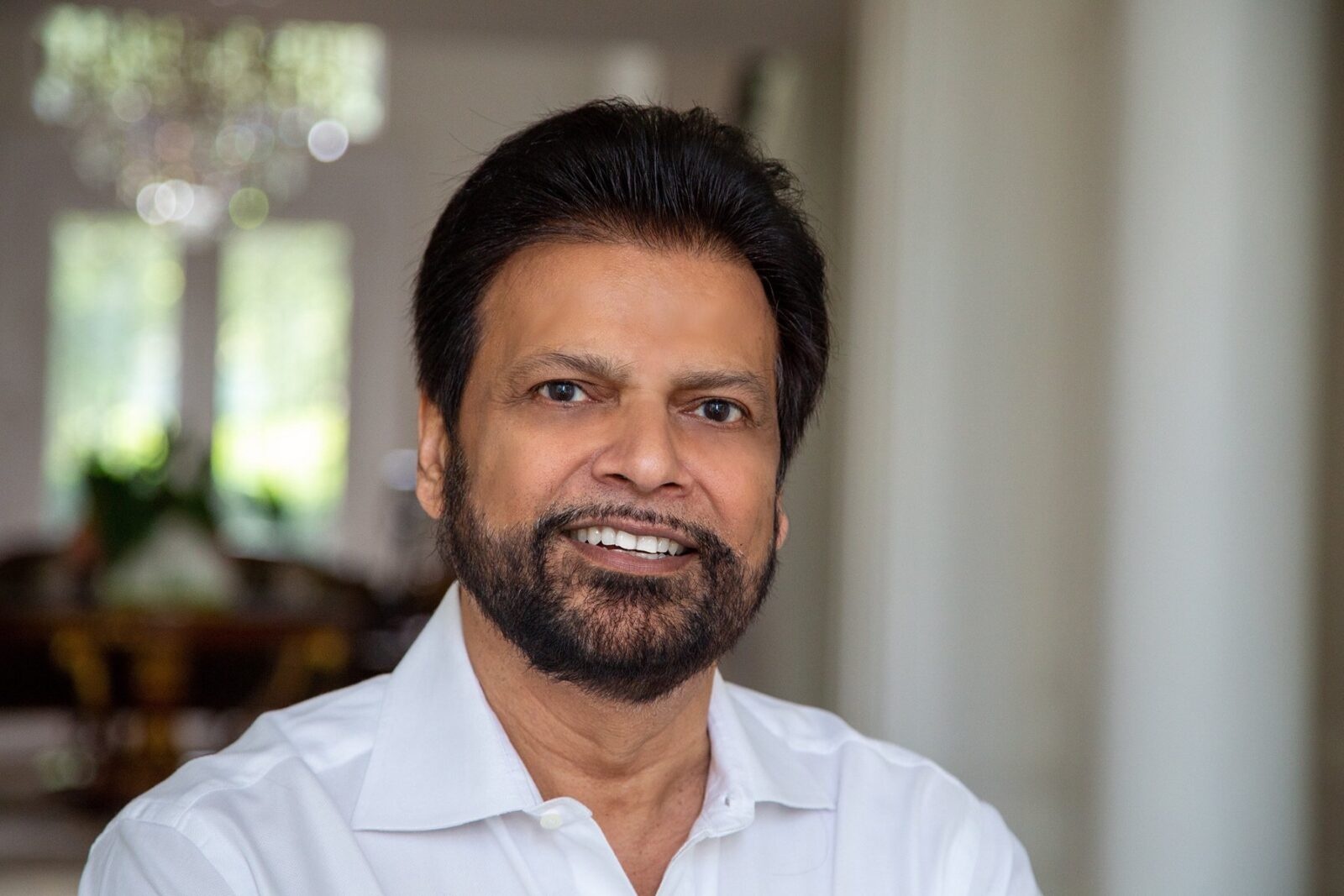
Today, he is the Dallas-based co-founder, Chairman and CEO of Encore. Colleagues and clients call him Doc. The nickname has survived a career in which a family venture became a firm investing in properties and operating companies. He still talks about ambition. Increasingly, he also talks about the conditions required to keep it useful.
A hotel, and a family drawn into business
Sangani grew up in Mumbai and moved to the United States in 1983. In his telling, he arrived with $10.45. It is the sort of detail a success story likes to keep polished. Yet his business beginning was less solitary than the pocket-change opening suggests. The people around him supplied ideas, work, and a rather abrupt introduction to responsibility.
His first real estate investment came in 1991. A visiting father-in-law wanted something to do in Gulfport, Mississippi, and proposed building a hotel. When he returned to India before the opening, Sangani’s wife, Smita, took charge. She moved into the hotel with their young children and organized its launch. The family had acquired a business education with rooms attached.
That beginning gives the later company a human scale. Before there were divisions and investment partnerships, there was a family deciding who would do the work. A hotel can be described as a property. Open its doors and it becomes a collection of tasks, each waiting for a person to take responsibility.
By 1999, Sangani had co-founded Encore as a way for other investors to participate in his real estate deals. The firm’s leadership now spans finance, operations, legal work and individual business divisions. His daughter Nili is part of that leadership. The family remains visible, although the machinery around it has grown considerably more elaborate.
The geography of starting again
Hurricane Katrina changed the geography of Sangani’s life in 2005. The storm destroyed his Gulfport home. He later described finding a photograph of his father among the debris. In a career often measured in transactions, that small object carries a different kind of value: something personal, displaced by a force no owner could negotiate with.
Afterward, he considered Dallas and Atlanta as places to relocate the business, choosing Dallas. A headquarters decision can look tidy on a corporate timeline. Here, it followed the upheaval of a home and a coastal community. Moving inland became part of how the next stage of the enterprise took shape.
His attachment to forward motion had older roots. As a young man, he had been disappointed by his father’s restrained response to an academic award, then discovered his father privately celebrating it with others. Approval was present, but apparently it had to travel by a circuitous route. Sangani remembers the lesson as a continuing invitation to aim higher.
“Nothing is ever enough for me. I like to go to the next level.”
Dr. Bharat Sangani
Thirty-five hotels and a decision to stop
The 2007 hotel sale gives that appetite for progress an instructive complication. Encore’s account describes a portfolio of 35 hotels and 3,840 guest rooms. Twenty-nine properties went to one institutional buyer for $315 million; the remaining six sold separately for $78 million. Together, the transactions produced the $393 million total.
There was operating work underneath the exit. Encore reports that net operating income rose by more than 35 percent in 2006, even while renovations disrupted many properties. The company then reassessed asset and capital markets and chose to sell. Improving the business and deciding to part with it belonged to the same sequence.
It is tempting to turn a successful exit into a tale of foresight. The more useful detail is the willingness to reconsider the next purchase. A team that has learned how to acquire hotels can keep finding reasons to acquire hotels. Stopping requires the organization to value a different answer.
Sangani later described a simple framework for real estate returns: the purchase, the management, and the exit each contribute. He used rough thirds while explicitly acknowledging that circumstances change the proportions. The appeal of the idea is its breadth. Getting one stage right does not release the owner from paying attention to the others.
The work hidden inside a burger
Restaurants gave Encore another way to test the relationship between property and operations. Its restaurant subsidiary, established in 2014, acquired, developed and operated 110 Five Guys locations across Texas, Oklahoma, Colorado, Massachusetts and California. The portfolio was sold to the franchisor in 2022. This was ownership with a great many lunch shifts inside it.
By late 2024, the restaurant business was pursuing a different daily habit: coffee. Encore announced exclusive rights to build and operate 7 Brew drive-thru stands in Utah and Arizona. The products changed. The practical questions of location, staffing and repeat customers remained close to the center of the work.
In June 2026, Sangani made his operating philosophy explicit. He argued for learning businesses from the ground up before organizing more capital around them. Restaurant experience featured in the argument: training, staffing, site selection and supply chains. None sounds especially glamorous. Each becomes conspicuous when it goes wrong.
That interest in the mechanics connects the burger counter to the hotel desk. An investor can own either through documents. Running either means remaining curious about the experience on the other side of the counter. Sangani’s argument gives those details a seat at the investment table.
An audience for the questions
His public life also includes asking other people how their work functions. On The Sangani Show, he has interviewed Encore CFO Yatin Gandhi about the role of a finance chief, liquidity, hiring and the relationship between a CEO and CFO. Bringing a colleague into the conversation makes the organization behind the founder a little easier to see.
Other conversations have ranged across marketing, networks and business formation. Guests have included marketing agency owner Lindsey Huettner, Family Office Club CEO Richard Wilson and CPA Un Vora. A business owner’s contact list can stay a private advantage. A conversation at least allows some of that experience to become available to an audience.
The same outward turn appears in Life is a Business, his mentorship program. Its stated purpose includes helping people pursue meaningful lives and develop their businesses. On his website, Sangani presents experience as the thing he has to offer. Teaching asks him to unpack decisions that an executive might otherwise compress into a rule.
He has also stepped into the interviewer’s role in print. A December 2025 conversation with Pyq founder Aman Raghuvanshi explored building an AI business. The setting differs from hotel ownership, but the format suits an executive interested in how people turn an idea into something that works.
The next decision is smaller than the last headline
Sangani’s writing in 2025 returned to less photogenic matters: debt maturities, cash reserves and the possibility of tighter financing. He described examining fixed rates and refinancing options. The concerns are ordinary enough to disappear beneath a founder’s public milestones. For the people responsible for an enterprise, they can determine how much freedom the next year contains.
In July 2026, Encore announced that he had been named an EY Entrepreneur Of The Year Southwest Award winner. Its announcement credited him with overseeing nearly $6 billion in real estate and private equity transactions. The recognition arrived after decades of building a company whose reach extends beyond its original property deals.
In an interview that month, he described his thinking through value creation, questioning assumptions and what he called “calibrated patience.” That last phrase allows for two impulses in the same founder: the desire to advance and the willingness to wait. It is a useful pairing for someone who has repeatedly bought, operated and sold.
There is a discipline in keeping the next decision that specific. A company may have a national portfolio, but a guest still arrives at one desk, a customer at one window, and a colleague with one question. The distance between those encounters and the investment committee is part of what an operating business has to manage. Sangani’s continuing interest is in closing that distance.
The family hotel remains a good place to begin understanding him. Somebody proposed it. Somebody financed it. Somebody had to get it open. Much later came the question of leaving. Across Encore’s changing businesses, Sangani keeps returning to the work between those moments - and to finding people who can do it well.